
Newlands Property, Cape Town: The Wettest Suburb
Newlands takes roughly three times Cape Town's rainfall. Damp, drainage and maintenance decide holding costs here, and the same water built the suburb's value.
By Cape Town Invest Editorial · Updated September 7, 2026 · 10 min read
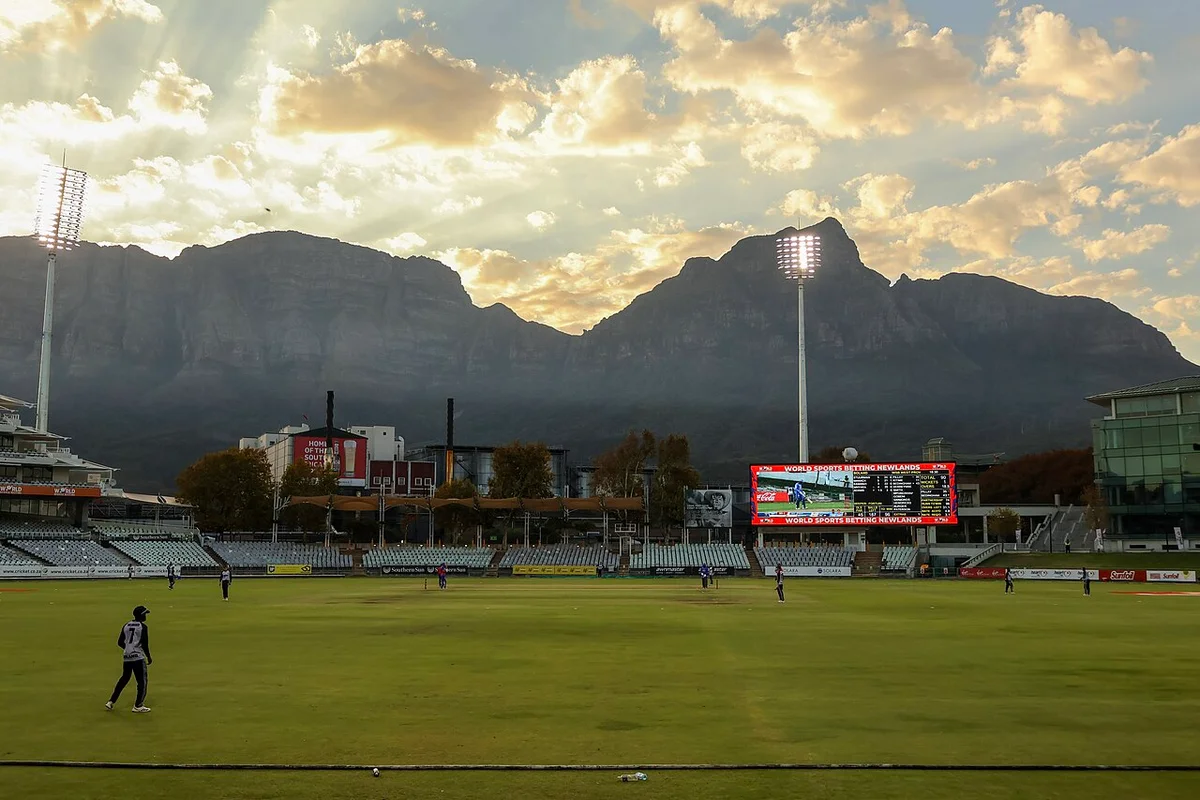
Quick answer: Newlands receives roughly three times the rainfall of central Cape Town, and that single fact runs through the whole investment case. It is why the suburb is the greenest and most established in the southern suburbs, why buyers pay a premium for it, and why its maintenance baseline sits above comparable suburbs a few kilometres away. Underwrite the roof and the damp, not just the yield.
Why does Newlands get so much more rain?
Topography, not chance. The suburb lies directly in the lee of the highest section of Table Mountain, so moist air moving in off the ocean is forced upward over the massif, cools and releases its water on the way. The effect is sharp and local.
The Kirstenbosch station beside the suburb averages roughly 1,310 millimetres of rain a year, against a Cape Town average nearer 500 millimetres. That is close to three times the water falling on a CBD property 8 km away, and roughly 80% of it arrives in the 5 winter months from May to September, when Cape Town takes most of its rain. For an owner this is not weather trivia, it is the input that drives the difference between a Newlands maintenance budget and a Claremont one. The water security guide covers the city-wide supply position, which is a separate question from how much water lands on a particular roof.
What does that rainfall cost an owner?
Volume is what fails buildings here rather than storm intensity, and the costs concentrate in predictable places. A Newlands property carries a higher baseline than an equivalent house in a drier southern suburb, and the gap is structural rather than a function of building quality.
| Item | Why Newlands is harder on it | Practical effect |
|---|---|---|
| Roof and gutters | Sustained winter volume, heavy leaf load from mature trees | More frequent clearing and repair |
| External timber | Long wet periods with limited drying | Shorter repaint and treatment cycles |
| Internal damp | Southern elevations and shaded walls stay cold | Damp-proofing and ventilation work |
| Site drainage | Runoff from the mountain slope above | Channels, soakaways and occasional remediation |
| Garden | Rapid growth and heavy leaf fall | Continuous rather than seasonal service |
A worked example puts rands on the difference. On a R7 million Newlands house, gutter clearing twice a year rather than once runs about R3,500 extra, an external repaint cycle at 5 years instead of 8 adds roughly R12,000 a year when amortised, damp remediation on two elevations lands between R25,000 and R60,000 as a one-off and recurs on a 10 to 15 year cycle where ventilation is not fixed, and continuous garden service rather than seasonal adds R2,000 to R3,500 a month. Against a municipal rates line of roughly R3,400 a month at the 2026/27 residential rate in the rand of about 0.0064 after the R620,000 rates-free portion, the weather-driven lines are the larger variable. The pros and cons balance out for a long-hold owner and rarely do for a three-year trade.
Insider tip: view in winter, or refuse to proceed without photographs taken in it. A Newlands house shows beautifully in February, when the trees are an asset and every wall is dry, and the same house in July is the one an owner actually lives with. Our reading of southern suburbs purchases is that damp is the most common post-transfer surprise here and the most avoidable, because it is visible to anyone who looks in the right season.
What is the buyer actually paying a premium for?
The rain built the thing that commands the price. Newlands is the greenest established suburb in Cape Town, with mature oak and pine cover, deep gardens and a forest edge, and none of that would exist on a drier slope.
Three further supports sit alongside it:
- School access, with several of the city’s long-established schools within or beside the suburb, which anchors family demand.
- Sporting infrastructure, including rugby and cricket grounds that have stood here for well over 100 years, giving the suburb an identity beyond residential streets.
- Southern suburbs connectivity, with the M3 and the rail line putting the CBD within about 20 minutes off-peak and the southern employment nodes closer still.
The result is a market that holds its value through cycles rather than one that spikes. Buyers here are choosing a setting and a school run, and neither of those decisions reverses quickly when interest rates move. For the wider corridor this suburb sits in, see the southern suburbs guide, and for how the City calculates the rates line, the rates and taxes guide.
Who rents here, and on what cycle?
Families, on leases that follow a child’s schooling rather than a job. That produces the lowest-churn tenant profile in this part of the city and a rental market that behaves differently from a professional or student one.
The upside is reliability: a family that has secured a place at a school in the catchment does not move for a marginal rent saving, so tenancies commonly run 3 to 5 years rather than the 12 months a professional lease turns on, and re-letting costs stay low. The corresponding risk is timing. A vacancy that opens in the middle of the school year meets a much thinner pool than one opening before it starts, so a landlord needing to re-let in June faces a void of 2 to 3 months against perhaps 3 weeks in the pre-January window. Model vacancy against the school calendar rather than against a flat annual allowance, and the numbers behave. For the adjacent suburb where the calendar is academic rather than scholastic, see the Rondebosch page.
What should a buyer check before offering?
Four checks are specific to this suburb, and all four are cheaper before an offer than after transfer.
- Damp on southern and shaded elevations, looked for rather than asked about, since a fresh coat of paint conceals it easily.
- Roof and gutter condition and capacity, because failure here is a volume problem and the volume is exceptional.
- Where water goes in heavy rain, including runoff from the slope above and the state of any channels or soakaways.
- Tree cover and its position, which is an amenity in summer, a drying obstacle in winter and a gutter load all year.
A fifth question is worth asking of the seller rather than the building: what has already been done. A house that has been re-roofed within 10 years, had its gutters upgraded to a larger profile and carries a documented damp treatment is a materially different holding proposition from one where none of that has happened, and the difference rarely shows in the asking price.
Beyond those the purchase is ordinary conveyancing, identical for a South African and a foreign buyer. The duty scale, transfer timeline and exchange-control steps are in the pillar investment guide.
Sources: SANBI Kirstenbosch station rainfall records for the Newlands area average, against South African Weather Service figures for the Cape Town city average. Rainfall figures are long-run averages and individual years vary widely. Maintenance observations describe typical southern suburbs stock rather than any specific property; obtain a damp and roof inspection before offering. Current as at 27 August 2026.
Frequently Asked Questions
It is among the wettest inhabited places in South Africa. Newlands sits directly in the lee of the highest part of Table Mountain, where moist air is forced upward and drops its water, and the Kirstenbosch station nearby averages around 1,310 millimetres a year against roughly 500 millimetres for the Cape Town city average. The suburb receives close to three times what the CBD does, a few kilometres away.
Substantially, and it is the main thing that separates a Newlands holding cost from a comparable southern suburbs one. Persistent winter damp attacks roofs, gutters, external timber and internal walls, and shaded properties under mature trees dry slowly. Budget for more frequent roof and gutter attention, damp-proofing where it has failed, and ventilation that a drier suburb would not need.
Four things a summer viewing hides: rising and penetrating damp on internal walls, especially on southern elevations; roof and gutter condition, since volume rather than intensity is what fails here; site drainage and where water actually goes in heavy rain; and tree cover, which is an amenity in February and a drying problem in July. View in winter if you can, or ask for photographs taken in it.
Because the same water made it. Mature gardens, established oak and pine cover, the Newlands forest edge and the greenest suburb setting in Cape Town all exist because of the rainfall, and they are what buyers pay for. Add school access, proximity to the sports grounds and easy southern suburbs connectivity, and the suburb holds a premium that its climate does nothing to reduce.
Families on long leases, principally. School catchment drives demand, so tenancies tend to run in multi-year blocks aligned to a child's schooling rather than to job moves. That produces low turnover and reliable occupancy, and it also means a vacancy that opens outside the school-year cycle can take longer to fill than the suburb's headline demand suggests.
It suits a long-hold buyer who wants stability rather than yield. Prices are supported by school access and scarcity of leafy stock rather than by rental returns, turnover is low, and the market moves steadily rather than sharply. A foreign owner should factor the higher maintenance baseline into holding costs, and should have someone local able to inspect after winter storms.
Get a Cape Town property shortlist
Share your budget, target area (Atlantic Seaboard, City Bowl, Winelands), and goal. We reply within one business day with matched stock and next steps.