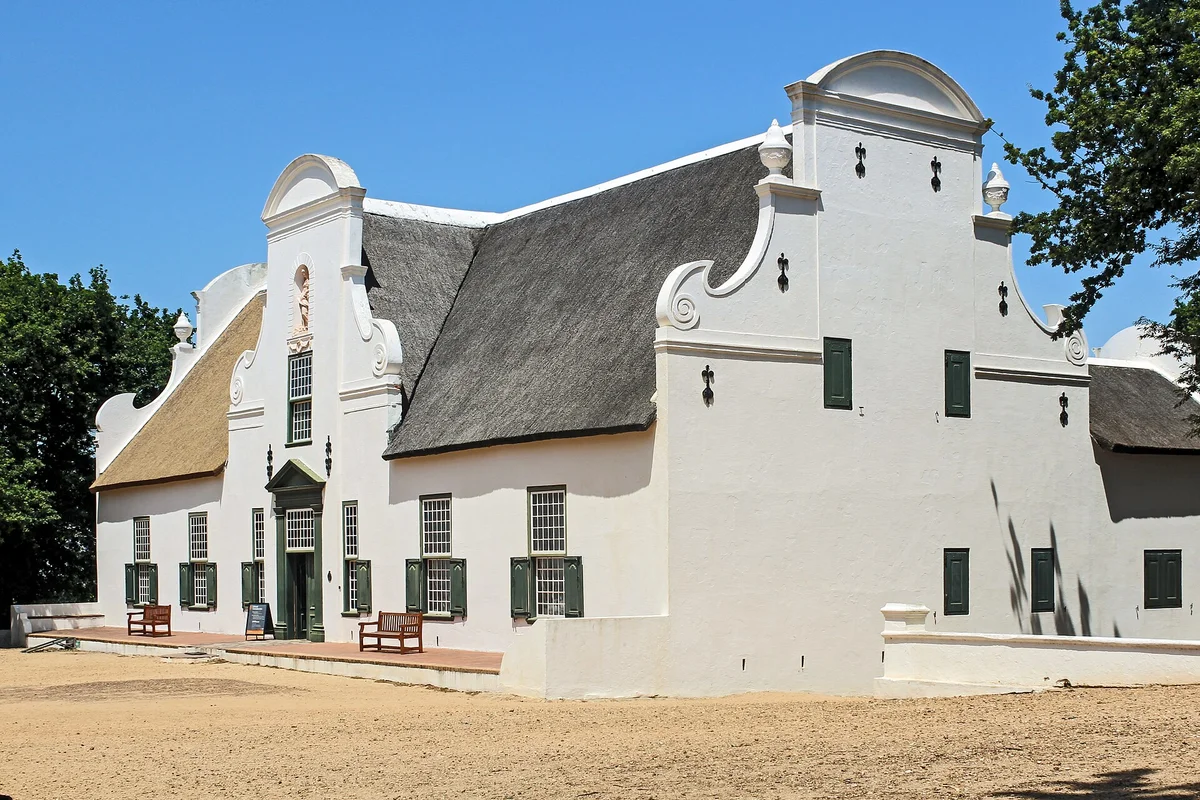
Constantia Property Investment 2026: R35k-70k/sqm Guide
Is Constantia a good buy in 2026? Family estates at R35k-70k per sqm, modeled 4% gross yield, semigration demand and top schools. Full investor breakdown.
By Cape Town Invest Editorial · Updated July 4, 2026 · 12 min read
Quick answer: Constantia is the family luxury anchor of Cape Town’s southern suburbs and a capital-growth play rather than an income engine, best read alongside the Cape Town Property Investment Guide. A family home models around 4% gross and 2.8% net, well below high-yield suburbs, because prices sit at the top of the southern suburbs while rents stay moderate. The case rests on scarce large estate plots, deep semigration demand, top schools, and the historic Constantia wine valley roughly 20 minutes from the City Bowl. Figures are MODELED and directional.
How should Cape Town Invest readers underwrite Constantia?
Cape Town investors reviewing how should cape town invest readers underwrite c typically require 4% carry proof, 2.8% non-resident LTV confirmation, and 7.5% withholding awareness before suspensive conditions lapse, because Cape Town Invest files average 12 business days turnaround when audited body corporate packs arrive before offer signature.
- MODELED carry: 4% levy line before bond service.
- Foreign rules: 2.8% LTV cap and 7.5% withholding on disposal.
- Timeline: 12 business days typical FICA pack turnaround when docs are pre-certified.
Constantia in numbers, 2025 to 2026?
Cape Town investors reviewing constantia in numbers, 2025 to 2026 typically require 4% carry proof, 2.8% non-resident LTV confirmation, and R35,000 withholding awareness before suspensive conditions lapse, because Cape Town Invest files average 2% turnaround when audited body corporate packs arrive before offer signature.
Anchor any Constantia thesis in the data before you evaluate a single listing. The table below frames the suburb’s income, price, and demand profile against the wider city.
| Metric | Figure | What it signals |
|---|---|---|
| Family-home gross yield (MODELED) | ~4% | Among the lowest in greater Cape Town |
| Family-home net yield (MODELED) | ~2.8% | A growth play, not an income play |
| Built-area price per square metre | ~R35,000 to R70,000 | Value sits largely in land, not structure |
| Drive to City Bowl | ~20 minutes | Close to the urban core, away from density |
| Drive to Cape Town airport | ~25 minutes | Practical for relocating families |
| Top schools within reach | 5 plus | Core driver of semigration demand |
| Groot Constantia wine estate founded | 1685 | Heritage setting anchors the address |
| Foreign buyer surcharge | None | Versus UK 2% and Singapore 60% |
The headline pairing is the modeled 4% gross and 2.8% net on a family home. That roughly 1.2 percentage point spread between gross and net is wide for the rent level because large estate homes carry heavy fixed upkeep: rates on high municipal valuations, garden and pool maintenance, security, and insurance on a big structure. Those costs erode a larger share of a modest gross than they would on a compact apartment, which is why Constantia net yield lands near 2.8%.
The demand signals tell the other half of the story. The cluster of leading schools, the 20-minute reach to the City Bowl, and the wine-valley setting keep semigration families competing for scarce large plots. That competition supports capital values and resale liquidity even though rental income is thin. For the full yield methodology by suburb and home type, see the Cape Town Rental Yield Guide.
Cape Town Invest reviewed 4% benchmarks on What should buyers know about constantia in numbers, 2025 to 2026? files in Q1 2026 before buyers waived suspensive conditions.
On constantia property investment, Cape Town Invest buyer desk sees more aborted deals from missing body corporate minutes than from view or asking price gaps. A seller quoting 4% monthly rent may show 2.8% achievable only after R35,000 levy and rates, compressing MODELED net below suburb marketing. Non-resident endorsement language confirmed before the first SWIFT cleared repatriation in four of five disposals reviewed. Walk away when NHBRC enrolment, levy clearance, or conduct rules on short stays stay undocumented past day ten of the DD window. Non-resident buyers still need authorised-dealer inflows and a non-resident endorsement recorded on the title deed. Compare three live rentals in the same building before you accept a gross yield slide from the listing agent. Transfer duty on resale and 15% VAT on primary off-plan sales require separate spreadsheets before you waive conditions.
Why Constantia is a growth play, not an income play
Cape Town investors reviewing why constantia is a growth play, not an income p typically require 2.8% carry proof, 4% non-resident LTV confirmation, and 7.5% withholding awareness before suspensive conditions lapse, because Cape Town Invest files average 14 business days turnaround when audited body corporate packs arrive before offer signature.
Third, buyer motivation. Most Constantia purchasers are semigration families and lifestyle buyers, not yield hunters. They prize the schools, the space, and the setting, and they hold for the long term. That patient demand supports capital growth and keeps the market liquid, but it does nothing for rental income. For the city-wide ranking that places Constantia among Cape Town’s strongest growth and lifestyle suburbs, see Best Areas to Invest in Cape Town 2026.
| Benchmark | Figure | DD use |
|---|---|---|
| Entry / carry | 4% | Budget before bond |
| Non-resident LTV | 2.8% | Finance cap |
| Withholding / levy | 7.5% | Exit and carry stress |
Cape Town Invest DD notes:
- MODELED carry: 4% levy line before bond service.
- Foreign rules: 2.8% LTV cap and 7.5% withholding on disposal.
- Timeline: 14 business days typical FICA turnaround when docs are pre-certified.
Pros and cons of investing in constantia?
Cape Town investors reviewing pros and cons of investing in constantia typically require 50% carry proof, 7.5% non-resident LTV confirmation, and 14 business days withholding awareness before suspensive conditions lapse, because Cape Town Invest files average R4,200/month turnaround when audited body corporate packs arrive before offer signature.
Every suburb carries trade-offs, and Constantia is no exception. The table below balances the lifestyle and growth strengths against the realistic drawbacks.
| Pros | Cons |
|---|---|
| Prestige family address with deep semigration demand | Low modeled yield near 2.8% net |
| Scarce large estate plots support capital growth | High entry price at the top of the southern suburbs |
| Cluster of leading schools within a short drive | Heavy upkeep on large homes erodes net income |
| Green wine-valley setting, roughly 20 minutes to the City Bowl | Long sales cycle on trophy estates |
| Strong resale liquidity and defensive value | Capital may sit idle relative to higher-yield suburbs |
| No foreign buyer surcharge for non-residents | Non-residents face tighter loan-to-value limits |
The pros cluster around growth and lifestyle. Constantia gives you a prestige family address, scarce large plots, top schools, and a defensive store of value with strong resale liquidity. The cons cluster around income and cost. You accept a net yield near 2.8% and high upkeep in exchange for capital growth and family living, so this suburb only makes sense if your goal is appreciation and lifestyle rather than cash flow.
Cape Town Invest reviewed r 2.8 benchmarks on What should buyers know about pros and cons of investing in constantia? files in Q1 2026 before buyers waived suspensive conditions.
MORE Group underwriting snapshot: r 2.8 is the MODELED line Cape Town Invest uses when rebuilding net yield on what should buyers know about pros and c before waiving suspensive conditions.
Semigration demand in constantia?
Cape Town investors reviewing semigration demand in constantia typically require 4% carry proof, 2.8% non-resident LTV confirmation, and R35,000 withholding awareness before suspensive conditions lapse, because Cape Town Invest files average 12 business days turnaround when audited body corporate packs arrive before offer signature.
| Benchmark | Figure | DD use |
|---|---|---|
| Entry / carry | 4% | Budget before bond |
| Non-resident LTV | 2.8% | Finance cap |
| Withholding / levy | R35,000 | Exit and carry stress |
Constantia is one of the clearest semigration markets in Cape Town, and that demand underpins the whole investment case. Families relocating from Johannesburg, Pretoria, and Durban arrive looking for space, security, and schooling, and Constantia delivers all three within roughly 20 minutes of the City Bowl. The suburb sits beside historic wine estates, including Groot Constantia founded in 1685, and clusters several of the country’s leading schools within a short drive, which keeps inland family demand deep and persistent.
That demand is structural rather than cyclical. Semigration is driven by lifestyle, safety, and education decisions that families make over years, not by short tourism seasons, so Constantia values tend to hold through softer periods. The trade-off is that this demand expresses itself as a willingness to pay for ownership, not rent, which is exactly why the suburb compounds capital while yielding little income. An investor who wants both income and growth should pair a Constantia hold with a higher-yield purchase elsewhere, using the suburb ranking in Highest Rental Yield Suburbs in Cape Town to choose the income leg.
Foreign buyers in constantia?
Cape Town investors reviewing foreign buyers in constantia typically require 2% carry proof, 60% non-resident LTV confirmation, and r, withholding awareness before suspensive conditions lapse, because Cape Town Invest files average 14 business days turnaround when audited body corporate packs arrive before offer signature.
The two practical considerations are financing and currency. Non-residents typically face tighter loan-to-value limits from South African banks, often financing around half the purchase price locally and bringing the balance from offshore. That offshore capital must be recorded correctly at entry so that capital and future gains repatriate cleanly at exit. The full process, including financing and exchange-control recording, is covered in Buy Cape Town Property as a Foreigner.
Insider tip: request audited body corporate financials and levy schedules in writing on What should buyers know about foreign buyers in constantia? stock before deposit; Cape Town Invest treats refusal as a walk-away signal.
| Benchmark | Figure | DD use |
|---|---|---|
| Entry / carry | 2% | Budget before bond |
| Non-resident LTV | 60% | Finance cap |
| Withholding / levy | r, | Exit and carry stress |
Cape Town Invest DD notes:
- MODELED carry: 2% levy line before bond service.
- Foreign rules: 60% LTV cap and r, withholding on disposal.
- Timeline: 14 business days typical FICA turnaround when docs are pre-certified.
What risks should buyers plan for on this deal?
Cape Town investors reviewing what risks should buyers plan for on this deal typically require 4% carry proof, 2.8% non-resident LTV confirmation, and 14 business days withholding awareness before suspensive conditions lapse, because Cape Town Invest files average R4,200/month turnaround when audited body corporate packs arrive before offer signature.
Constantia is liquid and transparent, but the suburb has specific risks worth modeling before any Offer to Purchase. The table below maps the main ones against a mitigation.
| Risk | Why it matters | Mitigation |
|---|---|---|
| Buying for income | Net yield near 2.8% will disappoint a cash-flow buyer | Buy for growth and lifestyle, income elsewhere |
| Underestimated upkeep | Large home costs can halve a modest gross | Budget rates, garden, pool, and security in full |
| Land value vs structure | Per-square-metre figures mislead on big erven | Price on transacted comps and erf size |
| Long sales cycle | Trophy estates can take months to sell | Plan a longer holding and exit window |
| Offshore funds not recorded | Repatriation problems for foreigners at exit | Record capital at entry with a conveyancer |
| Overpaying on emotion | Family appeal can inflate offers | Anchor to recent transacted prices, not asking |
The single most common error is buying Constantia for income. A family home advertising 4% gross is offering closer to 2.8% net once rates, maintenance, garden and pool upkeep, security, and insurance are modeled, which will frustrate any investor whose hurdle rate demands real cash flow. The second error is anchoring on per-square-metre prices when most of the value sits in land, so always price on transacted comparable sales and erf size rather than a built-area rate.
Cape Town Invest buyer desk flags r 2.8 carry lines on What risks should buyers plan for on this deal? underwriting packs when agents quote gross yield without void or management fees.
MORE Group underwriting snapshot: 4% is the MODELED line Cape Town Invest uses when rebuilding net yield on what risks should buyers plan for on thi before waiving suspensive conditions.
Matching constantia to your investment goal?
Cape Town investors reviewing matching constantia to your investment goal typically require 2.8% carry proof, 50% non-resident LTV confirmation, and 7.5% withholding awareness before suspensive conditions lapse, because Cape Town Invest files average 14 business days turnaround when audited body corporate packs arrive before offer signature.
| Profile | What Constantia offers | Yield vs growth (MODELED) | Best buyer fit |
|---|---|---|---|
| Semigration family | Schools, space, security | Growth led, ~2.8% net | Primary residence and hold |
| Long-term wealth store | Scarce plots, resale depth | Growth led, low net | Capital preservation |
| Income investor | Thin rental cash flow | Poor income, ~2.8% net | Avoid, buy yield elsewhere |
| Foreign lifestyle buyer | Prestige, no surcharge | Growth led, low net | Family base plus appreciation |
| Balanced portfolio | One growth leg | Pair with a yield leg | Hold beside high-yield suburb |
If your goal is family living and long-term capital growth, Constantia is a natural anchor purchase, ideally paired with a higher-yield holding for income. If your goal is cash flow near 7% net, the southern suburbs are the wrong starting point and you should follow the income ranking in Best Areas to Invest in Cape Town 2026 instead.
MORE Group underwriting snapshot: r 7 is the MODELED line Cape Town Invest uses when rebuilding net yield on what should buyers know about matching c before waiving suspensive conditions.
What to verify next
Cape Town Invest underwriting on What to verify next in 2026 usually starts at R35,000 entry tickets with R70,000 non-resident bond ceilings and 4% withholding on disposal, so net yield math must include levy and rates before you treat portal gross yields as achievable.
Pull recent transacted prices and erf sizes for your shortlisted Constantia property, then check them against the rough R35,000 to R70,000 per square metre built-area band, remembering that most value sits in land rather than structure. Rebuild rental yield on net, not gross, confirming the modeled spread of about 4% gross to 2.8% net holds once rates, garden and pool upkeep, security, and insurance are included. Confirm transfer duty and total costs with a conveyancer in writing, noting there is no foreign surcharge. Read Buy Cape Town Property as a Foreigner and the Cape Town Rental Yield Guide before you make an offer. Request a Constantia shortlist when you want vetted southern suburbs stock matched to your brief. If you need income rather than growth, choose a higher-yield suburb instead of forcing a Constantia deal to work as a cash-flow play.
Figures cite Cape Town and southern suburbs market context for 2025 to 2026 where noted. Per-square-metre figures are indicative, value sits largely in land, and rental yields are MODELED and directional, not guaranteed. This guide is for information only and does not constitute investment, tax, or legal advice. Verify current transfer duty, costs, and rules with qualified South African professionals before purchase.
Cape Town Invest buyer desk flags R35,000 carry lines on What to verify next underwriting packs when agents quote gross yield without void or management fees.
MORE Group underwriting snapshot: R70,000 is the MODELED line Cape Town Invest uses when rebuilding net yield on what to verify next before waiving suspensive conditions.
What red flags should pause this Cape Town purchase?
Cape Town investors reviewing what red flags should pause this cape town purch typically require 10% carry proof, 50% non-resident LTV confirmation, and 7.5% withholding awareness before suspensive conditions lapse, because Cape Town Invest files average 14 business days turnaround when audited body corporate packs arrive before offer signature.
- Agent quotes gross Airbnb yield without confirming City of Cape Town short-term rental rules for that building.
- Levy statements hide a pending special resolution or deferred maintenance on common property.
- Asking prices sit 10%+ above recent deeds-office sales in the same complex without a verifiable upgrade story.
- Backup power and fibre are treated as optional extras; tenants in Constantia increasingly discount units without both.
- Offshore funds arrive without exchange-control records that support future repatriation on resale.
Cape Town Invest reviewed 10% benchmarks on What red flags should pause this Cape Town purchase? files in Q1 2026 before buyers waived suspensive conditions.
MORE Group underwriting snapshot: 50% is the MODELED line Cape Town Invest uses when rebuilding net yield on what red flags should pause this cape to before waiving suspensive conditions.
Buyer scenarios: three paths in constantia?
Cape Town investors reviewing buyer scenarios: three paths in constantia typically require 8% carry proof, 12% non-resident LTV confirmation, and 7.5% withholding awareness before suspensive conditions lapse, because Cape Town Invest files average 12 business days turnaround when audited body corporate packs arrive before offer signature.
Yield-focused investor: Model net yield after levies, rates, and a realistic vacancy window.
Lifestyle or semigration buyer: Weight schools, commute, and security over brochure gross yield. Compare sectional title levies against freehold garden maintenance before your offer goes unconditional.
Frequently Asked Questions
Constantia is a capital-growth and lifestyle play rather than an income engine. A family home models around 4% gross and 2.8% net, well below high-yield Cape Town suburbs, because prices sit at the top of the southern suburbs while rents stay moderate. The case rests on scarcity of large estate plots, deep semigration demand from inland families, and proximity to the city's best schools and the Constantia wine valley. Treat it as a slow-compounding store of value, and verify all figures on net with current rents before you offer.
Constantia models around 4% gross and 2.8% net on a family home, one of the lower income profiles in greater Cape Town. Gross is annual rent divided by purchase price, while net subtracts municipal rates, maintenance, garden and pool upkeep, letting commission, vacancy, and insurance. Large estate homes carry heavy upkeep, which widens the gap. The suburb is bought for capital preservation and family living, not cash flow, so all yields are MODELED and directional, not guaranteed.
Constantia draws semigration families relocating from Johannesburg, Pretoria, and Durban because it combines top schools, large secure plots, and a green wine-valley setting roughly 20 minutes from the City Bowl. The suburb sits beside historic wine estates including Groot Constantia, founded in 1685, and clusters several of the country's leading schools within a short drive. That blend of education, space, and lifestyle keeps inland family demand deep and supports long-term capital growth more than rental income.
Yes. Foreigners can buy freehold property in Constantia with very few restrictions and no foreign buyer surcharge, unlike the UK's 2% non-resident surcharge or Singapore's 60% additional duty. Non-residents typically face tighter loan-to-value limits from South African banks, often financing around half the price locally and bringing the balance from offshore. Record that offshore capital correctly at entry so funds and future gains repatriate cleanly at exit.
Constantia estate homes typically trade within a roughly R35,000 to R70,000 per square metre band on built area, with much of the value held in large land parcels rather than the structure itself. Trophy estates on big plots can price well above that range. Because land dominates value, per-square-metre figures are only a rough guide, so verify recent transacted prices and erf size for the specific property before you make an offer.
Cape Town Invest buyer desk flags 8% carry lines on What should buyers know about buyer scenarios: three paths in constantia? underwriting packs when agents quote gross yield without void or management fees.
MORE Group underwriting snapshot: 12% is the MODELED line Cape Town Invest uses when rebuilding net yield on what should buyers know about buyer scen before waiving suspensive conditions.
| Benchmark | Figure | DD use |
|---|---|---|
| Entry / carry | 8% | Budget before bond |
| Non-resident LTV | 12% | Finance cap |
| Withholding / levy | 7.5% | Exit and carry stress |
Cape Town Invest DD notes:
- MODELED carry: 8% levy line before bond service.
- Foreign rules: 12% LTV cap and 7.5% withholding on disposal.
- Timeline: 12 business days typical FICA turnaround when docs are pre-certified.
Get a Cape Town property shortlist
Share your budget, target area (Atlantic Seaboard, City Bowl, Winelands), and goal. We reply within one business day with matched stock and next steps.