
Sectional Title Levies in Cape Town: 2026 Investor Guide
Body corporate levies in Cape Town explained: monthly levies, reserve funds, special levies, net yield impact, and City Bowl and Atlantic Seaboard examples.
By Cape Town Invest Editorial · Updated September 3, 2026 · 17 min read
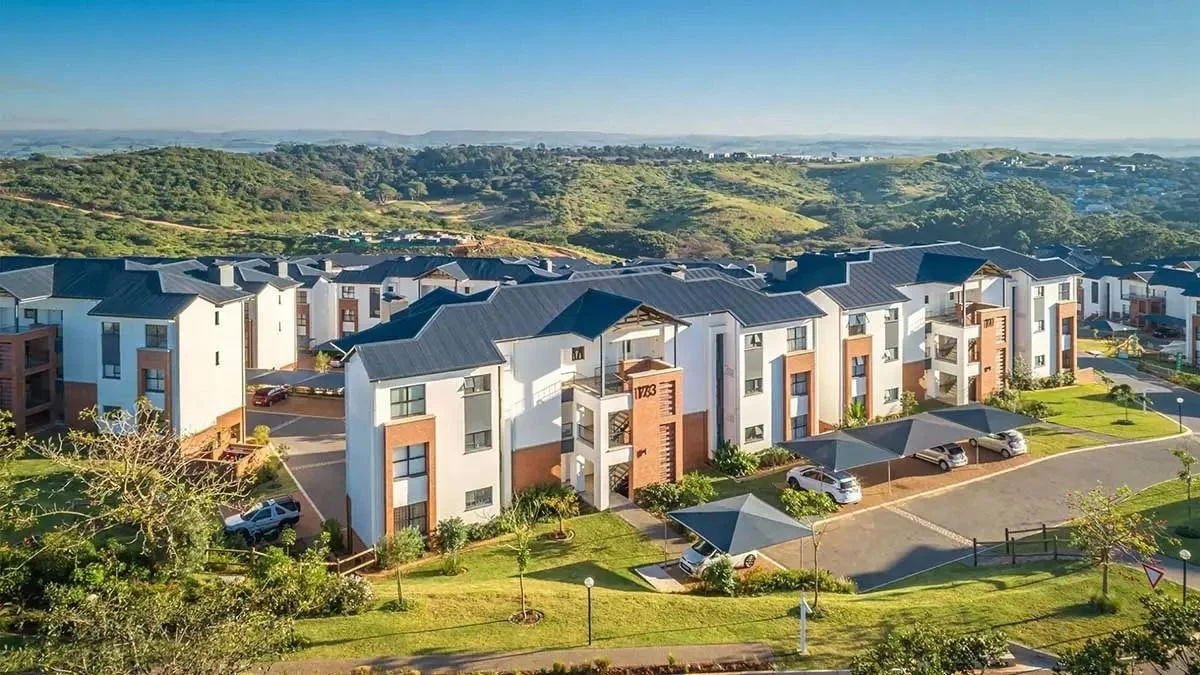
Quick answer: sectional title levies are monthly fees paid to your building’s body corporate, covering insurance, security, common-area maintenance, and the reserve fund. In Cape Town they typically run R2,000 to R6,000 a month in prime areas, with luxury Atlantic Seaboard schemes higher. Levies sit directly on the net yield line alongside municipal rates, and a special levy from a thin reserve fund can wipe out a year of rental profit overnight.
What sectional title levies are and why they matter
If you buy an apartment in Cape Town, you buy into two ongoing cost streams: municipal rates billed by the City of Cape Town, and body corporate levies billed by your building’s managing agent. Levies are the monthly fee every sectional title owner pays into the scheme’s operating account, and they are the cost line that most often surprises foreign buyers who have only modelled rates and mortgage payments.
Levies exist because sectional title ownership is shared ownership of a building. You own your unit outright, but the roof, lifts, passages, gardens, pools, and security systems belong collectively to all owners through the body corporate. Someone must fund their maintenance, insurance, and eventual replacement. That someone is you, through your monthly levy.
For investors, levies matter because they sit directly on the net yield line. Gross yield is annual rent divided by purchase price. Net yield subtracts every cost of being a landlord, and levies are often the second-largest drag after vacancy. A Sea Point apartment modeling 9.7% gross can lose 1.5 percentage points or more to levies and rates combined before management and maintenance are counted. In Camps Bay, premium levies are one reason modelled net collapses from 6.8% gross to about 4.4% net. The Cape Town Rental Yield Guide builds this stack suburb by suburb.
This guide covers what levies fund, how they are set, what special levies are, how they affect net yield in prime nodes, and what to check in body corporate financials before you offer. For the full pre-purchase checklist, pair this with the Due Diligence Cape Town Property guide.
What your levy pays for: the body corporate cost stack
- Building insurance on common property and the structure
- Security: guards, access control, CCTV, intercoms
- Common-area cleaning, gardening, and pool maintenance
- Lift servicing and compliance certificates
- Managing agent fees and audit costs
- Utilities for common areas: lifts, passages, parking lighting
- Minor repairs and reactive maintenance
| Levy component | What it covers | Typical share of levy |
|---|---|---|
| Building insurance | Common property and structure | 15% to 25% |
| Security | Guards, access, CCTV | 10% to 20% |
| Maintenance and cleaning | Gardens, pool, passages | 20% to 30% |
| Managing agent | Admin, collections, AGMs | 8% to 15% |
| Utilities (common) | Lift, lighting, water | 5% to 10% |
| Reserve fund contribution | Future major repairs | 10% to 25% |
How levies are calculated and increased
Levies are set annually at the body corporate’s annual general meeting, based on the approved budget for the coming year. Each owner’s share is calculated according to their participation quota, which is the percentage of total scheme value assigned to their unit in the sectional plan. In most residential blocks the participation quota tracks floor area, so a larger apartment pays a larger levy share.
The managing agent prepares a draft budget, the trustees review it, and owners vote at the AGM. If costs rise, levies rise. There is no City of Cape Town control over levies; each scheme sets its own. This means two buildings on the same street can levy very different amounts depending on age, condition, amenities, and reserve fund health.
| Factor | Effect on levy |
|---|---|
| Building age | Older buildings cost more to maintain |
| Amenities | Pool, gym, concierge add levy load |
| Lift | Servicing, compliance, eventual replacement |
| Reserve fund health | Thin fund means higher contributions or special levies |
| Arrears in the scheme | Other owners’ unpaid levies strain the budget |
| Insurance claims history | Past claims push premiums up |
Levies typically increase 5% to 10% a year in well-managed schemes, in line with insurance, security, and maintenance cost inflation. Poorly managed schemes can impose double-digit increases or special levies when deferred maintenance catches up. Always ask for the levy history over the last three years, not just the current figure.
Special levies: the cost that wipes out yield
A special levy is a one-off charge raised by the body corporate when the reserve fund cannot cover a major repair, and it is the single largest threat to a Cape Town net yield. Amounts run from about R15,000 per unit for a repaint to R200,000 or more for structural work in a large complex.
Special levies are the reason two apartments with identical rent can deliver very different returns. A body corporate raises one when the reserve fund cannot cover a major repair, and Cape Town’s older sectional title stock generates them steadily: roughly R15,000 to R40,000 per unit for a facade repaint, R50,000 to R120,000 for lift replacement, and R80,000 to R200,000 for a full building compliance upgrade. Against a modelled 7.5% net yield, a repaint takes out three to eight months of income and a lift replacement takes out eight to sixteen. The predictive signal sits in the audited financials rather than in the levy invoice: a reserve balance below three months of operating costs in a building over fifteen years old means a special levy is coming, whatever the trustees say at the viewing. Price it into your offer, or move to a scheme whose reserve fund has been funded properly.
Common triggers include:
- Lift replacement or major motor overhaul
- Facade waterproofing and painting
- Roof replacement or structural repairs
- Parking basement waterproofing
- Fire-compliance upgrades mandated by insurance
- Plumbing or electrical backbone replacement
Special levies are voted on at a general meeting and can be imposed even if a minority of owners dissent, subject to quorum and voting rules. Amounts vary enormously: R20,000 per unit for a facade repaint, R80,000 for lift replacement, R200,000 or more for major structural work in a large complex.
| Scenario | Typical special levy per unit | Impact on a 7.5% net yield |
|---|---|---|
| Facade repaint | R15,000 to R40,000 | Wipes 3 to 8 months of net income |
| Lift replacement | R50,000 to R120,000 | Wipes 8 to 16 months of net income |
| Parking deck repair | R30,000 to R80,000 | Wipes 5 to 11 months of net income |
| Full building compliance upgrade | R80,000 to R200,000 | Can exceed one year of net income |
The strongest predictor of a coming special levy is a thin or empty reserve fund combined with a building over fifteen years old. If the audited financials show a reserve balance below three months of operating costs, assume a special levy is coming and price it into your offer or walk away. This check belongs in every Due Diligence Cape Town Property review.
Levy levels by node: City Bowl and Atlantic Seaboard examples
Levy levels vary more by building than by suburb, but location and stock quality create recognizable bands. A City Bowl walk-up without a lift typically runs R2,000 to R3,000 a month, while a Camps Bay premium complex with pool and full security can run R5,000 to R8,000 or more before municipal rates are added. The table below sets out typical ranges for investor due diligence, not quotes for any specific block.
| Node / building type | Typical monthly levy | Typical monthly rates | Combined holding cost |
|---|---|---|---|
| City Bowl walk-up, no lift | R2,000 to R3,000 | R605 to R1,022 | R2,605 to R4,022 |
| City Bowl modern block | R3,000 to R4,500 | R744 to R1,301 | R3,744 to R5,801 |
| Sea Point one-bed, mid-range | R2,500 to R4,000 | R736 to R1,115 | R3,236 to R5,115 |
| Sea Point premium with pool | R4,000 to R6,000 | R837 to R1,393 | R4,837 to R7,393 |
| Green Point modern block | R3,500 to R5,000 | R790 to R1,208 | R4,290 to R6,208 |
| Camps Bay premium complex | R5,000 to R8,000+ | R1,301 to R2,692 | R6,301 to R10,692+ |
| Century City sectional title | R2,500 to R4,000 | R466 to R837 | R2,966 to R4,837 |
The City Bowl is the most common buying zone for foreign investors seeking walkable urban living with letting demand. For the investment case across the Bowl’s sub-neighbourhoods, read the City Bowl guide hub. City Bowl levies tend to be moderate on older walk-ups but climb sharply in renovated and new blocks with lifts and shared amenities.
On the Atlantic Seaboard, levy load is one reason Camps Bay models only 4.4% net despite 6.8% gross. Premium complexes with sea views, pools, and full security levy heavily, and those levies come off rent before you calculate net. Sea Point’s stronger 7.5% modelled net partly reflects lower levy loads on many mid-range blocks, though premium Sea Point schemes can match Camps Bay on monthly charges.
Need help modeling net yield after levies on a specific Cape Town block?
Get my yield breakdownHow levies compress net rental yield: worked examples
| Line | Amount |
|---|---|
| Monthly rent (long-let) | R32,300 |
| Annual rent | R387,600 |
| Gross yield | 9.7% |
| Less: vacancy at 8% | R31,008 |
| Less: levies at R3,500/month | R42,000 |
| Less: rates at R736/month | R8,832 |
| Less: insurance and maintenance | R18,000 |
| Net income before management | R287,760 |
| Net yield before management | 7.2% |
| Less: management at 10% | R38,760 |
| Net yield after management | ~6.2% |
| Line | Amount |
|---|---|
| Gross yield | 9.7% |
| Less: levies at R5,500/month | R66,000 |
| Net yield before management | ~5.8% |
| Net yield after management | ~5.2% |
| Line | Amount |
|---|---|
| Monthly rent (long-let) | R68,000 |
| Annual rent | R816,000 |
| Gross yield | 6.8% |
| Less: vacancy at 8% | R65,280 |
| Less: levies at R6,500/month | R78,000 |
| Less: rates at R2,800/month | R33,600 |
| Less: insurance and maintenance | R36,000 |
| Net income before management | R603,120 |
| Net yield before management | 5.0% |
| Less: management at 10% | R81,600 |
| Net yield after management | ~4.4% |
Sectional title vs freehold: the total holding cost comparison
Investors sometimes compare a sectional title apartment with a freehold house on price alone and miss the total holding cost picture. Freehold has no levy, but the owner carries every maintenance cost directly. Sectional title has a levy, but shared costs are pooled and building insurance on common property is included.
| Cost line | Sectional title | Freehold |
|---|---|---|
| Body corporate levy | R2,000 to R8,000/month | None |
| Municipal rates | On unit value | On whole property |
| Building insurance (structure) | In levy (common property) | Owner pays directly |
| Exterior maintenance | Body corporate | Owner pays directly |
| Special levies | Possible | N/A |
| Predictability | Budget set at AGM | Owner discretion |
| Due diligence focus | Body corporate financials | Building condition report |
Neither structure is inherently cheaper. A well-managed sectional title block with a healthy reserve fund can cost less to hold than a freehold house needing a new roof and boundary wall. A poorly managed block with a thin reserve fund can cost far more when the special levy lands. The due diligence is different, not easier.
What are the pros and cons of sectional title levies for investors?
Pros:
- Shared costs are pooled, so no single owner faces a full roof or lift bill alone, unless the reserve fund failed.
- Building insurance on common property is included in most levies.
- Professional managing agents handle collections, compliance, and AGM administration.
- Security and common-area maintenance are consistent, which supports tenant retention.
- Levy history is documented in audited financials, giving investors visibility before buying.
Cons:
- Levies rise with building age and amenity load, often faster than rent.
- Special levies can be imposed with limited individual control.
- You pay for amenities you may not use: pool, gym, concierge.
- Arrears from other owners can strain the scheme budget.
- Premium Seaboard levies compress net yield sharply on trophy stock.
What red flags should pause this Cape Town purchase?
Use this checklist before you offer on any sectional title unit in Cape Town. If the agent cannot produce these documents within a reasonable timeframe, slow down or walk away.
Insider tip: ask for the reserve fund balance as a percentage of the annual operating budget. A healthy scheme holds at least 25% to 50% of annual operating costs in reserve. Below that, a special levy is a matter of when, not if.
Red flags to verify:
- Reserve fund balance near zero or not disclosed.
- Special levy resolution pending in recent minutes.
- More than 15% of owners in levy arrears.
- Building insurance expired or underinsured.
- No audited financials for the last financial year.
- Managing agent changed more than once in two years.
- Deferred maintenance visible on inspection: peeling facade, broken lift, leaking parking deck.
- Body corporate involved in unresolved litigation.
For a structured pre-offer process covering title, compliance certificates, and levy review, follow the Due Diligence Cape Town Property guide step by step.
Who should worry most about levies: buyer scenarios
- Yield-focused investor in Sea Point: levy level is the difference between 7.5% and 5.2% modelled net on the same rent. Compare three buildings before you choose.
- Foreign buyer buying remotely: you cannot inspect common property easily. Insist on audited financials, photos of common areas, and the reserve fund balance in writing.
- City Bowl first purchase: older walk-ups levy less but may carry deferred maintenance. Newer blocks levy more but carry lower special-levy risk if the reserve is healthy.
- Camps Bay trophy buyer: accept high levies as part of the preservation trade-off. Model 4.4% net, not 6.8% gross, and confirm no pending special levy.
- Buy-to-let with short-term plans: confirm the body corporate rules allow short-term letting. Some schemes restrict or prohibit it, which kills the STR thesis entirely.
Frequently Asked Questions
Sectional title levies are monthly fees paid by each unit owner to the body corporate of their building or scheme. The levy covers shared costs: building insurance on common property, security, garden and pool maintenance, lift servicing, cleaning of common areas, and contributions to the reserve fund for future major repairs. Levies are separate from municipal rates, which the City of Cape Town bills directly to the owner.
Levies vary widely by building age, amenities, and location. Entry-level City Bowl and suburban blocks often charge R2,000 to R3,500 a month. Premium Atlantic Seaboard and City Bowl complexes with pools, concierges, and sea views commonly charge R3,500 to R6,000 a month. Luxury Camps Bay and Clifton schemes can exceed R8,000 a month. Always request the current levy schedule and the latest audited financials before you offer.
A special levy is a one-off extra charge the body corporate imposes on all owners to fund a major expense not covered by the reserve fund. Common triggers include lift replacement, facade waterproofing, parking deck repairs, and fire-compliance upgrades. Special levies can run from R20,000 to R200,000 per unit depending on the project. A thin or empty reserve fund is the strongest predictor that a special levy is coming.
Levies come directly off rental income before you calculate net yield. On a R4,000,000 Sea Point apartment modeling 9.7% gross, a R4,000 monthly levy plus R1,803 in rates can remove roughly 1.5 percentage points from net yield before vacancy and management. In Camps Bay, premium levies of R6,000 a month on a R12,000,000 unit are one reason modelled net collapses from 6.8% gross to about 4.4% net.
Request the latest audited financial statements, the reserve fund balance, the approved budget, minutes from the last twelve months, and any pending special levy resolutions. Check that the building insurance is current, that arrears are low, and that the reserve fund holds at least several months of operating costs. If the agent cannot produce these documents, treat it as a red flag and slow down.
Get a Cape Town property shortlist
Share your budget, target area (Atlantic Seaboard, City Bowl, Winelands), and goal. We reply within one business day with matched stock and next steps.