Cape Town Invest Free shortlist
Research guide

Bantry Bay Property Investment 2026: Prices, Yields, Data

Bantry Bay property investment guide: ultra-prime cliffside stock, ~6.5% gross and 4.5% net modeled yields, strong foreign demand, and no buyer surcharge.

By Cape Town Invest Editorial · Updated June 17, 2026 · 18 min read

Quick answer: Bantry Bay is one of Cape Town’s most exclusive cliffside addresses, an ultra-prime, low-density enclave on the Atlantic Seaboard prized for scarcity rather than income. It sits inside a strip and City Bowl market worth R11.3bn in 2025, up 26% year on year, where foreigners took roughly 25% of value and luxury sales above R20m surged 61% to R4.2bn. Prime stock trades within the R80,000 to R180,000 per square metre band and models around 6.5% gross and 4.5% net. Bantry Bay rewards capital preservation, currency diversification, and liquid resale over headline cash flow. Yields are MODELED and directional.

Cape Town Invest lens on Bantry Bay

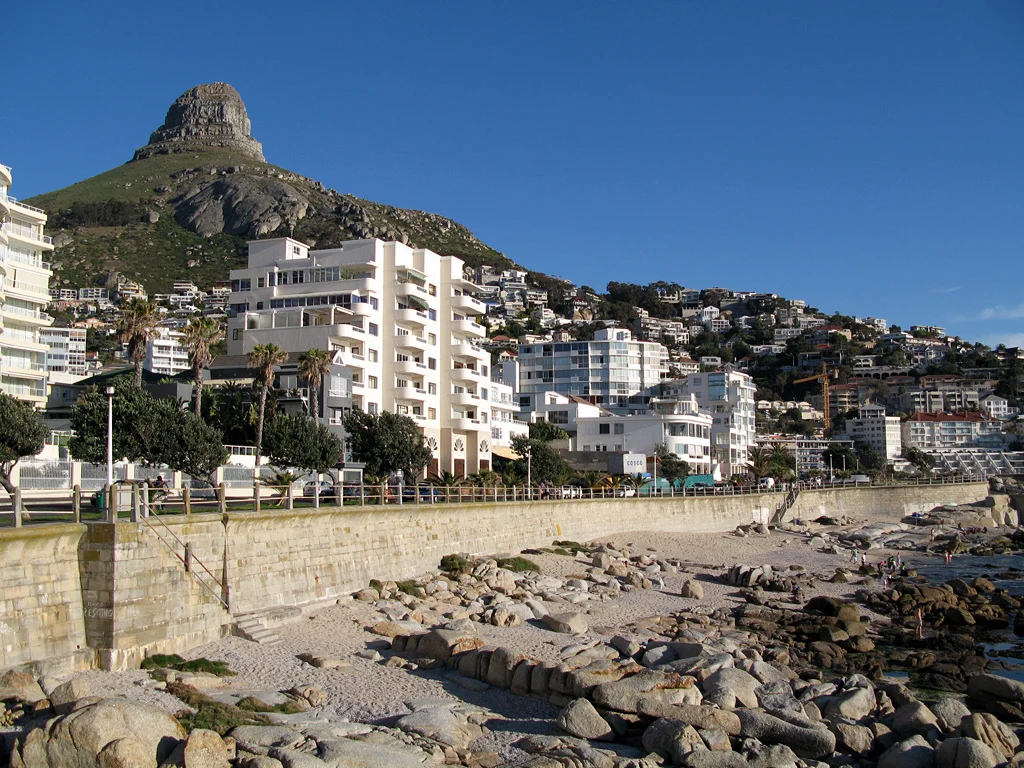
Bantry Bay is the quiet, ultra-prime neighbour to Camps Bay and Sea Point, and it earns its premium through scarcity and shelter rather than beachfront footfall. The suburb clings to the lower slopes of Lion’s Head, a narrow ribbon of cliffside apartments and a handful of trophy villas terraced above the Atlantic. There is almost no commercial frontage and very little developable land, so the supply of well-positioned, view-rich stock is among the tightest on the entire Atlantic Seaboard. That structural scarcity is the foundation of the investment case.

Read this page as the suburb-level companion to the broader Atlantic Seaboard Property Investment Guide. That parent guide frames the whole prestige strip, the combined R11.3bn in Atlantic Seaboard and City Bowl sales, up 26% year on year, the roughly 25% foreign share of value, and the 61% surge in luxury sales above R20m to R4.2bn. This page zooms into Bantry Bay specifically: how it behaves as an investment, what it actually yields once you model net rather than gross, and why it ranks among the most defensive addresses in the country.

The core thesis is straightforward. Bantry Bay is an ultra-prime capital-preservation asset. Prime stock models around 6.5% gross but only about 4.5% net, because entry prices run at multiples of the Cape Town median while levies, municipal rates, maintenance, and letting commission compress income. You are not buying Bantry Bay for monthly cash flow. You are buying scarcity, a globally recognised address, currency diversification, and the resale liquidity that a deep, surcharge-free foreign demand base provides.


Bantry Bay in numbers, 2025

Before evaluating any single block, anchor yourself in the suburb and strip data. The table frames where Bantry Bay sits within the prime coastal market.

Metric2025 figureWhat it signals
Atlantic Seaboard + City Bowl salesR11.3bn, up 26%Premium market in strong expansion
Luxury sales above R20m (strip)R4.2bn, up 61%Trophy bracket surging
Foreign share of value~25%Deep international demand
Prime price per square metre~R80,000 to R180,000Trades toward the upper end
Gross yield (MODELED)~6.5%Modest headline before costs
Net yield (MODELED)~4.5%Compressed by entry price and levies
Density profileAmong the lowest on the stripScarcity-led value
Foreign buyer surchargeNoneVersus UK 2% and Singapore 60%
Wind exposureSheltered from south-easterYear-round lifestyle premium

Bantry Bay sits inside a strip-wide market that grew 26% to R11.3bn in combined Atlantic Seaboard and City Bowl value, with luxury transactions above R20m surging 61% to R4.2bn. That context matters: Bantry Bay is not trading on reputation in a stagnant market. It is part of a prime coastal strip in confident expansion, where the very top end, exactly the bracket Bantry Bay competes in, is accelerating faster than the broader city.

The gap between the modeled 6.5% gross and 4.5% net is the most important number on this page. It is structural, not a one-off. High entry prices relative to achievable rent, combined with sectional title levies, municipal rates, and maintenance, drag net well below gross. Any listing quoting only the 6.5% gross is selling you roughly 4.5% net once the real cost stack is modeled. That 4.5% net sits marginally above the modeled 4.4% net on neighbouring Camps Bay, which reflects Bantry Bay’s slightly more residential, less tourism-dependent rental base.


Why Bantry Bay is a preservation play, not an income engine

Bantry Bay’s investment character is capital growth and preservation, and the yield math explains why. Listings quote gross yield, annual rent divided by purchase price. Serious underwriting uses net yield, after sectional title levies, municipal rates, maintenance, letting commission, vacancy, and insurance. On prime Bantry Bay stock that spread runs from a modeled 6.5% gross down to about 4.5% net.

That is not a flaw in the market. It is the defining feature of an ultra-prime enclave. You are paying for scarcity, a sheltered cliffside position with uninterrupted Atlantic views, and resale liquidity, and accepting compressed net yield in exchange. The return arrives mostly as capital growth, currency diversification for foreign buyers, and the confidence that surcharge-free foreign demand keeps the top of this market liquid through cycles.

If your hurdle rate demands real net income near 7%, Bantry Bay is not the right Atlantic Seaboard suburb for you, and the parent guide points yield-focused buyers toward Sea Point and Green Point instead. But if your goal is a tangible, internationally desirable wealth store that holds value through cycles and resells readily, Bantry Bay is among the most defensive lifestyle addresses on the African continent.


Yield reality: gross vs net

The table shows the two modeled benchmarks that frame Bantry Bay underwriting. Treat them as directional, not guaranteed.

StrategyMetricMODELED figure
Long-letGross yield~6.5%
Long-letNet yield~4.5%
ComparisonCamps Bay net (MODELED)~4.4%

A modeled 6.5% gross looks reasonable until levies, municipal rates, and the high entry price drag net to around 4.5%. Bantry Bay’s rental base leans more residential than tourism-driven, so its long-let demand from professionals, executives, and relocating families is steadier than a pure short-let beachfront play, though headline yield stays thin. The marginal advantage over Camps Bay’s modeled 4.4% net is real but small, and should not be the deciding factor between the two suburbs.

Every figure here is MODELED and directional. Net yield in particular is sensitive to the specific block’s levy and rates, vacancy assumptions, and whether you let long-term or short-term. Rebuild the model with current rents and the actual sectional title costs before you offer. For full modelling by area and unit type, see the Cape Town Rental Yield Guide.


Why Bantry Bay commands its premium

Bantry Bay’s pricing rests on structural forces, not sentiment. Scarcity is the foundation. The suburb is a narrow strip pinned between Lion’s Head and the Atlantic, so new supply of well-located, view-rich stock is physically constrained to a degree that exceeds even Camps Bay. When a fixed pool of cliffside assets meets growing domestic and international demand, prices express that pressure through value rather than volume, which is why prime psqm reaches toward the top of the R80,000 to R180,000 band.

Shelter is the second engine, and it is specific to Bantry Bay. The suburb’s south-westerly aspect against Lion’s Head shields it from Cape Town’s notorious south-easter wind, the same wind that can make summer days uncomfortable elsewhere on the peninsula. That microclimate gives Bantry Bay a year-round lifestyle premium that buyers pay for directly. Combined with its low density and minimal commercial frontage, it trades as a calm, residential, ultra-prime enclave rather than a busy destination.

Foreign demand is the third engine. Non-residents took roughly 25% of Atlantic Seaboard value in 2025, with Germany, the United Kingdom, and the Netherlands leading. This demand arrives with no surcharge to deter it and often a favourable rand exchange rate, so currency-strong buyers treat Bantry Bay as both a lifestyle purchase and a rand-denominated growth play. The strip-wide 61% surge in luxury sales above R20m, to R4.2bn, is the quantified expression of that appetite at the very top, exactly where Bantry Bay sits. Domestic semigration from inland provinces adds a further layer of competition for the limited stock.


Foreign buyers in Bantry Bay

For international investors, Bantry Bay offers a rare combination: one of South Africa’s most exclusive cliffside addresses with no entry penalty. South Africa imposes no foreign buyer surcharge, no additional acquisition tax, and no stamp-duty premium on non-residents. Foreigners pay the same transfer duty scale as locals. Compare that with the United Kingdom’s 2% non-resident SDLT surcharge or Singapore’s 60% Additional Buyer’s Stamp Duty, and the structural advantage is stark, especially at Bantry Bay’s price points where a percentage surcharge would translate into millions.

Foreigners can buy freehold and sectional title property in their own name at the Deeds Office, with no residency requirement. The main practical considerations are financing and currency. Non-residents typically face tighter loan-to-value limits from South African banks, often financing around half the purchase price locally and bringing the balance from offshore. That offshore capital must be properly recorded so both capital and future gains repatriate cleanly at exit, which matters most on a high-value Bantry Bay purchase.

The full foreigner process, including financing and exchange-control recording, is covered in Buy Cape Town Property as a Foreigner. Read it before you make an offer, because the foreigner-specific steps are best handled at the start, not at exit.


Pros and cons of investing in Bantry Bay

No suburb fits every investor. The table weighs Bantry Bay honestly against an investor lens.

ProsCons
Ultra-prime, low-density cliffside scarcityNet yield compressed to ~4.5% MODELED
Sheltered from the south-easter, year-round lifestyleEntry prices at multiples of city median
Globally recognised address with deep resale liquidityHigh levies and rates erode income
No foreign buyer surcharge for non-residentsLimited stock means fewer entry opportunities
Steady residential long-let demand basePer-square-metre prices toward strip top end
Currency diversification via rand-denominated assetNot suitable for income-first hurdle rates

The pros cluster around scarcity, shelter, brand, liquidity, and the structural no-surcharge advantage for foreigners. The cons cluster around the income trade-off: if you need real net cash flow, Bantry Bay’s modeled 4.5% net will disappoint, and a different Atlantic Seaboard suburb such as Sea Point fits better. Match the suburb to the goal rather than forcing the deal.


Bantry Bay vs Camps Bay

Buyers shortlisting Bantry Bay almost always weigh it against Camps Bay, its higher-profile beachfront neighbour. The two are close in price and both pay no foreign surcharge, but they behave differently as investments. Camps Bay is a beachfront destination with deep tourism demand, strong summer short-let peaks, and roughly 64% modeled short-let occupancy, which makes it the stronger short-let income play. Bantry Bay is quieter, lower density, more residential, and more sheltered, which makes it the stronger pure capital-preservation enclave.

On the numbers, the suburbs are close. Camps Bay models around 6.8% gross and 4.4% net; Bantry Bay around 6.5% gross and 4.5% net. The slight net edge to Bantry Bay reflects its steadier residential rental base, while Camps Bay’s headline short-let upside reflects its tourism depth. Neither difference is large enough to decide the question alone. The real choice is lifestyle and strategy: Camps Bay for beachfront energy and short-let optionality, Bantry Bay for sheltered calm, lower density, and quiet exclusivity. The Atlantic Seaboard Property Investment Guide frames how both fit within the wider strip.


Due diligence checklist before you offer

Bantry Bay is liquid and transparent, but ultra-prime entry prices mean mistakes cost more in absolute terms. Run this checklist before any Offer to Purchase.

  1. Verify recent transacted prices for the specific block and comparable stock, not asking prices
  2. Confirm freehold or sectional title, and read the full levy history
  3. Pull municipal rates and any outstanding municipal accounts
  4. For sectional title, request body corporate financials and any special levies
  5. Model net yield with current rents, levies, rates, vacancy, and insurance, not the headline 6.5% gross
  6. Confirm transfer duty and total acquisition costs with a conveyancer in writing
  7. For foreigners, plan the local-versus-offshore funding mix and record offshore capital
  8. Confirm the view line and aspect, since cliffside position drives both price and resale
  9. Confirm Bantry Bay matches your goal: preservation and growth, not income near 7% net
  10. Engage your conveyancing attorney before signing, not after

For the full foreigner buying sequence with timelines and documents, see Buy Cape Town Property as a Foreigner.


Red flags on Bantry Bay stock

Yield quoted on gross only. A Bantry Bay listing advertising 6.5% gross is selling you about 4.5% net once levies, rates, and the real entry price are modeled. Always rebuild on net before you anchor on a number.

Special levies hidden in body corporate minutes. Ultra-prime cliffside blocks with deferred maintenance, structural waterproofing, or façade work can hit owners with special levies that erase a year of net income. Read the financials, not just the headline levy.

View line assumed rather than verified. On a cliffside suburb, the difference between a front-line uninterrupted Atlantic view and a partially obstructed one is enormous for both price and resale. Confirm the exact aspect and what future development could block it.

Trophy pricing assumed to grow linearly. The strip-wide 26% growth and 61% surge above R20m are real, but they do not apply evenly. A poorly positioned unit without a clear sea view can lag the headline while front-line cliffside stock leads.

Offshore funds brought in without recording. Foreigners who fail to document offshore capital at entry create repatriation problems at exit. Get the paperwork right from day one on a high-value Bantry Bay purchase.


2026 outlook for Bantry Bay

The data points to an enclave that remains among the most defensive addresses in a prime strip in confident expansion. Bantry Bay sits inside an Atlantic Seaboard and City Bowl market worth R11.3bn, up 26%, with luxury transactions above R20m surging 61% to R4.2bn, the exact bracket where Bantry Bay competes. Foreign buyers taking roughly 25% of value, with no surcharge to deter them, provides a durable demand engine alongside domestic semigration money, and the suburb’s structural scarcity and wind shelter sustain its premium.

The winning approach is goal discipline over market timing. Bantry Bay is for capital preservation, scarcity-led growth, and a sheltered ultra-prime lifestyle, not for income. Buyers who need real net yield near 7% belong in Sea Point or Green Point, as the parent guide explains. Buyers who want a globally recognised, liquid, rand-denominated wealth store with currency diversification and minimal density will find Bantry Bay among the most defensive addresses available. Underwrite on net, not gross, and match the suburb to the goal. For the strip-wide context that frames these decisions, return to the Atlantic Seaboard Property Investment Guide.


TopicGuide
Prime strip overviewAtlantic Seaboard Property Investment Guide
Rental yield by areaCape Town Rental Yield Guide
Beachfront neighbourCamps Bay Property Investment
Income-focused alternativeSea Point Property Investment

Figures cite South African and Atlantic Seaboard market data for 2025 where noted, including combined Atlantic Seaboard and City Bowl sales value, foreign share, and luxury sales above R20m. Price benchmarks and per-square-metre figures are indicative, and rental yields are MODELED and directional, not guaranteed. This guide is for information only and does not constitute investment, tax, or legal advice. Verify current transfer duty, costs, and rules with qualified South African professionals before purchase.


Closing verification checklist

Before you treat any Bantry Bay purchase as investment-ready, confirm:

  • Transacted comparables verified for the specific block, not asking prices
  • Goal matched to suburb: Bantry Bay for preservation and growth, Sea Point for income
  • Net yield rebuilt with current rents, levies, rates, vacancy, and insurance, not the 6.5% gross
  • Transfer duty and total acquisition costs confirmed in writing, no foreign surcharge applies
  • View line and aspect confirmed, since cliffside position drives price and resale
  • Foreign funding mix planned and offshore capital recorded for repatriation
  • Body corporate financials and special-levy risk reviewed for sectional title
  • Per-square-metre price checked against the roughly R80,000 to R180,000 prime band
  • Related guides read for strip context, yield math, and neighbouring-suburb comparison

This checklist does not replace professional advice. It prevents the predictable modelling errors that turn a strong Bantry Bay thesis into a disappointing purchase.

Buyer scenarios for bantry bay property investment

Cash buyer (foreign, no SA mortgage): Prioritise clear title, FICA pack, and exchange-control proof for offshore transfers. Budget 8 to 12% on top of price for transfer duty, conveyancing, and bond cancellation if applicable.

Yield-focused investor: Model net yield after levies, rates, management, and 4 to 8 weeks vacancy — not gross Airbnb screenshots. Sea Point and City Bowl often model stronger net returns than Atlantic Seaboard prime on entry price.

Lifestyle and semigration buyer: Weight fibre quality, backup power, schools, and security over brochure gross yield. Compare sectional title levies against freehold maintenance before you offer.

Apply this decision framework to bantry bay property investment before you sign an offer to purchase.

Frequently Asked Questions

Bantry Bay is an ultra-prime capital-preservation play, not an income engine. It is one of the lowest-density, most sought-after addresses on Cape Town's Atlantic Seaboard, where the wider strip and City Bowl market reached R11.3bn in 2025, up 26% year on year, with foreigners taking roughly 25% of value. Bantry Bay stock models around 6.5% gross and 4.5% net, so the return arrives mainly as scarcity-led growth, resale liquidity, and currency diversification, not monthly cash flow. Figures are MODELED and directional.

Bantry Bay models around 6.5% gross and 4.5% net on prime stock. The gap is structural: entry prices run at multiples of the Cape Town median while levies, municipal rates, maintenance, and letting commission erode income. Net at roughly 4.5% sits marginally above neighbouring Camps Bay's modeled 4.4%, but Bantry Bay remains a preservation rather than income strategy. All yields are MODELED.

Prime Bantry Bay stock sits within the wider Atlantic Seaboard band of roughly R80,000 to R180,000 per square metre, trading toward the upper end because cliffside position, sea views, and low density command a premium. Front-line view apartments and the rare freehold villa price at the very top. Verify current transacted prices for the specific block before offering, because per-square-metre figures vary widely by view line and building.

Yes. Foreigners can buy freehold and sectional title property in Bantry Bay with very few restrictions and no foreign buyer surcharge, unlike the UK's 2% non-resident SDLT or Singapore's 60% ABSD. Foreigners took roughly 25% of Atlantic Seaboard value in 2025, with Germany, the United Kingdom, and the Netherlands among the leading source markets. Non-residents typically finance about half locally and bring the balance from offshore, recorded for clean repatriation.

Bantry Bay is smaller, lower density, and more sheltered than Camps Bay. It is tucked against Lion's Head with a south-westerly aspect that shields it from the south-easter wind, and it has almost no commercial frontage, so it trades as a quiet, residential, ultra-prime enclave rather than a beachfront destination. That scarcity supports capital preservation, while Camps Bay offers deeper tourism-driven short-let demand. Both pay no foreign buyer surcharge and both are preservation plays at modeled net yields near 4.5%.

Free · Independent advisory

Get a Cape Town property shortlist

Share your budget, target area (Atlantic Seaboard, City Bowl, Winelands), and goal. We reply within one business day with matched stock and next steps.