
Atlantic Seaboard, Cape Town: Property by Suburb 2026
Every Atlantic Seaboard suburb from Mouille Point to Llandudno: prime rand per square metre, modelled net yield from 7.5% to 3.5%, and R11.3bn traded in 2025.
By Cape Town Invest Editorial · Updated August 27, 2026 · 13 min read
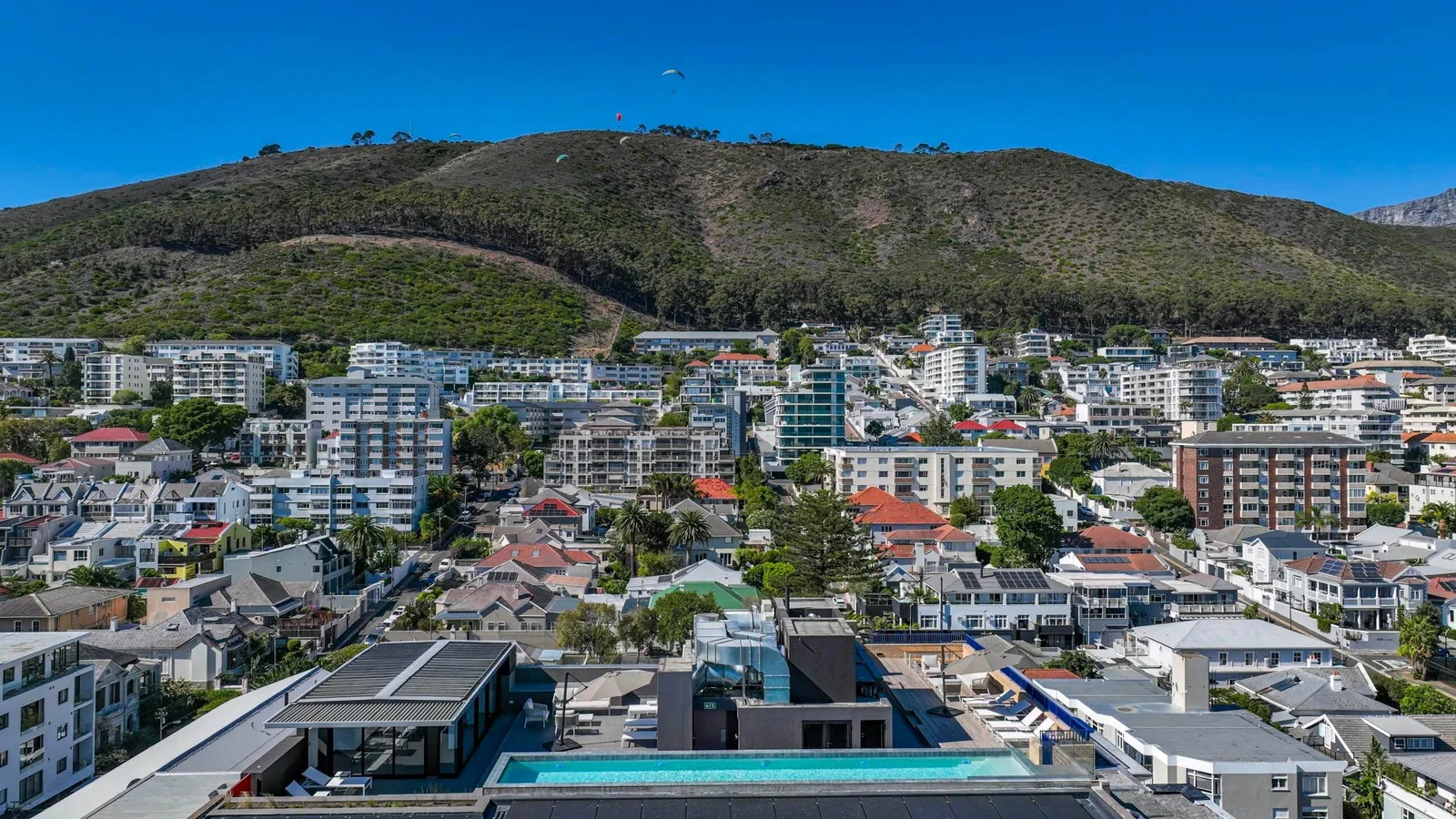
Quick answer: the Atlantic Seaboard is eight distinct micro-markets sharing one coastline, and they rank consistently on a single axis. Net yield falls from about 7.5% in Sea Point to about 3.5% in Llandudno, entirely because the ratio of price to achievable rent worsens as you move up the prestige ladder. The strip and the City Bowl traded R11.3bn in 2025, up 26%, with foreign buyers taking R2.8bn of it.
What did the Atlantic Seaboard actually trade in 2025?
The strip closed 2025 at a record, and the shape of the growth matters more than the headline. Combined Atlantic Seaboard and City Bowl turnover reached R11.3bn, up 26% from R8.9bn in 2024, but the top bracket ran far ahead of the rest.
| Metric | 2025 figure | What it signals |
|---|---|---|
| Combined strip and City Bowl turnover | R11.3bn, up 26% | Expansion, not a plateau |
| Above R20 million | R4.2bn across 116 sales, up 61% | The trophy bracket is accelerating |
| Sales above R50 million | 16, of which two above R100 million | A genuine ultra-prime ceiling |
| Foreign share of value | R2.8bn, about 25% | Germany, the UK and Northern Europe |
| Camps Bay prime sales | 29 transactions | Deepest liquidity on the strip |
| Bantry Bay and Fresnaye prime sales | 17 each | Concentrated, sufficient turnover |
| Prime price per square metre | R80,000 to R200,000+ | Wide band by suburb and view line |
Two readings follow, and our analysis of the strip weights the second more heavily. The first is obvious: a market growing 26% in value while its top bracket grows 61% is one where scarce assets are being competed for rather than accumulated slowly. The second is about exit rather than entry. Transaction counts, not price records, decide whether a trophy asset can be sold when its owner needs to sell, and 116 clearances above R20 million in a single year is what separates the Atlantic Seaboard from prestige coastal markets that trade a dozen times a year and take eighteen months to exit.
How do the eight suburbs rank on yield, and why?
Yield across the strip falls in a straight line from Sea Point to Llandudno, and the cause is arithmetic rather than desirability. Rent tracks what a tenant can pay; price tracks what a buyer will pay for scarcity. Where those two diverge most, net yield is lowest, which is why the most desirable addresses produce the weakest cash return.
| Rung | Suburb | Net yield (modelled) | Why it sits here |
|---|---|---|---|
| 1 | Sea Point | ~7.5% | Highest density, entry prices closest to achievable rent |
| 2 | Green Point | mid range | Urban amenity and professional tenant depth |
| 3 | Camps Bay | ~4.4% | Beachfront premium multiplies price, not rent |
| 4 | Hout Bay | ~4% | Lower entry price offset by thinner rental demand |
| 5 | Clifton | below 4% | Extreme scarcity, among the highest psqm in South Africa |
| 6 | Bantry Bay | below 4% | Wind-sheltered premium, top of the psqm band |
| 7 | Fresnaye | below 4% | Elevated views, freehold stock, thin rental market |
| 8 | Llandudno | ~3.5% | Under 200 homes, no commercial strip, no rental depth |
The ladder is stable through cycles, which is its practical value. A buyer who wants income does not need to compare eight suburbs; they need to compare the first two against the City Bowl and the northern suburbs. A buyer who wants a store of value can ignore the yield column entirely and read the transaction counts in the section above instead. Every figure here is modelled from platform and listing bands rather than audited accounts, and the gross versus net guide shows the working.
What separates the suburbs beyond price?
Character differences on the strip are sharper than the price bands suggest, and they decide who a property can be let to and how quickly it resells. Each suburb below carries one attribute that no neighbour reproduces.
- Sea Point: the only genuinely dense node, with a promenade, walkable retail and a rental market that clears year-round rather than seasonally. Detail in the Sea Point area guide.
- Green Point: stadium precinct, urban park and V&A adjacency, which produces professional and expatriate tenants on twelve-month leases.
- Camps Bay: the international brand name, a beachfront that fills in December and empties in July, and the strip’s deepest resale market.
- Clifton: four beaches, no through-traffic on the beach side, and stock so scarce that per-square-metre pricing sits at the national ceiling.
- Bantry Bay: shelter from the south-easter, which is a real and priced attribute on a coast where wind decides how usable a terrace is.
- Fresnaye: elevated, freehold, residential and quiet, with roughly seventeen prime sales a year, so comparables are scarce.
- Hout Bay: a working harbour, a village centre and three mountain passes, one of which closes in bad weather.
- Llandudno: under 200 freehold homes, one west-facing beach and no commercial strip at all.
Per-square-metre pricing separates them more sharply than the yield ladder does, because it prices the view line rather than the rent.
| Suburb | Indicative sectional psqm | What the band is paying for | Suburb page |
|---|---|---|---|
| Sea Point | R80,000 to R120,000 | Density and walkability, not the view | Sea Point |
| Green Point | R75,000 to R110,000 | Amenity and V&A proximity | Green Point |
| Hout Bay | R55,000 to R90,000 | Village character, valley setting | Hout Bay |
| Camps Bay | R100,000 to R180,000 | Beachfront address and brand recognition | Camps Bay |
| Fresnaye | R90,000 to R150,000 | Elevation and freehold privacy | Fresnaye |
| Bantry Bay | R110,000 to R180,000 | Wind shelter and uninterrupted sea line | Bantry Bay |
| Clifton | R120,000 to R200,000+ | Absolute scarcity of view-line stock | Clifton |
| Llandudno | R90,000 to R200,000+ | Enclave privacy, under 200 homes | Llandudno |
Three smaller addresses sit inside the same coastline and are usually marketed as part of one of the eight above. Mouille Point is the flat strip below Green Point, where the promenade starts and the stock is almost entirely apartments. Three Anchor Bay is the pocket between Green Point and Sea Point, priced closer to Sea Point than its address suggests. Bakoven is the last cluster past Camps Bay before the Twelve Apostles, small enough that a single sale moves the recorded average. Treat all three as sub-markets of their neighbour rather than as separate suburbs when you compare prices.
Bands overlap deliberately, because within one suburb a front-line unit and a back unit on the same street trade at different multiples. Our analysis of strip listings puts the spread inside a single suburb at wider than the gap between two adjacent suburbs, which is why a suburb-level average tells a buyer almost nothing about the unit in front of them.
Insider tip: on this coast, ask which way a property faces and what shelters it before you ask its price. A Bantry Bay terrace usable in November and a Camps Bay terrace unusable in the same south-easter differ by a wind line that appears on no listing and in no valuation, and it moves both rent and resale.
Why is the gross-to-net gap so wide here?
The gap between quoted gross yield and money that reaches an account is wider on the Atlantic Seaboard than anywhere else in Cape Town, and it widens as you climb the ladder. Costs scale with the property while rent scales with the tenant’s budget, so a doubled purchase price rarely buys doubled rent.
| Cost line | Behaviour on the strip |
|---|---|
| Sectional title levy | Scales with unit size and building age, heaviest in 1960s cliff blocks |
| Municipal rates | Scales with the City’s valuation, so prime stock carries it hardest |
| Maintenance | Coastal salt exposure raises the baseline against inland suburbs |
| Letting commission and vacancy | Fixed as a share of rent, so it bites hardest where rent is weakest |
A worked example makes the compression concrete. A Sea Point one-bedroom modelling 9.7% gross loses about 2.2 percentage points to levies, rates, maintenance, commission and vacancy, landing near 7.5% net. Prime Camps Bay stock modelling 6.8% gross loses about 2.4 points from a much lower base and lands near 4.4%, so the same cost stack removes a third of the return rather than a fifth. That is the whole argument against underwriting a trophy purchase on a gross number, and it is why the ladder in the previous section is stated net. Rebuild it with the specific block’s levy schedule before offering, because a single cliff-block special levy can move a year’s net yield to zero.
What sustains the premium?
The strip’s pricing rests on three forces that have widened its gap with the rest of South Africa for more than a decade, and none of the three has reversed. Physical supply is fixed between the Twelve Apostles and the ocean, so demand converts into price rather than into new stock.
- Constrained supply. There is no land bank behind Clifton or Bantry Bay. New supply arrives only as redevelopment of existing sites, one building at a time.
- Foreign demand at a quarter of value. R2.8bn of 2025 turnover came from abroad, concentrated in Germany, the United Kingdom and Northern Europe, and it competes for the same fixed pool.
- Semigration from the interior. High-income households continue moving from Gauteng to the coast, a flow the semigration guide covers in detail.
Cape Town Invest treats the first force as the durable one. Foreign demand and semigration are flows that can slow with currency or politics, while a mountain range does not move. That distinction matters for a ten-year hold: the scarcity argument survives a bad two years, and the demand argument does not necessarily.
Does short-letting change the arithmetic?
Nightly letting lifts gross revenue on the strip and does not lift net as much as owners expect, because it converts a passive asset into an operating business. Peak-season rates on prime Camps Bay stock can reach R4,500 a night, but the annual average is what pays the bond.
The three things that decide whether it works:
- Seasonality. December to February carries the bulk of the year’s revenue on this coast, and the shoulder months determine whether the average holds.
- Operating cost. Cleaning, linen, platform commission and management run well above long-let costs, and they scale with occupancy rather than with rent.
- Permission. Municipal rules and the body corporate’s conduct rules both apply, and the second can prohibit what the first allows.
A worked example shows how thin the margin can be. A Camps Bay two-bedroom clearing R4,500 a night through December and January, R2,600 through the shoulder and standing empty for much of the winter models roughly R700,000 of gross revenue across a year, against a long let at R38,000 a month producing R456,000 with no cleaning, no linen, no platform commission and no calendar to manage. The nightly route wins on paper by about R244,000, and then gives back cleaning and linen at roughly R450 per changeover, platform commission near 15%, management at 20% of collected revenue where an agent runs it, and the vacancy that peak-season pricing conceals. What remains is a business rather than an investment, and it is a good business only for owners who either run it themselves or buy stock that clears both tests.
The permission point is where deals fail rather than where they underperform. A body corporate can restrict or ban nightly letting by special resolution at a 75% threshold under the STSMA, and it binds owners who bought before the vote. Check the conduct rules and the last two years of general meeting minutes before you model a single night, which the body corporate rules guide covers in full.
What is the outlook for 2026?
The strip enters 2026 with momentum in its top bracket and a supply pipeline that cannot answer it. The 61% growth in above-R20 million turnover happened while no material new trophy stock came to market, which is the condition under which prices rise rather than volumes.
Two things would change the picture, and they pull in opposite directions. A firmer rand improves the return for local sellers and weakens the entry discount that has drawn foreign buyers, at a moment when a quarter of strip value is foreign money. Tighter short-term letting regulation, now moving through a draft City by-law, would compress the revenue case for the nightly-let stock concentrated in Camps Bay and Sea Point without touching the trophy suburbs at all. A third factor sits underneath both: interest rates. Prime at 10.5% sets the opportunity cost every cash buyer on this strip is measuring against, and a cut moves the trophy bracket faster than the income bracket, because trophy buyers are more often deciding between assets than between financing options.
Cape Town Invest underwrites the strip on the long-let fallback for that reason: a Camps Bay apartment that only works as a nightly let is exposed to a regulatory decision it cannot influence, while one that clears a sensible long-let rent is exposed only to the market. The City Bowl guide covers the adjacent market, and the pillar investment guide covers what the purchase itself costs a foreign buyer.
Sources: Cape Region Atlantic Seaboard and City Bowl sales report for 2025, as reported by Cape Town Etc and The Citizen in December 2025, for turnover, bracket growth, transaction counts and foreign share; Sectional Titles Schemes Management Act 8 of 2011 for the special resolution threshold; City of Cape Town draft short-term letting by-law, August 2026. Yields are modelled from listing and platform bands, not audited accounts, and are directional. Verify levies, rates and achievable rent for the specific block before offering. Current as at 27 August 2026.
Frequently Asked Questions
The Atlantic Seaboard and City Bowl together turned over R11.3bn in 2025, a record, up 26% from R8.9bn in 2024. The above-R20 million bracket grew fastest: R4.2bn across 116 transactions, up 61% from R2.66bn, including 16 sales above R50 million and two above R100 million. Foreign buyers accounted for R2.8bn, about 25% of value, led by Germany, the United Kingdom and Northern Europe.
Sea Point, by a wide margin. A one-bedroom Sea Point apartment models around 9.7% gross and 7.5% net, because entry prices sit closest to achievable rents. Yield then falls consistently as you move up the prestige ladder: Camps Bay models near 4.4% net, Clifton, Bantry Bay and Fresnaye sit at or below that, and Llandudno models near 3.5%. The ranking is structural, driven by the ratio of price to rent rather than by rental demand.
Because the cost stack scales with the property while rent scales with the tenant's budget. Sectional title levies on a prime block, municipal rates on a high valuation, maintenance on coastal exposure, letting commission and vacancy together absorb two to three percentage points of gross on entry-level strip stock and more at the top. The gap widens as you move up the ladder: Sea Point loses about 2.2 points from gross to net, Camps Bay about 2.4 from a much lower base.
It depends what you are buying. For capital preservation and resale liquidity the strip is defensible: supply is physically fixed between the Twelve Apostles and the ocean, foreign demand took 25% of value in 2025, and the top bracket grew 61% in a year. For monthly income it is not: only Sea Point and Green Point produce net yields that compete with the City Bowl or the northern suburbs.
Liquid by trophy-market standards. Camps Bay recorded 29 prime sales in 2025, with Bantry Bay and Fresnaye at 17 each, and the strip's R20 million-plus bracket alone cleared 116 transactions. That matters on exit: a trophy market with too few annual sales becomes hard to leave, and the Atlantic Seaboard avoids that because foreign and semigration demand keep turnover healthy even at high price points.
Sea Point for income, Green Point for a balance of income and tenant depth, Hout Bay for entry price. All three let a first-time buyer learn the market at a price point where a mistake is recoverable. The trophy suburbs, Clifton, Bantry Bay, Fresnaye and Llandudno, reward buyers who already know what they want, because their return arrives as capital value and resale liquidity rather than monthly cash.
Get a Cape Town property shortlist
Share your budget, target area (Atlantic Seaboard, City Bowl, Winelands), and goal. We reply within one business day with matched stock and next steps.