
De Waterkant Property: Prices and Yields 2026
De Waterkant is a heritage pocket between Green Point and the CBD where the tourism premium is priced in. A modelled 7.8% gross, and what the cobbles cost.
By Cape Town Invest Editorial · Updated September 7, 2026 · 12 min read
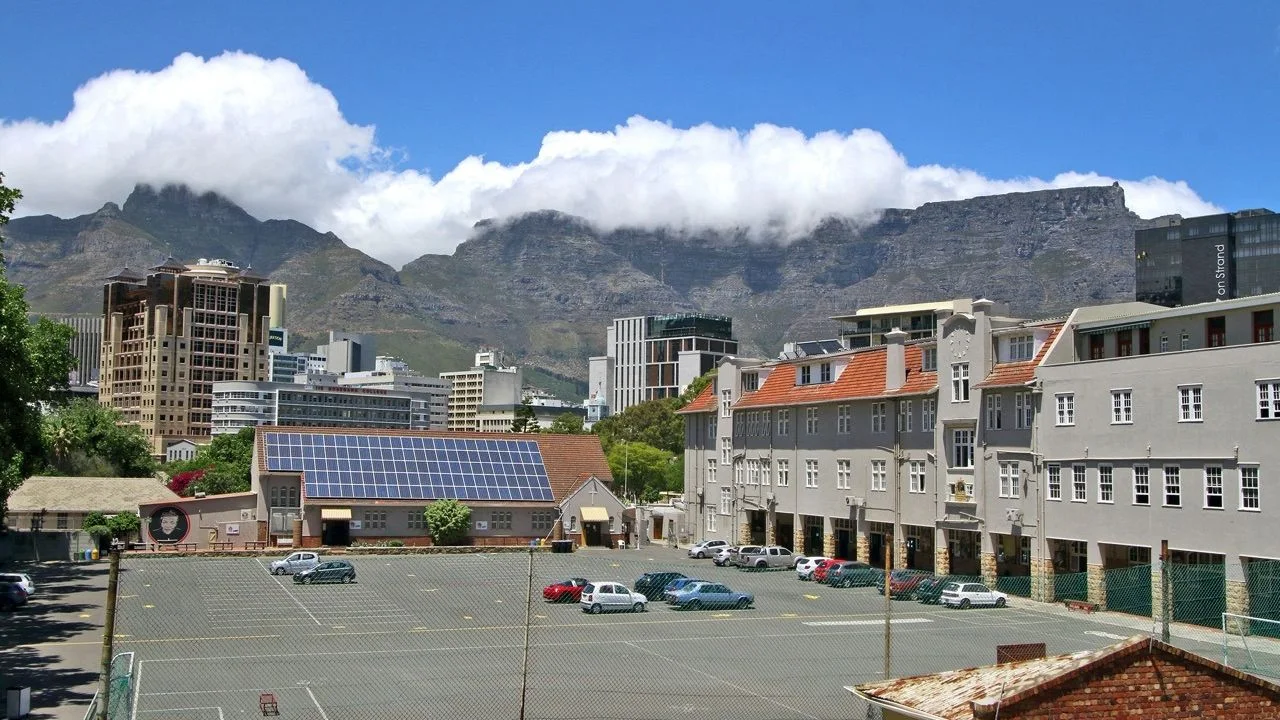
Quick answer: De Waterkant is the heritage boutique pocket between Green Point and the City Bowl guide hub, where restored cottages and small apartment blocks meet deep short-let and long-let demand. A compact apartment models around 7.8% gross and 5.8% net on a long-let basis, in line with Gardens and Tamboerskloof, while prestige stock above R3m compresses net because rents lag heritage premiums. Blok’s ONEONR scheme at 1 Rawbone Street adds fresh off-plan supply steps away. Foreigners pay no buyer surcharge, and figures are modelled and directional.
How should you underwrite De Waterkant?
De Waterkant is where the City Bowl’s income thesis meets Atlantic Seaboard lifestyle, and that overlap defines every investment decision here. The pocket sits on the lower western slope toward Signal Hill and the harbour, wedged between Green Point to the west and the CBD to the east, with cobbled streets, restored heritage façades, and a restaurant grid that functions as a village inside the city. Where Gardens rewards young-professional long lets and Woodstock rewards gentrification upside off a low base, De Waterkant rewards boutique prestige, short-let depth, and walkability to both the bowl and the Waterfront.
A compact apartment models around 7.8% gross and 5.8% net on a long-let basis, in line with the core City Bowl suburbs profiled in the City Bowl guide. Prestige stock often trades above R3m, which compresses net relative to entry-level bowl apartments because achievable rent does not scale one-for-one with heritage premiums. That makes De Waterkant a dual-strategy suburb: income on long-let for compact stock, lifestyle and short-let upside for character units, with capital growth supported by scarcity and foreign demand on the Atlantic Seaboard guide fringe.
What do the 2025 to 2026 numbers say about De Waterkant?
Anchor any De Waterkant thesis in the data before you evaluate a single listing. The pocket’s profile is a modelled 7.8% gross and 5.8% net on a compact apartment, a gross-to-net spread of roughly 2 percentage points, and 74 new ONEONR units due to land in the same streets. The table below frames that income, demand, and supply picture against the wider prime market.
| Metric | Figure | What it signals |
|---|---|---|
| Apartment gross yield (modelled, long-let) | ~7.8% | In line with core City Bowl suburbs |
| Apartment net yield (modelled, long-let) | ~5.8% | After levies, rates, and costs |
| Prestige entry band | Often above R3m | Net compresses on trophy stock |
| Walk to CBD / Waterfront | ~5 to 10 min | Drives professional and tourist demand |
| City Bowl + Seaboard 2025 sales | R11.3bn, up ~26% | Prime market expanding |
| Foreign share of value | ~25%, about R2.8bn | Deep international demand |
| ONEONR off-plan supply | 74 units, Q3 2027 target | Fresh Blok stock in the pocket |
| Foreign buyer surcharge | None | Versus UK 2% and Singapore 60% |
The headline pairing is the modelled 7.8% gross and 5.8% net on compact long-let stock. That roughly 2 percentage point spread between gross and net is typical for City Bowl sectional title, where levies, municipal rates, maintenance, letting commission, vacancy, and insurance erode the gross figure. De Waterkant keeps that band on well-priced compact units, but heritage cottages and view-led apartments above R3m often land below it on net because purchase prices reflect scarcity and character more than rent multiples.
Short-let signals reinforce the upside case without replacing the base case. The pocket’s restaurant density, harbour proximity, and walkability to the V&A precinct support strong peak-season occupancy for well-managed units, yet City of Cape Town regulation and seasonality mean the disciplined investor underwrites long-let first. For off-plan buyers evaluating new supply, see ONEONR De Waterkant and the off-plan property Cape Town guide before you compare brochure rents to live comparables.
Why is De Waterkant between Green Point and the City Bowl?
The position is literal, not figurative. Somerset Road forms the western edge, and crossing it puts you in Green Point; Buitengracht forms the eastern edge, and crossing it puts you in the CBD and the lower Bo-Kaap. Everything in between, the Loader, Napier, Dixon, Waterkant, and Jarvis Street grid, is a few hundred metres wide, which is why the pocket behaves as a single micro-market rather than a suburb.
That geometry produces a tenant pool neither neighbour has on its own. Green Point tenants orient toward the promenade, the stadium precinct, and the urban park; CBD tenants orient toward offices and the Company’s Garden end of town. De Waterkant residents walk to both, plus the Cape Quarter for daily retail, and reach the V&A on foot rather than by car. Households that want to live without a vehicle in Cape Town have a short list, and this pocket is near the top of it, which supports rent even when the wider bowl softens.
The trade-off is physical. The streets are narrow, cobbled, and steep toward Signal Hill, so secure parking is scarce and unevenly distributed. A unit with a dedicated bay lets faster and holds rent better than an identical unit without one, and that single feature explains much of the price variation between adjacent buildings. Compare the letting profile against Green Point before deciding which side of Somerset Road suits your strategy.
What are the pros and cons of investing in De Waterkant?
| Pros | Cons |
|---|---|
| Modelled ~7.8% gross on compact long-let stock | Prestige stock above R3m compresses net |
| Strong short-let demand, walkable to Waterfront | Short-let exposed to regulation and seasonality |
| Heritage character supports resale liquidity | Parking and access tight on cobbled streets |
| Fresh ONEONR supply validates the address | Off-plan handover risk on 2027 timeline |
| No foreign buyer surcharge for non-residents | Non-residents face tighter loan-to-value limits |
| Dual demand: CBD professionals and tourists | Block quality varies sharply street by street |
The pros cluster around character, walkability, and dual letting strategies. De Waterkant gives you a heritage village address with modelled long-let income near 5.8% net on compact stock, short-let upside in the right unit, and foreign demand depth without an entry surcharge. The cons cluster around price compression and management intensity. Trophy heritage stock can look beautiful on a brochure yet deliver a net yield below your hurdle rate once levies, parking constraints, and seasonality are modelled honestly.
Short-let versus long-let in De Waterkant
Underwrite the long-let first, then treat nightly letting as optional upside. The base case for a compact apartment is a modelled 7.8% gross and 5.8% net, and that number should survive on its own before any short-let assumption is layered on.
| Factor | Long-let | Short-let |
|---|---|---|
| Modelled yield | ~7.8% gross, ~5.8% net | Higher gross, no reliable net benchmark |
| Income pattern | Even across the year | Peaks in the southern summer |
| Cost load | Agency commission, levies, rates | Adds cleaning, platform fees, furnishing replacement |
| Management | Low touch | Effectively a small hospitality business |
| Rule exposure | Lease law | City rules plus body corporate conduct rules |
The pocket’s restaurant density and walk to the Waterfront make it one of the stronger short-let addresses in the bowl, but the deciding factor is usually the building rather than the location. Body corporate conduct rules can prohibit or throttle nightly letting regardless of what the City permits, and a scheme can adopt such a rule later by special resolution at 75% of the votes cast. A short-let case built on a building that could vote it away next year is a fragile case.
The practical answer for most non-resident owners is a long lease with a managing agent, and short-letting only where the building explicitly allows it and you have someone local running turnovers. Check the framework in the short-term rental rules for Cape Town and the operating economics in the Airbnb Investment Cape Town Guide.
Oneonr and new supply in the pocket
Off-plan buyers carry construction and handover risk that resale buyers avoid, plus a 30% cash deposit requirement on Blok’s standard terms. Yields on ONEONR are modelled only, not guaranteed, and should be rebuilt on net using live comparables for the exact unit type. Read the full off-plan property Cape Town guide alongside the project page before you treat marketing rents as underwriting inputs.
Off-plan and resale carry different acquisition costs in the same street, and the difference is not small. A new unit bought from a VAT-registered developer includes 15% VAT in the price and attracts no transfer duty, so the headline R1.995m for a ONEONR studio is closer to an all-in figure than it looks, although Blok’s standard terms require a 30% cash deposit held until handover. Resale heritage stock works the other way: no VAT, but transfer duty on the SARS scale, with nothing payable below R1,210,000 and 3%, 6%, 8%, 11%, and 13% applying to the slices above it. Set the two cost structures side by side before you decide, because 74 new units arriving in the pocket will judge both at the same 2027 exit.
| Buyer type | ONEONR fit | Resale heritage stock fit |
|---|---|---|
| Off-plan, design-led buyer | Studios to two-bed from R1.995m | N/A |
| Short-let operator | New amenities, clear house rules TBC | Character premium, verify STR rules |
| Long-let income buyer | Model net after projected levy | Compact cottages near 7.8% gross band |
| Foreign lifestyle buyer | No surcharge, 50% LTV typical | Heritage trophy, growth-led net |
How do foreign buyers approach De Waterkant?
The two practical considerations are financing and currency. Non-resident financing is the binding constraint for most foreign buyers: banks typically lend to about half the price, and the rest must come in from abroad. Keep the authorised dealer confirmation for each transfer, since exchange control treats the introduction record as the basis for taking money out.
What risks should you plan for with De Waterkant Property Investment Guide 2026, Yields?
De Waterkant is liquid and transparent at the prime end, but the pocket has specific risks worth modeling before any Offer to Purchase. The table below maps the main ones against a mitigation.
| Risk | Why it matters | Mitigation |
|---|---|---|
| Gross yield quoted, not net | A 7.8% gross listing is about 5.8% net once costs apply | Rebuild on net with real levies and rates |
| Prestige premium without rent support | R3m-plus stock can compress net sharply | Model rent per bedroom, not façade appeal |
| Short-let regulation change | Peak nightly rates can reverse on new rules | Underwrite long-let fallback near 5.8% net |
| Heritage maintenance and levies | Older bodies corporate carry special levies | Read financials and minutes before offer |
| ONEONR handover competition | 74 new units may pressure some segments | Stress-test rents at 2027 supply |
| Offshore funds not recorded | Repatriation problems for foreigners at exit | Record capital at entry with a conveyancer |
The single most common error is treating De Waterkant as uniformly high yielding. Compact long-let apartments can model near 7.8% gross, but heritage trophy stock often trades on capital preservation and short-let upside instead, with net yields that may not clear an income investor’s hurdle rate. The second error is assuming short-let income is permanent: underwrite long-let first, then treat tourism peaks as optional.
Insider tip: in De Waterkant the parking bay decides the rent as much as the finish does. The streets are narrow, cobbled, and largely one-way, on-street space is contested by restaurant traffic, and a compact apartment without a dedicated bay re-lets slower and at a discount to an identical unit that has one. Confirm the bay is registered as an exclusive use area on the sectional plan rather than merely allocated by the trustees, because informal allocations can change with a body corporate vote.
Which De Waterkant property fits your investment goal?
De Waterkant fits boutique prestige and dual-strategy buyers best. The table below positions the pocket against its neighbours on an investor lens.
| Suburb / pocket | Positioning | Yield vs growth (modelled) | Best buyer fit |
|---|---|---|---|
| De Waterkant | Heritage boutique, tourism-heavy | Balanced long-let ~5.8% net, short-let upside | Short-let plus lifestyle, compact income |
| Green Point | Waterfront edge, stadium precinct | Balanced, ~6.0% net | Yield plus liquidity on the strip |
| Gardens | Kloof Street lifestyle core | Balanced, ~5.8% net | Long-let young professionals |
| Woodstock | Regeneration frontier | Growth led off low base | Value and gentrification upside |
| V&A Waterfront precinct | Luxury sectional title | Growth led, low net | Trophy, foreign capital preservation |
If your goal is heritage character with modelled long-let income near 5.8% net on compact stock plus credible short-let upside, De Waterkant is the natural pick inside the bowl fringe. If your goal is maximum net cash flow on the Atlantic strip, Green Point sits one suburb west with a modelled 6.0% net. If your goal is pure luxury sectional title and capital preservation at the Waterfront itself, compare the dedicated Waterfront precinct guide and the Atlantic Seaboard guide before you conflate the pocket with the precinct.
Investment scenarios for De Waterkant
Three scenarios show how the same pocket behaves for different buyer goals. All yields are modelled and directional.
| Scenario | Entry profile | Strategy | Modelled outcome | Main risk |
|---|---|---|---|---|
| Compact long-let | One-bed sectional title near R2m to R2.8m | 12-month professional lease | ~7.8% gross, ~5.8% net | Levies in older blocks |
| Short-let operator | Character two-bed with parking | Peak-season nightly rates | Gross above long-let in summer | Regulation and off-season |
| Off-plan at ONEONR | Studio or one-bed from R1.995m | Hold to 2027 handover, then let | Depends on levy and comps at exit | Construction delay, supply at handover |
Scenario one suits income-first City Bowl buyers who want De Waterkant’s address without paying a pure trophy premium. Scenario two suits operators who will manage short-stay actively and accept seasonality. Scenario three suits buyers who trust Blok’s delivery record but must still verify projected levies and house rules before signing an Offer to Purchase on ONEONR.
What to verify next
Pull recent transacted prices for your shortlisted De Waterkant block, then position them against Green Point and Gardens, remembering heritage stock above R3m often compresses net. Rebuild rental yield on net, not gross, confirming the modelled spread of about 7.8% gross to 5.8% net holds with the block’s actual levies, rates, and current rents. If you are evaluating ONEONR, read the Blok developers guide and the off-plan property Cape Town guide before you rely on marketing assumptions. Stress-test any short-let projection against a long-let fallback near 5.8% net. Ask the conveyancer to quote transfer duty and total acquisition costs in writing; foreigners pay the same scale as residents, with no surcharge. If the net numbers fail your hurdle rate after honest modelling, revisit the wider the City Bowl guide rather than forcing the deal.
Figures cite Cape Town and City Bowl market data for 2025 to 2026 where noted, including combined sales value, foreign share of value, and ONEONR published pricing. Per-square-metre and price figures are indicative, and rental yields are modelled and directional, not guaranteed. This guide is for information only and does not constitute investment, tax, or legal advice. Verify current transfer duty, costs, and rules with qualified South African professionals before purchase.
Frequently Asked Questions
De Waterkant is one of the City Bowl's strongest boutique prestige pockets, sitting between Green Point and the wider bowl with heritage character and deep short-let demand. A compact apartment models around 7.8% gross and 5.8% net on a long-let basis, in line with Gardens and Tamboerskloof, while prestige stock above R3m compresses net because entry prices run higher. Blok's ONEONR scheme at 1 Rawbone Street adds fresh off-plan supply nearby. Figures are modelled and directional, so rebuild them on net with current rents and the block's levies before you offer.
De Waterkant models around 7.8% gross and 5.8% net on a compact long-let apartment, matching the core City Bowl suburbs. Gross is annual rent divided by purchase price, while net subtracts sectional title levies, municipal rates, maintenance, letting commission, vacancy, and insurance, roughly a 2 point spread. Boutique prestige stock above R3m often compresses net below that band because rents do not scale linearly with heritage premiums. Short-stay income can lift gross in peak season but adds regulation and seasonality risk. All yields are modelled, not guaranteed.
Short-letting is among the strongest in the City Bowl thanks to cobbled heritage streets, restaurant density, and a five- to ten-minute walk to the CBD and V&A Waterfront. De Waterkant draws business travellers, design tourists, and leisure visitors who want village scale without leaving the Atlantic Seaboard fringe. A well-run unit can lift gross income above the long-let benchmark in summer, but City of Cape Town short-term letting rules apply, so underwrite a long-let fallback near 5.8% net before you rely on nightly rates.
Yes. Foreigners can buy freehold and sectional title property in De Waterkant with very few restrictions and no foreign buyer surcharge, unlike the UK's 2% premium or Singapore's 60% stamp duty. Foreigners took roughly 25% of combined City Bowl and Atlantic Seaboard value in 2025, about R2.8bn, and De Waterkant's boutique character attracts a disproportionate share of international lifestyle buyers. Non-residents typically finance around half the purchase price locally and should record offshore capital at entry for clean repatriation at exit.
Green Point models around 8.0% gross and 6.0% net with V&A Waterfront adjacency and stadium precinct demand, while De Waterkant models around 7.8% gross and 5.8% net with heritage boutique prestige and stronger short-let intensity. Green Point suits buyers who want a balanced Atlantic Seaboard node with stadium and urban park anchors; De Waterkant suits buyers who want cobbled village character, tourism-led upside, and walkability to both the bowl and the Waterfront. Both carry no foreign surcharge, and both should be underwritten on net, not gross.
Get a Cape Town property shortlist
Share your budget, target area (Atlantic Seaboard, City Bowl, Winelands), and goal. We reply within one business day with matched stock and next steps.