
Blok Developers: What a Small Scheme Concentrates
A design-led boutique building is the opposite of a master-planned precinct. Fewer units concentrate the levy, the arrears and the resale pool onto you.
By Cape Town Invest Editorial · Updated August 27, 2026 · 11 min read
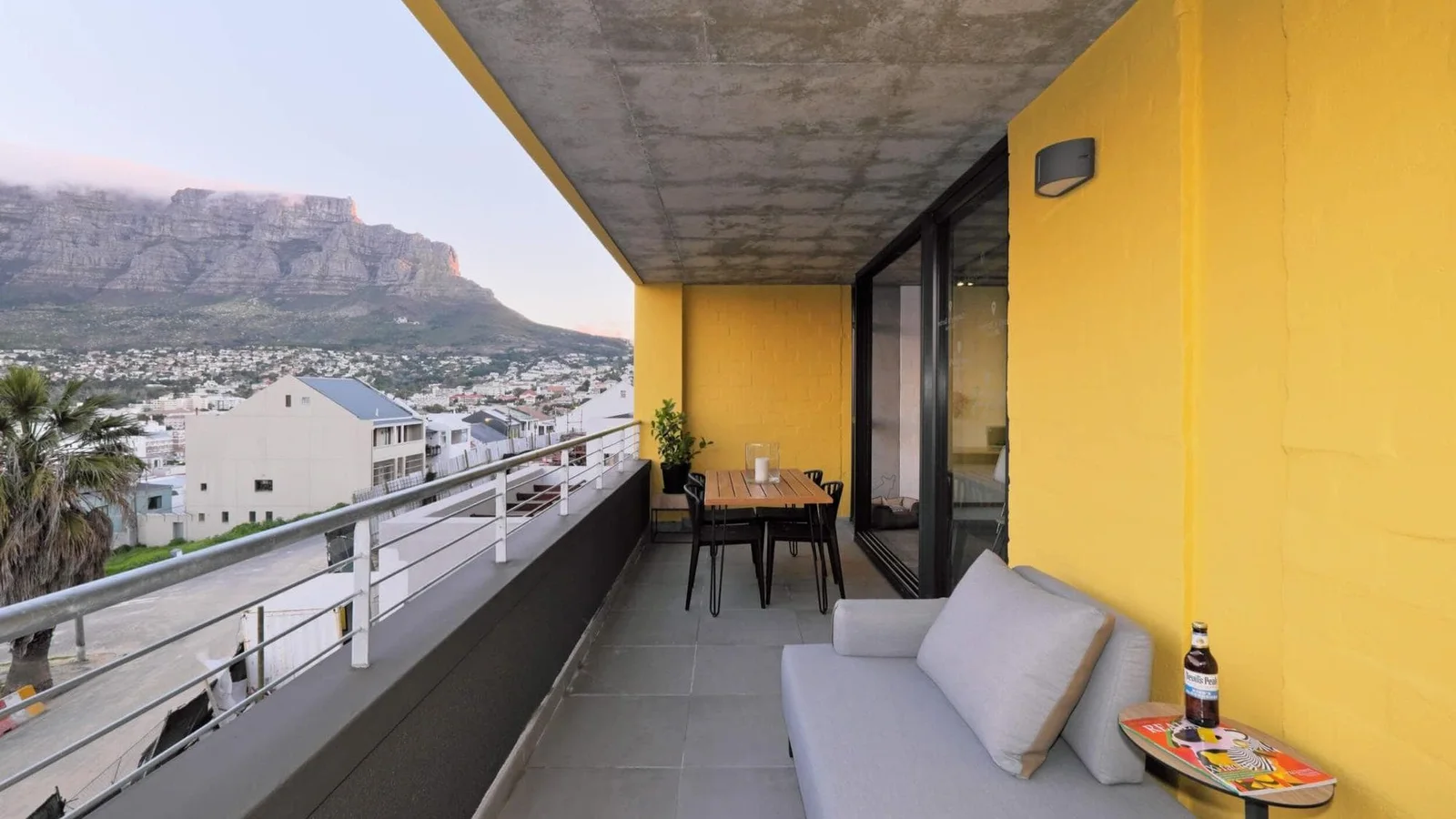
Quick answer: Blok builds small, design-led apartment schemes in the Atlantic Seaboard and City Bowl, which is close to the opposite proposition from a master-planned precinct. The design is the product and it is the part buyers discuss. The part that decides more of the outcome is the size: a scheme of thirty units divides every shared cost by thirty, so the levy, a special levy, one owner’s arrears and the pool of people who might buy your unit are all concentrated rather than spread.
What is actually being sold?
Architecture, at a deliberate scale.
Blok’s schemes are small apartment buildings in the Atlantic Seaboard and City Bowl, built to a considered plan and a high specification rather than to a unit count. The buildings are sized in tens rather than hundreds, they are designed to be looked at, and a large part of what a buyer pays for is the way space has been arranged rather than how much of it there is.
That is a legitimate and coherent product. It is also a different asset from a unit in a master-planned precinct, and reading across from one to the other is where buyers go wrong. The precinct version of this decision, with its own covenant and its own conflict, is on the Rabie page.
Why the design is a bet rather than a premium
Because design is the one feature of a building that can move in both directions.
An ordinary apartment ages slowly and predictably. A distinctive one either becomes the building people want in that street, or becomes the building that obviously belongs to a particular decade. Both outcomes come from the same decision, and which one you get is only visible from later.
That has a practical consequence at resale rather than at purchase. A plain building competes on location, size and condition, which are all measurable. A design-led building competes on those things plus a preference, and a preference is a wider distribution of outcomes. It is why the same specification that lets a unit rent above its neighbours can also narrow the pool of buyers who want it.
None of this argues against buying one. It argues for buying one whose design you would defend to a stranger, rather than one whose design is merely current.
The variable nobody prices: how many units
This is the part that decides more of the outcome than the finish does, and it is arithmetic rather than judgement.
Every shared cost in a sectional title scheme is divided among its units. So the same repair lands very differently depending on how many people are dividing it:
| Shared cost | 30-unit scheme | 100-unit scheme |
|---|---|---|
| R900,000 roof and waterproofing | R30,000 per unit | R9,000 per unit |
| R450,000 lift refurbishment | R15,000 per unit | R4,500 per unit |
| One owner two years in arrears at R4,000 a month | About 3.3% of the budget, carried by 29 owners | About 1% of the budget, carried by 99 |
| A R60,000 legal recovery | R2,000 per unit | R600 per unit |
Read the third row twice. In a small scheme a single defaulting owner is a material hole, and the remaining owners fund it in the meantime whether or not it is ever recovered. In a large scheme the same default is noise.
The same concentration works in your favour in one respect: a small body corporate is easier to influence, its meetings are attended by people who know each other, and a well-run one can make decisions a hundred-unit scheme would take two years to reach. Concentration is not a synonym for risk. It means whatever is true of the scheme is true of you, strongly.
The mechanics of what a levy has to cover, and what a scheme can and cannot recover, are set out in the levies guide.
What to read, and in what order
In a small scheme the documents are not due diligence, they are the investment case.
- Three years of financials, read for the reserve balance and the direction it is moving. A falling reserve in a building that has not yet done its major maintenance is a special levy with a date on it.
- Two years of general meeting minutes, read for what keeps coming up. A repair discussed in three consecutive years is a repair nobody has funded.
- The maintenance plan against what has actually been done, which is the only honest read on the building’s condition.
- The arrears schedule, which in a small scheme is a first-order number rather than a footnote.
The due diligence guide sets out the full list and how to read each document. On a boutique building, do not treat any of it as optional because the scheme is new or the finish is good: a new scheme has no reserve history at all, which is a different problem rather than the absence of one.
Off-plan or completed?
The answer differs more here than it does with a large developer, because the covenant is thinner.
A completed Blok building carries no delivery risk at all. It is standing, it can be walked through, its body corporate has a history and its levy is a fact rather than a projection. Everything above about size still applies, and everything about delivery does not.
An off-plan unit from any boutique developer asks you to underwrite a shorter record and a smaller balance sheet than a decades-old master developer offers. That is not a criticism of any particular firm. It is simply what a shorter record means, and it is the honest way to weigh a developer with fewer completed schemes behind it.
The pros and cons therefore come out as follows:
- In your favour: design that can earn a premium in rent and at resale, a small body corporate that is easy to influence, and a location on the Seaboard or in the Bowl where new supply is scarce.
- Against you: every shared cost and every arrears problem concentrated across few owners, a narrower resale pool for distinctive stock, and a thinner developer covenant on anything bought off-plan.
- The same as anywhere: no foreign buyer surcharge, the same duty scale, and the same exchange control on money in and out.
The general off-plan discipline, why a launch levy is systematically the optimistic one, and what the developer’s own budget assumes, is worked through in the off-plan versus resale comparison.
Who is the tenant?
Someone paying for the finish rather than the floor area, and that is a real market with real limits.
Design-led stock frequently trades space for specification: a smaller apartment, better made. In the City Bowl and on the Atlantic Seaboard that suits professionals, remote workers and couples who would rather have a well-made one-bedroom than an ordinary two. Sea Point’s letting market, which renews year-round across exactly that tenant pool, is set out on the Sea Point page.
The limit is that this pool is narrower than the market for a plain family-sized unit. Price the property against comparable finished stock rather than against square metres, because a per-square-metre comparison will make a well-finished small apartment look expensive and tell you nothing about what it will actually let for. For orientation, City Bowl long lets model about 7.9% gross and roughly 5.5% to 6.0% net, while a Sea Point one-bedroom models about 9.7% gross and 7.5% net; a boutique unit should be tested against those bands and not against a precinct average. Municipal rates run at about 0.0064 in the rand for 2026/27, after a R620,000 rates-free slice on homes valued at R8 million or less, and sit outside the levy entirely. All yields are modelled from listed prices against observed rents rather than audited returns.
What to establish before you offer
| Question | Where the answer is | Why it matters more here |
|---|---|---|
| How many units share every cost | The sectional title register | It is the multiplier on every future repair |
| The reserve balance and its direction | Three years of financials | Few owners to spread a shortfall across |
| Current arrears | The body corporate | One default is a material share of a small budget |
| What the design will look like in fifteen years | Your own judgement | Distinctive ages in both directions |
| Comparable finished stock, not price per square metre | The letting market | Specification, not floor area, sets the rent |
The question most often skipped is the first, because it does not feel like an investment question. It is the one that turns a manageable repair into a five-figure invoice.
Sources: Sectional Titles Schemes Management Act 8 of 2011 for the body corporate, levy, reserve fund and recovery regime. The cost-per-unit table is arithmetic on stated scheme sizes and repair amounts, offered as illustration rather than as figures from any particular building. Characterisations of design-led development and of tenant preference are editorial readings of the Cape Town market, not measured statistics. Obtain the sectional title register, the financials and the arrears schedule for the specific scheme. Current as at 27 August 2026.
Frequently Asked Questions
A design-led boutique developer building small apartment schemes in the Atlantic Seaboard and City Bowl rather than large precincts. The product is architecture: considered plans, high specification and buildings sized in tens of units rather than hundreds. That is a genuinely different proposition from a master-planned precinct, and the investment consequences follow from the size as much as from the design.
Because every shared cost is divided by it. A R900,000 repair is R30,000 a unit across thirty units and R9,000 across a hundred. One owner falling into arrears is a far larger hole in a small scheme's budget than in a large one. Small buildings concentrate both the cost and the risk of the cost, and neither appears on a levy statement until it arrives.
It is a bet rather than a premium. Distinctive design that ages well holds value and rents above the ordinary stock around it; distinctive design that dates is harder to sell than the plain building next door, because the thing that made it special is the thing a later buyer is reacting to. Timeless and dated are the same decision viewed from different decades.
It is thinner, and that matters most on off-plan. A developer with fewer completed schemes and a smaller balance sheet offers less protection against delivery and quality risk than one with decades of finished phases behind it. That is not a judgement on any particular firm; it is what a shorter record means. A completed Blok building carries none of that risk, because it is already built.
Usually a tenant paying for the finish rather than the floor area, since design-led stock often trades space for specification. That is a real and reliable market in the City Bowl and on the Atlantic Seaboard, and it is narrower than the market for an ordinary two-bedroom. A landlord should price the unit against comparable finished stock rather than against square metres.
Three years of the body corporate's financials, read for the reserve balance and the direction it is moving, alongside two years of minutes. In a small scheme the reserve position is the whole story, because there are few owners to spread a shortfall across. A scheme with a thin reserve and a maintenance plan it is not funding is telling you what your third year costs.
Get a Cape Town property shortlist
Share your budget, target area (Atlantic Seaboard, City Bowl, Winelands), and goal. We reply within one business day with matched stock and next steps.