
New Developments in Cape Town 2026: 28 Schemes Tracked
Every Cape Town new development we track, by region: 46 schemes, 7,651 units, and the 21 you can still commit to before handover, plus the 15% VAT rule.
By Cape Town Invest Editorial · Updated September 7, 2026 · 18 min read
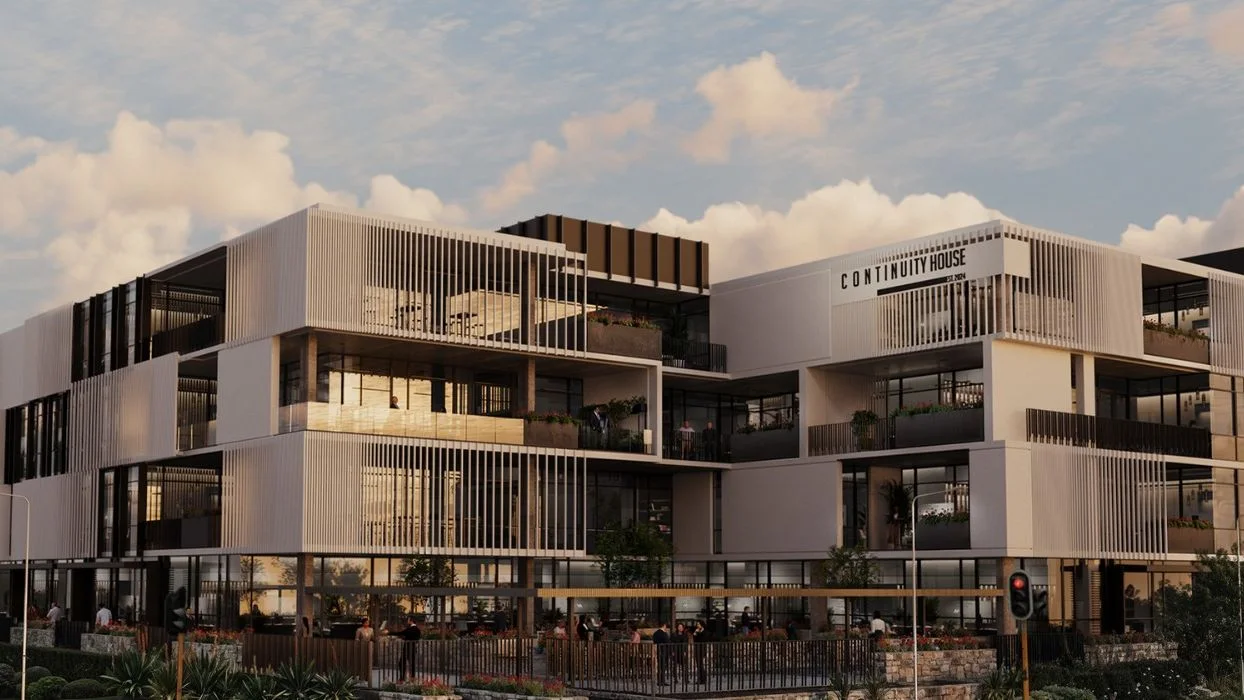
Quick answer: we track 46 residential new developments across Cape Town, the Helderberg and the Winelands, carrying 7,651 units between the 24 schemes that publish a count. Twenty-one are already complete. Twenty-one are open before handover, most of them selling now from the developer rather than off-plan. A new build from a VAT-registered developer carries 15% VAT and no transfer duty, there is no foreign buyer surcharge, and your protections are NHBRC enrolment and developer due diligence.
How many new developments are on the market in Cape Town?
Forty-six schemes across seven regions, carrying 7,651 units between the 24 that publish a count. Twenty-one are finished. Twenty-one remain open to a buyer before handover, which is a much larger live pipeline than this page carried when it tracked only the metro’s apartment stock, and the growth is almost entirely estate developers in the northern suburbs, the Helderberg and the Winelands rather than new towers in the bowl.
| Status | Schemes | What it means for a buyer |
|---|---|---|
| Completed | 21 | Inspect the actual unit, read the body corporate’s real accounts, rent from transfer |
| Selling now from the developer | 16 | Price on a live list, phase pricing moves between releases |
| Under construction | 3 | Price locked, handover dated, structure visible on site |
| Approvals pipeline | 3 | Not sellable yet; watch for launch pricing |
| Near completion | 2 | Short wait, finishes usually fixed, snagging list still yours to run |
| Active multi-developer node | 1 | Several builders on one site, quality varies by builder |
The gap between what is marketed and what is actually purchasable is the single most useful number on this page. A search for new developments in Cape Town returns pages of listings, most of which are completed buildings being resold or launch pages for schemes that closed their books eighteen months ago. Insider tip: before you spend an afternoon on a scheme, ask the agent for the occupation certificate date. If it exists, you are buying resale stock at new-build marketing prices, and transfer duty applies instead of VAT.
Which precincts carry the 2026 pipeline?
Seven regions hold the 46 schemes, and they split by land availability rather than by demand. The City Bowl carries the largest published unit count at 2,473 on eight schemes, the Atlantic Seaboard carries the most schemes at thirteen while publishing only 436 units between seven of them, and the Northern Suburbs have gone from nothing to eight schemes on the back of estate developers rather than tower builders.
| Region | Schemes | Units published | Character of the stock |
|---|---|---|---|
| Atlantic Seaboard | 13 | 436 across 7 | Small, premium, several under 25 units |
| West Coast | 9 | 2,233 across 5 | Master-planned Century City and Milnerton, one developer dominant |
| Northern Suburbs | 8 | 595 across 1 | Estates rather than towers, houses and apartments mixed |
| City Bowl | 8 | 2,473 across 8 | Towers and conversions, the largest counts in the metro |
| Winelands | 3 | 614 across 2 | Estate living, house and apartment mix |
| Southern Suburbs | 2 | 1,300 across 1 | Conversion and one large pipeline node |
| Helderberg | 2 | not published | Somerset West and Gordon’s Bay, entry-priced apartments |
The regions used here are the site’s own, which is why they differ from the precinct names a developer’s marketing uses. Seventeen of the 46 schemes carry no published unit count at all, so the totals describe what developers disclose rather than what exists.
City Bowl and Foreshore: 6 schemes, 2,256 units
The bowl carries the biggest numbers because it is the only part of the metro where a single site can hold hundreds of units. Two of the six are not yet sellable, and one of the six is routinely misfiled as an Atlantic Seaboard address.
| Scheme | Developer | Status | Units |
|---|---|---|---|
| Chestercourt redevelopment | Putirex and Divercity | Pipeline | 830 |
| Zero2One | FWJK | Under construction | 624 |
| Harbour Arch | Amdec | Completed | 560 |
| Foreshore Place | HBW Group | Completed | 171 |
| Venice House | Prospekt | Completed | 36 |
| The Charlotte | Prospekt | Near completion | 35 |
One naming trap sits in this table. Zero2One carries Sea Point in its filename and in a great deal of agent marketing, but it is a 42-storey tower on Adderley Street in the CBD. A buyer underwriting it on Sea Point promenade rents is underwriting the wrong building. The Sea Point suburb page sets out what the actual Sea Point letting market pays.
Atlantic Seaboard: 14 schemes, 436 units
The seaboard has the most schemes and the fewest units, which is the whole story of the coast in one line. Land is bounded by mountain and sea, so new supply arrives as small buildings at the highest price per square metre in the city.
| Scheme | Developer | Status | Units |
|---|---|---|---|
| Rockwell Tower | Styleprops Properties | Completed | 143 |
| ONEHUNDREDONM | Blok | Under construction | 93 |
| ONEONR De Waterkant | Blok | Off-plan | 74 |
| NINEONS Green Point | Blok | Completed | 23 |
| Camps Bay Infinity | Boutique developer | Completed | 6 |
| Azure Camps Bay Beach | Horizon Capital | Completed | 4 |
| 343 on B | Blok | Completed | not stated |
| Mont Reve | Berman Brothers | Completed 2025 | 116 |
| Station House | Berman Brothers with D2E | Completed 2022 | not stated |
| The Estate | Berman Brothers | Completed 2020 | not stated |
| TENONQ | Blok | Completed, page withdrawn | not published |
| The Ridge Clifton | Multiple | Completed | not stated |
Five of the fourteen carry the Blok name, and three the Berman Brothers name, which makes the seaboard the only region where design-led developers rather than volume builders set the tone. All three Berman schemes are complete and sold out, so the seaboard’s apparent supply is thinner than the scheme count suggests. For how the eight suburbs behind these buildings rank on yield, read the Atlantic Seaboard guide.
Century City and Milnerton: 8 schemes, 2,233 units
Every scheme in this corridor carries the same developer name, which is unusual and matters. Rabie Property Group built the Century City master plan and continues to supply it, so the precinct behaves like one managed estate rather than a collection of competing launches.
| Scheme | Developer | Status | Units |
|---|---|---|---|
| Infinity Milnerton | Rabie Property Group | Completed | 1,749 |
| Nine Palms Century City | Rabie Property Group | Completed | 131 |
| SkyWater Century City | Rabie Property Group | Under construction | 122 |
| On Park Century City | Rabie Property Group | Completed | 121 |
| Rhapsody Burgundy Estate | Rabie Property Group | Completed | 110 |
| The Bridges | Rabie Property Group | Phase 3 to come | not stated |
| Park Place | Rabie Property Group | Two penthouses left | not stated |
| Suikerbos | Balwin Properties | New phase releasing | not stated |
The advantage of single-developer supply is predictability: consistent build quality, a body corporate culture that holds, and backup infrastructure that works. The risk is correlation. When one developer sets pricing across seven schemes in one corridor, a buyer’s exit competes with that developer’s next launch rather than with a fragmented resale market. The Century City guide works through what that means for a five-year hold, and the Rabie developer page covers the track record.
Northern Suburbs and Helderberg: 10 schemes, the estate belt
This is where the market actually grew. None of these schemes existed on this page a year ago, and none of them is a tower: they are estates, mixing apartments with freestanding houses, plot-and-plan erven and in one case a life rights retirement village. Entry prices run from R754,900 in Gordon’s Bay to R3.45m for a family house in Burgundy Estate, which is a wider spread than the whole Atlantic Seaboard offers.
| Scheme | Area | Developer | Status | From |
|---|---|---|---|---|
| Ashmere | Burgundy Estate | Rabie Property Group | Phase 1 selling | R3.45m |
| Clara Anna Fontein | Durbanville | Rabie with Oasis Life | Selling | by release |
| De Aan-Zicht | Cape Town | Balwin Properties | Final Signature unit | R2,749,900 |
| De Buurt | Richwood | Balwin Properties | New phase releasing | R1,479,900 |
| De Kuile | Kuils River | Balwin Properties | Selling | R1,429,900 |
| Finwood | Burgundy Estate | Rabie Property Group | Final phase coming | R1.82m |
| Greenbay | Gordon’s Bay | Balwin Properties | Selling | R754,900 |
| Oasis Life Burgundy Estate | Burgundy Estate | Oasis Life | Selling | life rights |
| Stonepine Crescent | Kuils River | Rabie Property Group | Phase 2 selling | R2.25m to R2.9m |
| The Huntsman | Somerset West | Balwin Properties | New phase released | R1,179,900 |
Two things to carry out of this table. Balwin bans short-term letting across every one of its schemes, so six of the ten are long-let only regardless of what the surrounding suburb would support. And Oasis Life is sold on life rights rather than title, which is not a property purchase at all and behaves nothing like the rest of the table on exit.
V&A Waterfront, Southern Suburbs, Winelands and the rest
The remaining ten schemes sit across five areas and share one feature: each is the only scheme of its kind in its location, so there is no comparable new build to price against.
| Scheme | Precinct | Developer | Status | Units |
|---|---|---|---|---|
| Observatory Green | Southern Suburbs | Multiple | Pipeline | 1,300 |
| Pearl Valley Nova | Winelands | Val de Vie Estate | Completed | 500 |
| Le Boutonne | Winelands, Southern Paarl | Rabie Property Group | Final release, 11 homes left | 114 sold |
| Silo District Residences | V&A Waterfront | Growthpoint Waterfront | Completed | 110 |
| Amdec Hout Bay | Hout Bay | La’Mare | Off-plan | 84 |
| Granger Bay | V&A Waterfront | Growthpoint Waterfront | Pipeline | not stated |
| Makers Landing | V&A Waterfront | V&A Waterfront | Completed | not stated |
| Green Village Val de Vie | Winelands | Val de Vie Estate | Near completion | not stated |
| Acacia House Woodstock | Southern Suburbs | Signatura and Indigo | Completed | not stated |
| Two Oceans Beach | West Coast | Multiple | Active | not stated |
Observatory Green is the outlier worth watching. At 1,300 units in the approvals pipeline it is the largest single addition proposed anywhere in the Southern Suburbs, and it sits in a suburb whose modelled gross yield runs from 7.8% to 9.2%, the highest band in the corridor. A scheme of that size changes the letting market it lands in, which is a different consideration from whether the units themselves are good.
Off-plan or completed: which suits your position?
Off-plan locks today’s price for delivery in 12 to 36 months and carries 15% VAT instead of transfer duty. Completed stock is inspectable, has real accounts, and pays rent from transfer. Only two of our 46 schemes are formally off-plan, though sixteen more are selling live phases, so the practical choice is wider than the off-plan label alone suggests.
| Off-plan | Completed new stock | |
|---|---|---|
| Price | Locked at signature | Current market |
| Tax on purchase | 15% VAT inside the price | Transfer duty above R1,210,000 |
| Wait | 12 to 36 months | None |
| What you can inspect | Plans, show unit, developer’s past work | The actual unit and the actual building |
| Body corporate | Founding budget only, untested | Two or more years of real financials |
| Main risk | Developer fails to deliver or delivers late | You inherit whatever the scheme deferred |
The decision is usually made by cash flow rather than preference. A buyer who needs the rent to service a bond cannot carry 24 months of no income, so completed stock wins regardless of the price argument. A buyer with capital sitting idle can take the delivery risk in exchange for the price lock. Our off-plan guide works through the payment schedules and what happens if a developer misses a date.
Do you pay VAT or transfer duty on a Cape Town new build?
You pay 15% VAT and no transfer duty when you buy directly from a VAT-registered developer, because the two are mutually exclusive in South Africa. Transfer duty only starts above the R1,210,000 threshold, and on a new build it does not arise at all.
The practical trap is quotation. The developer accounts for the VAT to SARS, so a price list is normally VAT-inclusive, but a price quoted excluding VAT raises the real cost by a sixth. On a R4 million apartment that is R600,000, which is larger than the transfer duty a resale buyer would have paid at the same price. Get the VAT position in writing before you sign anything, including the reservation form.
Three further points a foreign buyer should hold:
- No surcharge exists. South Africa charges non-residents nothing extra, against a 2% non-resident surcharge in the United Kingdom and steeper premiums in Sydney, Vancouver and Singapore.
- Financing is the real constraint. South African banks typically cap non-residents near 50% loan-to-value, so the cash requirement rather than the tax rate sets the entry point.
- Registration is in your own name. A non-resident registers at the Deeds Office on the same basis as a resident, with exchange-control record-keeping rather than permission as the extra step.
The cost of buying guide sets out the full stack including conveyancing, and the transfer duty explainer covers the resale side.
What does NHBRC enrolment actually cover?
NHBRC enrolment gives five years of structural cover on a new home, and it is the one protection a buyer cannot negotiate into a contract afterwards. The unit has to be enrolled before construction, so a scheme that was not enrolled cannot be fixed at transfer.
Enrolment covers major structural defects for five years, roof leaks for twelve months, and non-compliance with the technical requirements for three months from occupation. It does not cover finishes, appliances, or the things a snagging list catches, which is why the snagging inspection guide treats the two as separate exercises. Ask for the enrolment certificate showing your specific unit number rather than a company registration confirming the developer exists. Those are different documents and only one of them protects you. The NHBRC warranty guide sets out the claim process and its deadlines.
How do you check a Cape Town developer before signing?
Five checks, in this order, and all of them before the deposit rather than after. The pattern that destroys buyers is a developer who launches, takes deposits, then cannot fund construction, and every one of these checks is designed to catch that pattern early.
- Completed schemes you can walk through. Visit two, and speak to an owner about delivery date and defect handling rather than to the sales agent.
- Secured development finance. A scheme that needs a sales target before it can start is asking you to underwrite its funding gap.
- NHBRC enrolment naming your unit. Not the developer’s registration, the unit’s enrolment.
- Deposit in a named attorney trust account. Not the developer’s operating account, and the attorney’s name should appear in the sale agreement.
- A founding body corporate budget you can read. A first-year levy set unrealistically low is a marketing decision that becomes your special levy in year two.
Insider tip: ask what happens to your deposit if the developer does not reach the construction start date in the agreement. A well-structured scheme answers with a date and a refund mechanism. A weak one answers with reassurance.
Why do the 2025 plan approvals matter?
Statistics South Africa recorded building plans passed and buildings completed down by almost 6% year on year in the fourth quarter of 2025, and an approved plan still takes 12 to 36 months to become a finished apartment. That makes the 2027 completed supply largely already determined, in a metro where coastal land is bounded by mountain and sea and demand is topped up by semigration.
Scarcity cuts two ways. It supports the value of well-located new stock secured now, particularly on the Atlantic Seaboard and in the City Bowl where infill sites were already limited, and it means launches face less competition so incentives run thinner. It also removes your margin for error, because a tightening pipeline lifts prices for weak schemes as readily as for strong ones and tempts marginal developers to launch without secured finance. Buying into scarcity is not the same thing as buying a good building. Use the approvals trend to inform timing, then run the five checks above on every scheme regardless. The wider pricing picture sits in our 2026 to 2027 market forecast.
Which precinct fits your strategy?
| If your goal is | Look at | Because |
|---|---|---|
| Low-hassle managed living | Century City and Milnerton | Master-planned, backup infrastructure, one developer, steady demand |
| Premium scarcity and capital growth | Atlantic Seaboard | Eight schemes but only 343 units, highest price per square metre |
| Walkable city and short-let demand | City Bowl and Foreshore | Largest unit counts, conversion stock, lifestyle pull |
| Trophy address, lowest supply risk | V&A Waterfront | Three schemes, one of them still pipeline |
| Yield inside the school belt | Southern Suburbs | Observatory models 7.8% to 9.2% gross, the corridor’s highest band |
| Estate living and semigration growth | Cape Winelands | Constrained land, house and apartment mix |
Sources: scheme counts, developers, statuses and unit numbers are taken from our own project pages, listed above and each carrying its own sources; totals cover the 24 of 46 schemes that publish a unit count. VAT rate and the R1,210,000 transfer duty threshold from the VAT Act and the transfer duty tables effective 1 April 2025. Non-resident loan-to-value from South African bank lending policy and market practice. United Kingdom non-resident surcharge from HMRC SDLT rates. Building plan and completion trend from Statistics South Africa, Selected building statistics of the private sector as reported by local government (P5041.1), fourth quarter 2025. Observatory yield band modelled by Cape Town Invest from listed prices against observed long-let rents. Status and unit counts change; confirm the current position with the developer before offering. Current as at 7 September 2026.
Frequently Asked Questions
We track 46 residential schemes across the Cape Town metro, the Helderberg and the Winelands, carrying 7,651 units between the 24 schemes that publish a count. Of the 46, twenty-one are complete and trade as resale or first-transfer stock, sixteen are selling now from the developer, three are under construction, three sit in the approvals pipeline, two are at near-completion stage, and one is an active multi-developer node. Twenty-one are therefore open to a buyer before handover. Sixteen schemes publish no unit count at all, so the totals describe disclosure rather than supply.
Eight precincts carry the pipeline. The City Bowl and Foreshore hold six schemes and the largest unit counts, led by Chestercourt at 830 units and Zero2One at 624. The Atlantic Seaboard holds eight, but they are small and premium, several under 25 units. Century City and Milnerton hold five, all Rabie schemes, including Infinity Milnerton at 1,749 units. The V&A Waterfront holds three, the Southern Suburbs two, the Winelands two, and Hout Bay and the West Coast one each. Land availability rather than demand decides where new stock appears.
Off-plan lets you lock today's price for a unit delivered in 12 to 36 months, carries 15% VAT instead of transfer duty, and gives you brand-new finishes with NHBRC structural cover, but you wait for delivery and carry developer risk. Completed new stock is inspectable, has an established body corporate, and generates rent immediately, but you pay current market price and the choice of units is smaller. Off-plan rewards patient buyers who trust the developer; completed stock suits buyers who want certainty and immediate cash flow.
No. South Africa charges no foreign buyer surcharge or stamp-duty premium on new developments, which sets Cape Town apart from cities like Sydney, Vancouver, and Singapore where non-residents pay extra. Foreign buyers purchase on the same legal basis as residents, pay the same 15% VAT on a new build or the same transfer duty on a resale, and register at the Deeds Office in their own name. The main practical differences are financing, where non-residents are usually capped near 50% loan-to-value, and exchange-control record-keeping.
Verify five things before you sign: a track record of completed schemes you can visit and inspect, secured development finance rather than a project that needs a sales target to start, NHBRC registration with your specific units enrolled, a deposit held in a named attorney trust account, and a realistic founding body corporate budget. Visit the developer's previous projects and speak to owners about delivery time and defect handling. The pattern to avoid is a developer who launches, takes deposits, then cannot fund construction.
You pay 15% VAT, not transfer duty, when you buy a new build directly from a VAT-registered developer, because VAT and transfer duty are mutually exclusive in South Africa. The developer accounts for the VAT to SARS, so the price list is normally VAT-inclusive. A resale buyer pays progressive transfer duty instead, which starts above the R1,210,000 exemption threshold. Always confirm in writing whether a quoted new-build price is VAT-inclusive, because a price quoted excluding VAT raises your real cost by a sixth.
Across the 46 schemes we track, Rabie Property Group carries the most with twelve, spanning Century City, Burgundy Estate, Kuils River and Southern Paarl. Balwin Properties carries six estate schemes from Gordon's Bay to Richwood. Blok carries four design-led apartment buildings on the Atlantic Seaboard and in De Waterkant, and Berman Brothers Group three in Sea Point and Fresnaye. Prospekt carries two City Bowl buildings, Growthpoint Waterfront two at the V&A, and Val de Vie Estate two in the Winelands. FWJK carries one here, Zero2One, but is the largest of the group nationally and the only one selling co-development stakes rather than finished units. The remainder are boutique or multi-developer nodes. We publish developer and project pages for orientation, not endorsement, and the same due diligence applies to every scheme regardless of the brand name on the hoarding.
Get a Cape Town property shortlist
Share your budget, target area (Atlantic Seaboard, City Bowl, Winelands), and goal. We reply within one business day with matched stock and next steps.