
Foreshore Place Cape Town: CBD Mixed-Use Tower Review
Foreshore Place Cape Town: 34-storey Absa tower conversion, 171 apartments R1.1m-R4.2m, HBW Group, CBD walkability, foreign buyer due diligence.
By Cape Town Invest Editorial · Updated September 3, 2026 · 11 min read
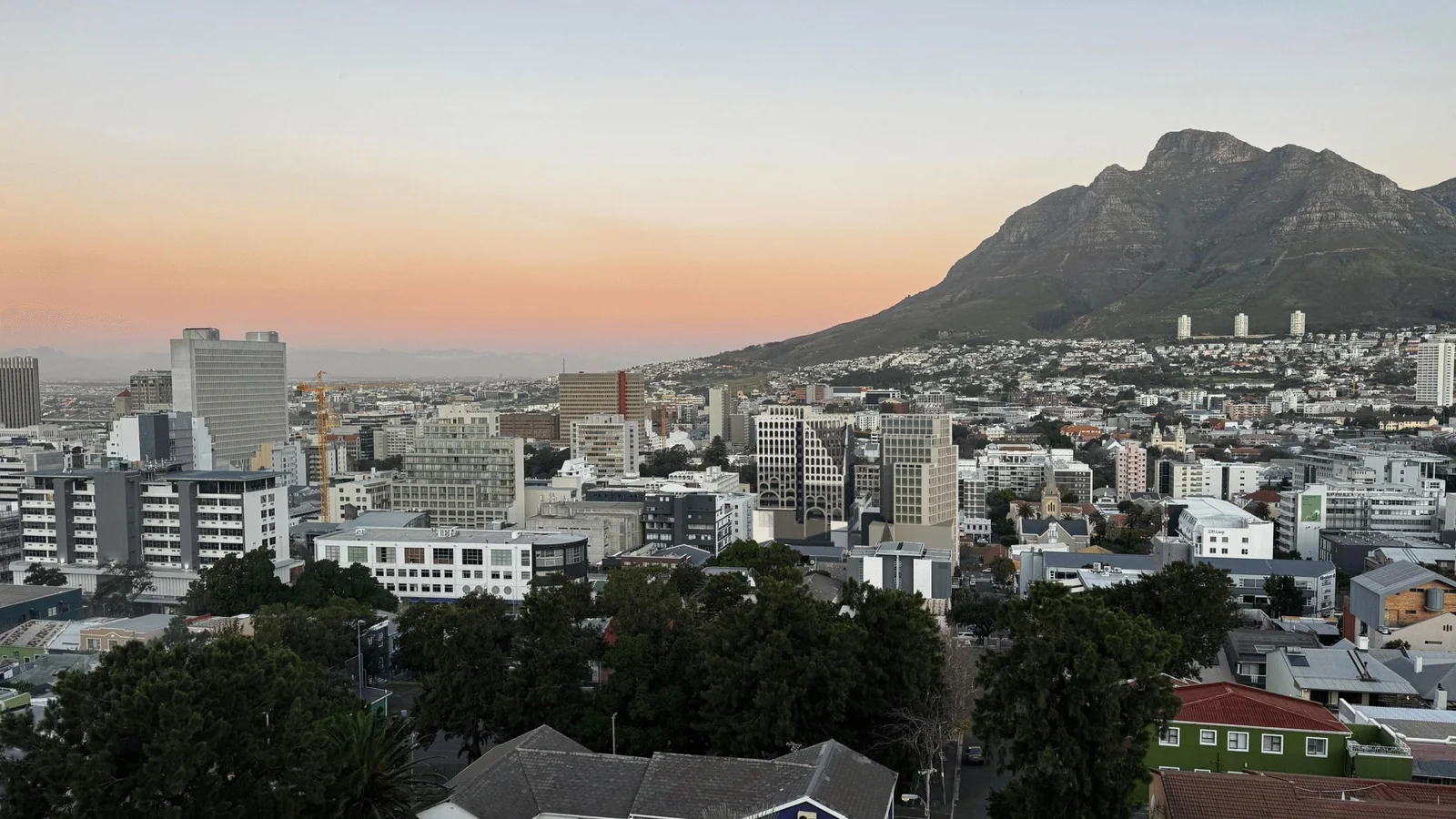
Quick answer: Foreshore Place is the 34-storey mixed-use conversion of Cape Town’s former Absa tower on Adderley and St Georges Mall, delivering 171 studios and apartments from about R1.1 million at launch above retail, offices, parking, and hotel space. It is a City Bowl income and convenience play for professionals, not a coastal scarcity bet.
What numbers define Foreshore Place in 2026?
Scale is the argument for this tower and the table below is the short version of it. Four numbers do most of the work: 34 storeys, 171 residential doors, a launch band running from about R1.1 million to R4.2 million, and a modelled net yield of roughly 3.5% to 5.5% once levies and rates come off. Read the rest as context for those four.
| Metric | Indicative figure | Signal |
|---|---|---|
| Storeys | 34 | Second-tallest CBD tower |
| Residential units | 171 | Scale letting pool |
| Studios | 63 | Lower ticket entry |
| One-bedroom | 99 | Core investor stock |
| Two-bedroom | 9 | Limited family stock |
| Launch price band | About R1.1m to R4.2m | Verify on resale |
| Project value | About R400m to R450m | Major CBD retrofit |
| Developer | HBW Group / Hightower | Conversion specialist |
| Status | Completed | Resale underwriting |
| modelled gross yield | About 5% to 7% | City Bowl band |
| modelled net yield | About 3.5% to 5.5% | After levies and rates |
| Foreign surcharge | None | Standard SA rules |
Mixed-use layout and tenant demand
Foreshore Place stacks 171 residential units above office levels, ground-floor retail, parking podiums and an international hotel brand, so the tenant base is wider than a pure residential block. Finance, legal and government-adjacent workers rent the one-bedrooms that resell at R2m to R3m, and the fourth-floor lounge carries co-working demand from downstairs.
- 63 studios, 99 one-bedroom and nine two-bedroom apartments in the mix
- One-bedroom resale band of R2m to R3m, with studios below it
- Long-let is the base case; short-stay may be restricted where hotel management overlaps
Long-let is the base case for foreign owners. Short-stay may be restricted where hotel management overlaps; read body corporate rules and City of Cape Town by-laws before you assume Airbnb economics.
Resale economics and transfer duty
The tower is completed, so there is no developer primary stock left and every purchase here is a resale from a private seller. That has one immediate consequence for your cash budget: transfer duty applies, and it is payable in rand before registration, not financed into the bond. The SARS table effective 1 April 2025 exempts the first R1,210,000 and then steps through 3%, 6%, 8%, 11%, and 13% on the portions above. There is no surcharge for foreign buyers, so a non-resident pays exactly what a local pays.
On the launch band cited for this building, roughly R1.1 million to R4.2 million, a studio near the lower end can fall inside or just above the exemption threshold, while a two-bedroom in the upper band carries a materially larger duty bill. Add conveyancing fees, deeds office charges, and bond registration costs if you are borrowing. Budget the full stack rather than the duty line alone.
Resale value inside the building is not uniform. Floor level, aspect, whether the unit looks over the mall or into a neighbouring facade, and the parking bay allocation all move price per square metre. So does the levy: a high monthly levy on a studio eats the yield that made the studio attractive in the first place. Run that arithmetic on the actual statement, because at a modelled gross of 5% to 7% a studio bought near R1.1 million produces roughly R4,500 to R6,500 of rent a month, and a combined levy and rates line of R2,500 leaves a thin margin once an 8% to 10% management fee and a one-month annual vacancy come out. Municipal rates themselves apply only above the R620,000 exemption, at about 0.64 cents in the rand. Get the levy statement for the specific unit, not the scheme average. Mechanics in transfer duty explained, full costs in the cost guide.
Who should buy Foreshore Place and who should choose Charlotte or Waterfront stock?
This building suits an investor who wants CBD income at the lowest realistic entry ticket and is content with a conventional long-let. The unit mix says so plainly: 63 studios and 99 one-bedrooms against nine two-bedrooms means the scheme was built for single professionals and couples, and your tenant pool is finance, legal, tourism, and government-adjacent workers who want to walk to work. If your hurdle is a modelled net in the 3.5% to 5.5% band with a large letting pool behind it, this is the right shape of asset.
Choose The Charlotte instead if you want hospitality income with the operating burden handled for you. Thirty-five units under aparthotel management is a different product: the fee stack includes housekeeping and front desk, the revenue is nightly rather than monthly, and the developer-claimed returns need stress-testing against occupancy assumptions you did not set. It is an operating business you own a share of, not a lease you collect.
Choose Waterfront or Silo District stock if the objective is capital preservation and currency-strong resale liquidity rather than yield. Those tickets are multiples of a Foreshore studio and the modelled net band sits lower, but the buyer pool on exit is deeper and less price-sensitive.
The mistake to avoid is buying Foreshore Place expecting short-stay economics. The hotel component and body corporate rules can restrict nightly letting in the residential sections, and that restriction is the single assumption most likely to break an imported spreadsheet.
Foreshore Place versus Charlotte and Waterfront stock
Three City Bowl and Waterfront addresses cover most of the realistic alternatives for a foreign buyer with CBD intent, and they separate cleanly by what they ask of you. Foreshore Place is scale and a conventional lease, The Charlotte is an operating hospitality business, and Silo District is capital preservation at a trophy ticket. The table sets them against each other on the terms that actually decide the purchase.
| Factor | Foreshore Place | The Charlotte | Silo District |
|---|---|---|---|
| Unit count | 171 | 35 | 31 + 79 |
| Format | Mixed-use tower | Boutique aparthotel | Ultra-premium resale |
| Entry (indicative) | From ~R1.1m launch | From R1.695m | Trophy resale |
| modelled net band | ~3.5% to 5.5% | Developer-claimed higher, stress-test | ~2.5% to 4.5% |
| Best for | CBD scale income | Managed hospitality | Capital preservation |
What belongs on your insider checklist?
An insider checklist for Foreshore Place is five documents and one arithmetic test. Ask for the body corporate levy schedule, the hotel floor programme, written confirmation on short-let consent, a conveyancer’s pro-forma including transfer duty above the R1,210,000 threshold, and two independent rental appraisals for the same bedroom count on the CBD corridor.
Ask the agent for the latest body corporate levy schedule, the hotel floor programme, and whether short-term letting requires body corporate consent. Confirm parking bay allocation and monthly parking tariffs if not included in levy. Request a written pro-forma transfer cost from a conveyancer including transfer duty on your offer price. Pull two independent rental appraisals for the same bedroom count on the Foreshore or City Bowl corridor. If gross yield still clears your hurdle after a one-month vacancy assumption, proceed; if not, walk to Century City income stock.
Location: Foreshore, st georges mall, and the cbd commute
The 34-storey tower stands at Adderley Street, Riebeek Street and St Georges Mall, the hinge between the Foreshore office district and the pedestrianised spine of the old CBD. For a tenant in a one-bedroom that resells at R2m to R3m, the commute is a walk and a car is optional, which is real money in a parking-scarce city.
Legal and financial employers cluster within a few blocks, the Civic Centre and government offices are close, and the mall carries the daytime foot traffic that keeps ground-floor retail trading.
The Foreshore side of the address carries the district’s known weaknesses. It was built for cars and offices, the elevated freeway ramps dominate the streetscape, and after the offices empty the immediate blocks go quiet in a way that Sea Point or Gardens do not. Tenants who want evening street life gravitate to Bree, Loop, and Kloof rather than Riebeek Street. Weekend footfall on St Georges Mall is thinner than weekday.
That profile shapes who rents from you. The reliable tenant here is someone whose working life is inside a ten-minute walk and who values that over neighbourhood atmosphere. Underwrite against office attendance patterns in the CBD rather than tourism seasonality, price a 1 month vacancy into any R2m to R3m one-bedroom, and check the walking route from the building to the nearest MyCiTi stop and grocery yourself rather than trusting a map. Broader district context sits in the City Bowl guide.
Studio versus two-bedroom stock at Foreshore Place
Studios dominate the unit mix with 63 doors versus only nine two-bedroom apartments, which shapes the investor universe. Studios attract young professionals and student-adjacent demand tied to the nearby Cape Station student accommodation precinct, supporting higher void-adjusted turnover but lower absolute rent per door. One-bedroom units are the workhorse at 99 apartments, balancing ticket size near R2m to R3m resale with broader tenant demand. Two-bedroom stock is scarce and may suit small families or executive sharers willing to pay premium per square metre for mall-adjacent space.
When you compare Foreshore studios to The Charlotte studios, remember Charlotte’s aparthotel management may include housekeeping and front desk in the fee stack, while Foreshore is conventional sectional title unless a unit participates in hotel pooling. Normalize net cash flow per square metre before you choose between them.
Foreign cash buyers should pre-clear FICA documents and rand liquidity for transfer duty before bidding, because Foreshore resales move quickly when listings are scarce and delayed FX transfers have cost buyers their deposit slots in other CBD towers. Two numbers drive that timing. Transfer duty is payable in rand before registration and cannot be rolled into the bond, so on any price above the R1,210,000 exemption the cash must already be in the country when the conveyancer calls for it. South African banks also lend non-residents only about 50% of value, which means the other half arrives from offshore through an authorised dealer bank and has to be recorded for later repatriation. Keep a conveyancer on standby before you make a verbal offer, and ask your bank how many working days an inbound transfer of that size genuinely takes.
What to verify next
Pull live Foreshore Place listings and three rental comparables on St Georges Mall. Obtain body corporate financials, levy statements, and hotel management agreements affecting noise and access. Model transfer duty with the cost guide and net yield with the rental yield guide. Foreign buyers: read the foreign buyer hub and confirm FICA before offer.
Frequently Asked Questions
Foreshore Place is the mixed-use conversion of the iconic 34-storey former Absa tower on the corner of Adderley Street, Riebeek Street and St Georges Mall in Cape Town's CBD. The scheme comprises 171 residential units, 63 studios, 99 one-bedroom and nine two-bedroom apartments, above commercial floors, retail, parking, and hotel space. HBW Group and Hightower Properties led the redevelopment with a reported project value around R400 to R450 million.
Marketing at launch cited studio, one-bedroom and two-bedroom pricing from about R1.1 million to R4.2 million, depending on floor and aspect. Resale values today depend on levy, view, and body corporate health. Always rebuild entry cost with transfer duty and conveyancing using live comparables, not launch brochures.
City Bowl apartments can modelled around 5% to 7% gross for long-let professional tenants, compressing to roughly 3.5% to 5.5% net after levies, rates, and management. Mixed-use towers with hotel and office components need careful body corporate rules on short-stay. Figures are modelled and directional, not guaranteed.
Yes, with no foreign buyer surcharge. Non-residents may finance up to about 50% locally and must introduce offshore funds with proper exchange-control recording. Resale purchases attract transfer duty per the SARS table plus conveyancing fees.
Both are City Bowl investment addresses. The Charlotte is Prospekt's boutique 35-unit aparthotel on Burg Street targeting hospitality income. Foreshore Place is a large-format mixed-use tower on St Georges Mall with hotel and office floors. Foreshore suits scale and mall foot traffic; Charlotte suits managed short-stay at smaller unit count.
Get a Cape Town property shortlist
Share your budget, target area (Atlantic Seaboard, City Bowl, Winelands), and goal. We reply within one business day with matched stock and next steps.