
Cost of Buying Property in Cape Town 2026: Every Fee
Every cost of buying property in Cape Town: 2025 SARS transfer duty, conveyancing and bond fees, VAT on new builds, plus charges that surface after transfer.
By Cape Town Invest Editorial · Updated September 3, 2026 · 26 min read
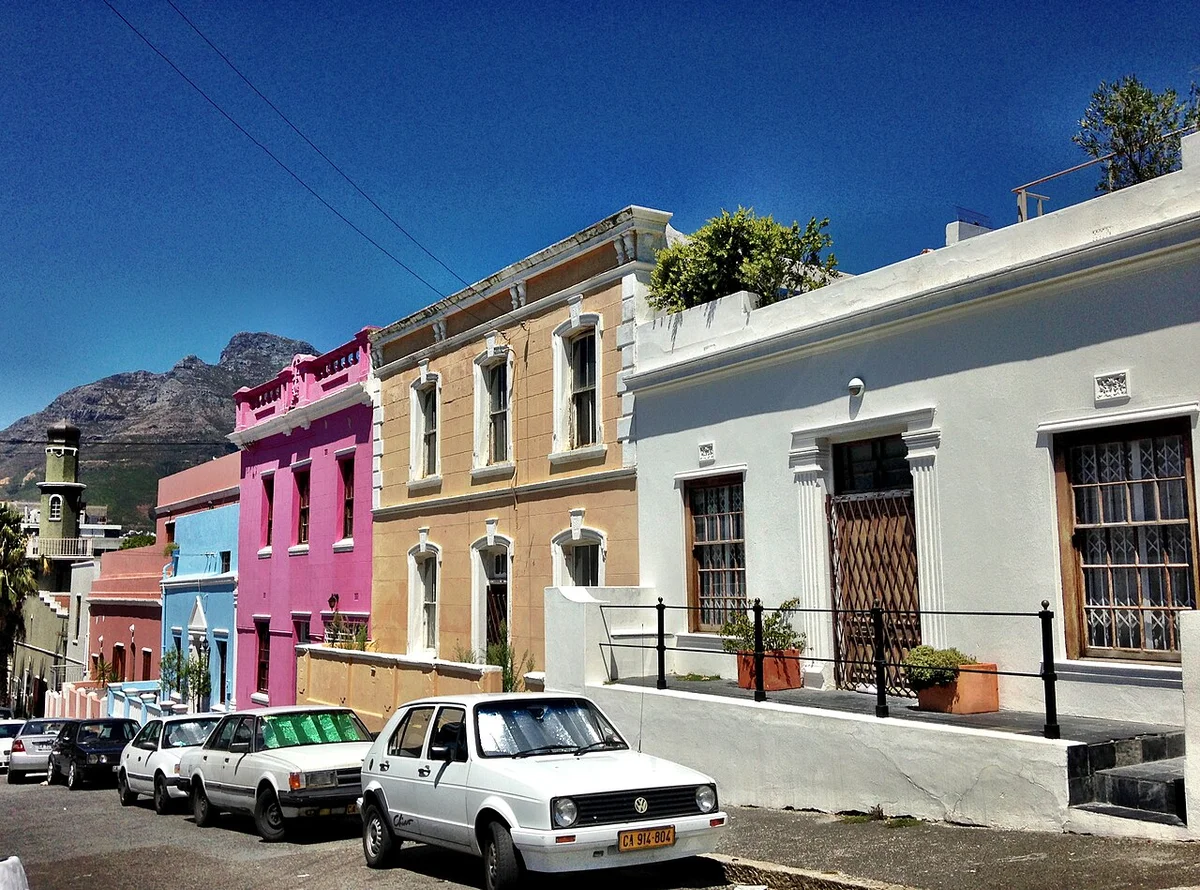
Quick answer: The cost of buying property in Cape Town is the purchase price plus once-off costs of roughly 4 to 10 percent, driven mainly by SARS transfer duty. A R2,000,000 resale adds about R62,000, a R5,000,000 resale about R379,000, and a R10,000,000 resale about R953,000, before any bond costs. New builds from a VAT-registered developer swap transfer duty for 15 percent VAT that is already inside the price.
The true cost of buying property in Cape Town
The table below shows the full picture on a R3,000,000 resale, the kind of home a relocating family or first investor often targets. It is the anchor most other numbers in this guide flow from.
| All-in cost line | Who charges it | When you pay | Rough size on R3,000,000 |
|---|---|---|---|
| Transfer duty | SARS | Before registration | R107,356 |
| Conveyancing fee | Transferring attorney | Before registration | R30,000 (excl. VAT) |
| Conveyancing VAT 15 percent | Attorney | Before registration | R4,500 |
| Bond registration (if financed) | Bond attorney | Before registration | R30,000 (excl. VAT) |
| Deeds Office and sundries | Deeds Office | Before registration | R2,000 to R3,000 |
| Annual municipal rates | City of Cape Town | Yearly, ongoing | R15,232 per year |
A cash buyer on this R3,000,000 home pays roughly R143,000 in once-off costs above the price. A bonded buyer adds bond registration on top. Decide your true ceiling before you view, because the cheapest mistake in Cape Town is loving a R4,500,000 home when your real all-in limit is R4,000,000.
Transfer duty: the SARS table for 2025 and 2026
The rates below took effect on 1 April 2025 and hold through the 2026 season, starting at 0% up to R1,210,000. Transfer duty is a marginal tax: each bracket taxes only the slice of value inside it, never the whole price. The buyer pays SARS through the transfer attorney before the Deeds Office will register.
| Property value (Rand) | Transfer duty |
|---|---|
| 0 to 1,210,000 | 0 percent |
| 1,210,001 to 1,663,800 | 3 percent of the value above R1,210,000 |
| 1,663,801 to 2,329,300 | R13,614 plus 6 percent above R1,663,800 |
| 2,329,301 to 2,994,800 | R53,544 plus 8 percent above R2,329,300 |
| 2,994,801 to 13,310,000 | R106,784 plus 11 percent above R2,994,800 |
| 13,310,001 and above | R1,241,456 plus 13 percent above R13,310,000 |
Two practical points matter. First, the zero-rated band means an entry-level apartment under R1,210,000 pays no transfer duty at all, which makes the sub-R1.2m segment attractive for first buyers. Second, the jump to 11 percent above R2,994,800 is where duty starts to bite hard, so a small negotiation that drops a price from R3,050,000 to R2,990,000 saves duty as well as price. For bracket-by-bracket maths see our South Africa transfer duty guide and the step-by-step buying guide.
VAT versus transfer duty: new builds against resale
| Factor | New build from VAT developer | Resale from private seller |
|---|---|---|
| Tax that applies | 15 percent VAT | Transfer duty |
| Who pays SARS | The developer | The buyer |
| Extra tax on top of price | None | Duty per the table |
| Example on R5,000,000 | VAT already inside price, R0 duty | R327,356 duty |
The takeaway is that a VAT-inclusive new-build price is often more buyer-friendly on tax than it first looks, because there is no separate duty cheque to write. Always confirm in the Offer to Purchase whether the price is VAT-inclusive or transfer-duty applicable, because guessing wrong distorts your whole budget. Investors weighing new versus resale should also read our the metro investment guide.
Conveyancing and legal fees
Conveyancing fees in Cape Town run from about R14,000 excluding VAT at R1,000,000 to about R62,000 at R10,000,000, with 15 percent VAT on top of every line. Most Cape Town buyers sit in the R1,000,000 to R3,000,000 band, where the transfer attorney fee is R15,000 to R35,000 before VAT.
| Purchase price | Transfer attorney fee (excl. VAT) | Plus 15 percent VAT |
|---|---|---|
| R1,000,000 | about R14,000 | about R2,100 |
| R2,000,000 | about R23,000 | about R3,450 |
| R3,000,000 | about R30,000 | about R4,500 |
| R5,000,000 | about R42,000 | about R6,300 |
| R10,000,000 | about R62,000 | about R9,300 |
Treat these as guidance, not quotes. Firms may discount, especially on higher values or repeat business, and disbursements add a few hundred rand. Ask for a written pro-forma account from the conveyancer before you sign the Offer to Purchase, so the legal cost is a known number rather than a surprise on registration day.
Want a personalised all-in cost estimate for a specific Cape Town price band?
Get my cost breakdownBond registration costs
If you finance the purchase with a home loan, called a bond in South Africa, a separate bond attorney registers that bond over the property. This is a distinct cost from the transfer fee, and it is also paid by the buyer. The bond attorney is usually nominated by your lending bank.
Bond registration fees follow a scale close to transfer fees, plus 15 percent VAT. On top, the bank charges a once-off initiation fee, which is capped by regulation at R6,037 including VAT, and may charge a small monthly service fee over the life of the loan.
| Bond amount | Bond registration fee (excl. VAT) | Bank initiation fee (incl. VAT) |
|---|---|---|
| R1,000,000 | about R14,000 | R6,037 |
| R2,000,000 | about R23,000 | R6,037 |
| R3,000,000 | about R30,000 | R6,037 |
| R5,000,000 | about R42,000 | R6,037 |
Cash buyers avoid every line in this table, which is one reason a cash offer can be both cheaper and faster to register. Bonded buyers should budget bond registration as a real cost, not an afterthought, because on a R2,000,000 home it adds roughly R32,000 once VAT and initiation are counted. Non-resident buyers should note that a local bank typically lends only up to about 50 percent of value, covered in detail in our foreign buyer guide.
Worked examples: R2m, R5m and R10m purchases
Three price points cover most Cape Town enquiries: R2,000,000 for an entry investment flat, R5,000,000 for a family home, and R10,000,000 for Atlantic Seaboard stock. Each is modelled below as a cash resale purchase, so transfer duty applies rather than VAT. Start with the prices and their dollar equivalents at R18.
| Purchase price (ZAR) | Approx. in USD at R18 |
|---|---|
| R2,000,000 | about $111,000 |
| R5,000,000 | about $278,000 |
| R10,000,000 | about $556,000 |
Now the once-off cost stack on each, for a cash resale buyer.
| Cost line | R2,000,000 | R5,000,000 | R10,000,000 |
|---|---|---|---|
| Transfer duty | R33,786 | R327,356 | R877,356 |
| Conveyancing (excl. VAT) | R23,000 | R42,000 | R62,000 |
| Conveyancing VAT 15 percent | R3,450 | R6,300 | R9,300 |
| Deeds Office and sundries | R2,000 | R3,000 | R4,000 |
| Total once-off add-on | about R62,200 | about R378,700 | about R952,700 |
| Add-on in USD at R18 | about $3,500 | about $21,000 | about $52,900 |
The pattern is clear: as a share of price, once-off costs climb from roughly 3 percent on R2,000,000 to nearly 10 percent on R10,000,000, because transfer duty is progressive. A bonded buyer adds bond registration on top of these figures, roughly R26,000 to R48,000 depending on the bond size and VAT. Investors should fold this entire add-on into their entry cost before calculating return, a step we walk through in the Cape Town rental yield guide.
Ongoing costs: rates and levies
Ongoing Cape Town ownership costs are municipal rates plus, for sectional title, the body corporate levy. The City charges roughly 0.64 cents per rand of municipal value per year after excluding the first R620,000, so a R2,000,000 apartment pays about R8,832 a year, with a levy of R2,000 to R4,000 a month on top.
Rates are billed monthly and fund refuse, roads and city services. The sectional title levy covers building insurance, common-area maintenance and the reserve fund.
| Property | Annual municipal rates (approx.) | Sectional title levy (approx.) |
|---|---|---|
| R2,000,000 apartment | about R8,832 | R2,000 to R4,000 per month |
| R5,000,000 home | about R28,032 | freehold, none |
| R10,000,000 home | about R64,000 | freehold, none |
These figures are estimates tied to municipal valuations, which can differ from the price you pay. Always ask the seller for the latest rates account and, for sectional title, the levy statement and body corporate financials. A block with thin reserves is heading for a special levy that no seller will volunteer, so the levy line is a due-diligence item, not just a budget line.
Hidden and one-off costs buyers forget
Hidden Cape Town purchase costs are five: advance rates for the clearance certificate, occupational rent if you move in before registration, building and contents insurance from registration day, utility deposits and connection fees, and compliance certificates. None is large alone, but together they add a percent or more to a R2,000,000 entry cost.
- Rates clearance certificate: the City requires rates paid several months in advance before it issues clearance, so on a R2,000,000 apartment billed about R8,832 a year you fund a few thousand rand upfront.
- Occupational rent: if you take occupation before registration, you pay the seller a monthly occupational rent until transfer.
- Home and contents insurance: lenders require building cover from registration day, and you arrange contents cover yourself.
- Moving, utility deposits and connection: electricity and water account transfers and deposits with the City.
- Compliance certificates: the seller usually pays for electrical, gas, plumbing and beetle certificates, but confirm this in the Offer to Purchase so it does not land on you.
Body corporate levy spikes and special levies
On sectional title, the monthly levy is not a fixed forever cost. It is the most common post-purchase hidden cost in Cape Town because buyers focus on today’s levy and ignore the reserve fund, deferred maintenance and conduct rules behind it.
Ordinary levy increases track insurance, security, cleaning, utilities in common areas and the statutory reserve fund contribution. Well-run schemes raise levies gradually. Under-funded schemes defer maintenance until a crisis forces a step-change increase that can add 20% to 50% to your monthly bill in a single year.
Special levies are one-off charges for major capital projects: roof replacement, lift modernisation, facade repair, fire-compliance upgrades or backup power installation for the common areas. They are split by participation quota. A special levy of R1,500,000 on a block of forty units might mean R37,500 per owner, but a penthouse with a larger quota can pay far more. Special levies approved at an AGM shortly before or after you take transfer become your liability.
| Levy risk signal | What to request in due diligence | Hidden cost if skipped |
|---|---|---|
| Thin reserve fund | Audited financials and 10-year maintenance plan | Special levy within 12 to 24 months |
| Deferred roof or lift work | AGM minutes and engineer reports | Six-figure special levy |
| Rising levy trend | Three years of levy statements | Permanent yield compression |
| Short-let restrictions | Conduct rules in writing | Strategy blocked after purchase |
This is not theoretical. Atlantic Seaboard and City Bowl blocks with pools, lifts and sea exposure carry heavier maintenance cycles than suburban estates. Audit the levy and reserve fund during due diligence before your suspensive conditions lapse, not at the first AGM after you own the unit.
Rates clearance and municipal charge surprises
Arrears on the seller’s account are usually settled from sale proceeds, but disputes over amount, allocation or timing delay registration. Every extra week between unconditional offer and registration is a week of occupational rent, double housing cost or lost letting income if you expected to tenant the unit immediately.
Municipal valuation vs purchase price catches investors who budget running costs off the price they paid. Rates are calculated on the City’s valuation, which can lag or lead the market. A R4,000,000 purchase on a R3,200,000 municipal valuation will rate lower than the same apartment once the City revalues upward after sale.
Utility and refuse charges attach to the property account. Confirm no hidden municipal debt sits outside the rates line, especially on homes that were vacant or tenant-occupied with arrears accumulated in the seller’s administration.
| Rates clearance issue | Who resolves it | Buyer impact |
|---|---|---|
| Unpaid rates arrears | Conveyancer from proceeds | Delayed transfer |
| Valuation reassessment after sale | City of Cape Town | Higher annual rates next cycle |
| Disputed utility balance | Seller and municipality | Registration hold |
| Incomplete clearance figures | Conveyancer follow-up | Extended occupational rent |
Insider tip: watch the expiry date on the rates clearance figure, not only the amount. The City issues a clearance certificate valid to a set date and charges several months of rates in advance to get there. If registration slips past that date, the conveyancer must re-apply and the seller must fund another advance, which can add two to three weeks at the exact point everyone assumes the deal is done. Ask for the clearance date in writing the week it is issued.
Rates are an ongoing cost, not only a transfer hurdle. For annual rates sizing on a R3,000,000 home, budget roughly R17,000 to R18,000 per year as a starting point and verify against the actual municipal account during due diligence.
FICA, exchange control and foreign-buyer delay costs
Foreign buyers pay the same statutory transfer costs as locals, but they face timeline friction that functions as a hidden cost. Delays are expensive in Cape Town’s competitive market because they extend rent, hotel bills, opportunity cost and the risk that the seller accepts a faster competing buyer.
FICA compliance requires identity verification, source-of-funds documentation and sometimes additional certification for non-residents. Banks, estate agents and conveyancers must complete FICA before large funds move. Missing apostilles, expired passports or inconsistent name spelling between passport, bank account and Offer to Purchase can hold a deal for two to six weeks.
Exchange control requires purchase funds to enter South Africa through the banking system with the correct purpose code, so that the non-resident endorsement on the title can support later repatriation of capital and profit. Ad hoc transfers or third-party payments create rework and bank compliance queries.
Power of attorney and remote signing add legal cost if you cannot attend the signing in person. A properly drafted power of attorney for the transaction is normal, but it must be prepared early, not the week before transfer.
| Foreign-buyer friction | Hidden cost form | Mitigation |
|---|---|---|
| FICA document gaps | Transfer delay | Start document pack before offer |
| Exchange-control queries | Bank hold on funds | Use authorised dealer, correct purpose |
| Remote signing | Extra legal fees | Appoint conveyancer early |
| 50% LTV ceiling | Larger offshore deposit | Budget cash before you search |
Time is money here. A four-week FICA delay on a R35,000-a-month short-term rental plan is R35,000 of lost peak-season income before you even register. Treat compliance as a parallel workstream from day one in the how to buy property step-by-step guide.
Maintenance and compliance costs after transfer
Hidden costs do not stop at registration. Cape Town’s stock mix, coastal climate and infrastructure history make post-transfer spend predictable rather than random, particularly on older sectional title, and the body corporate levy pays for none of it inside your own unit. Budget year one before you offer, working from the inspection report rather than the seller’s description.
Older Atlantic Seaboard and City Bowl apartments often need immediate spend on inverters, solar backup, geyser replacement, waterproofing or window seals, so budget 1% to 2% of property value in year one where the seller has not maintained aggressively. On a R3,800,000 apartment that is R38,000 to R76,000 of work before you collect a first month’s rent. Load-shedding readiness sits inside that number and can exceed it: a meaningful inverter and battery system commonly runs R80,000 to R250,000 depending on the load you want to carry, and for a letting owner it is closer to a prerequisite than an upgrade. Salt air shortens the maintenance cycle on anything facing the sea, which is why two blocks of the same age can present very differently at inspection.
A unit without backup power is harder to let and cheaper to buy for a reason. Levy money covers common property, never your unit’s internals.
Water security matters less than at Day Zero peak, but buyers still check tanks, pumps and borehole compliance. Non-compliant boreholes or unauthorised water installations can trigger municipal enforcement.
Building plan compliance is a due diligence item that becomes your problem after transfer if missed. Unapproved enclosed balconies, loft conversions or garage conversions without City of Cape Town approval can block resale, void insurance and require costly rectification.
Short-let compliance: the hidden cost that blocks income
Short-let compliance is the hidden cost that can zero out a Cape Town buy-to-let thesis. Body corporate conduct rules increasingly cap or ban short-stay letting, City policy adds registration and levies, and setup runs R50,000 to R200,000 before management fees of 15% to 20% of revenue.
Body corporate conduct rules increasingly restrict or ban short-stay letting in sectional title schemes. A rule that requires owner consent, caps nights per year, or prohibits letting outright turns a projected STR yield into a standard long-term let with a different return profile. Confirm rules in writing during due diligence, not from the agent’s assurance.
City of Cape Town short-term rental policy continues to tighten oversight in residential zones. Depending on the property type and area, you may need registration, pay tourism levies, meet safety standards and maintain guest records. Non-compliance risks fines and platform delisting.
Operational setup costs include furnishing, linen, cleaning contracts, smart locks, noise management and dynamic pricing tools. These are capital and operating costs, not transfer costs, but they are hidden in the sense that buyers price the apartment without pricing the business.
| Short-let compliance line | When it hits | Cost character |
|---|---|---|
| Body corporate ban or consent rule | Before you list | Can zero out STR plan |
| Municipal registration and levies | Before or at letting | Ongoing compliance |
| Furnishing and setup | Pre-first guest | R50,000 to R200,000+ |
| Management at 15% to 20% | Monthly | Yield compression |
| Guest damage and turnover | Ongoing | Operating reserve |
If STR is core to your thesis, read short-term rules alongside this guide and model long-term letting as your fallback case. A purchase that only works on STR assumptions is a purchase that fails when rules change.
Worked example: hidden costs on a R3,800,000 City Bowl resale
| Cost line | Modelled amount (ZAR) | Visible or hidden |
|---|---|---|
| Purchase price | 3,800,000 | Visible |
| Transfer duty | 152,000 | Visible but often under-budgeted |
| Conveyancing (incl. VAT and disbursements) | 38,000 | Visible |
| Bond registration (incl. VAT) | 32,000 | Hidden to many first buyers |
| Bank initiation fee | 6,000 | Hidden |
| Bond life insurance (year one) | 18,000 | Hidden monthly stack |
| FICA and legal for POA (foreign buyer) | 12,000 | Hidden |
| Rates clearance delay: 3 weeks occupational rent | 15,000 | Hidden timeline cost |
| Special levy due 4 months after transfer | 45,000 | Hidden levy risk |
| Inverter and battery year one | 120,000 | Hidden post-transfer |
| Total hidden-ish lines (excl. price) | 286,000 | About 7.5% on top of visible fees |
How to protect yourself from hidden costs
Protection from hidden costs is four habits, not vigilance. Budget all-in before you view, adding transfer duty, conveyancing with 15% VAT, bond fees, a levy reserve and a year-one maintenance reserve. Appoint the conveyancer early, run full sectional title due diligence, and model 4 weeks of delay as a cost line.
- Compare listings on all-in cash, not on the headline price
- Appoint the transferring attorney in week 1, not week 4
- Read the levy roll, reserve fund, AGM minutes and special-levy history
- Add 4 weeks of holding cost to the base case if you are buying from abroad
Budget all-in before you view. Build price plus transfer duty, conveyancing, bond fees, a levy reserve and a year-one maintenance reserve. Compare listings on all-in cash, not headline price.
Appoint the conveyancer early. A good transferring attorney flags rates arrears, title conditions and FICA gaps weeks earlier than a last-minute appointment. See the conveyancing fees guide for what the fee covers and what to ask upfront.
Run full due diligence on sectional title. Levy, reserve fund, AGM minutes, conduct rules and special-levy history are not optional extras. They are the difference between a clean yield model and a post-transfer shock.
Model delay as a cost line. Foreign buyers especially should add four weeks of holding cost to the base case. If the deal still works with that delay, the timeline stress will not break your budget when it happens.
Who gets hit hardest by hidden costs
| Buyer profile | Highest hidden-cost risk | Priority check |
|---|---|---|
| First-time South African buyer | Transfer duty bracket and bond insurance | Duty maths and bank fee sheet |
| Foreign cash buyer | FICA delay and year-one maintenance | Document pack and inspection |
| Foreign bonded buyer | 50% deposit plus bond stack plus FX | All-in cash flow in rand and home currency |
| Sectional title investor | Special levy and STR rules | Levy audit and conduct rules |
| Luxury coastal buyer | Low yield plus high levy plus upkeep | Reserve fund and engineering reports |
No profile escapes transfer friction entirely. The difference is whether you discover the cost in a spreadsheet before offer or in an invoice after transfer.
What are the pros and cons of the Cape Town cost structure?
The Cape Town cost structure is cheap at the bottom and steep at the top: transfer duty is 0 percent below R1,210,000 and reaches 11 percent on the slice above R2,994,800, while conveyancing scales gently. Non-residents pay no surcharge, but bonded buyers carry a second attorney and rand exposure on repatriation.
Pros:
- Transfer duty is zero under R1,210,000, keeping entry-level buying cheap on tax.
- New builds bundle 15 percent VAT into the price, so there is no separate duty cheque.
- No foreign surcharge: non-residents pay the same fees as locals.
- Rand pricing offers strong value for buyers earning in dollars, euros or pounds.
- Cash buyers avoid all bond costs and register faster.
Cons:
- Transfer duty rises steeply above R2,994,800, hitting 11 percent on the slice over that line.
- Conveyancing, VAT and disbursements add a meaningful layer over the price.
- Bonded buyers carry separate bond registration costs on top of transfer fees.
- Ongoing rates and levies are easy to underestimate at the planning stage.
- A weak rand cuts both ways: cheaper entry, but currency risk on repatriation.
Off-plan versus resale: Century City worked examples
The VAT-versus-duty decision is abstract until you attach it to real schemes. Rabie’s Century City pipeline gives three useful anchors: a sold-out off-plan launch, a completed occupied scheme, and resale stock that now trades with transfer duty.
| Scheme | Buyer type | Price band (indicative) | Transfer duty or VAT | Conveyancing (indicative) | All-in once-off add-on |
|---|---|---|---|---|---|
| SkyWater Century City off-plan | VAT-registered developer sale | Studio to two-bed, project value ~R270m | 15% VAT inside price, no transfer duty | R18,000 to R32,000 excl. VAT | Roughly 2% to 4% of price (VAT already in price) |
| Nine Palms Century City resale | Private seller after occupation | One-bed resale ~R2.5m to R2.9m (market dependent) | SARS transfer duty ~R33,786 to R106,784 on R2.0m to R3.0m | R22,000 to R35,000 excl. VAT | Roughly 3% to 5% of price |
| On Park Century City resale | Private seller, completed stock | One-bed to two-bed, occupied scheme | Transfer duty per SARS table | R22,000 to R38,000 excl. VAT | Roughly 3% to 6% of price |
The pattern is consistent. Off-plan from Rabie or Blok swaps transfer duty for VAT that is already embedded in the list price, which can save a meaningful slice on sub-R3m stock compared with buying the same unit later from a private seller. Resale in a completed scheme like On Park removes construction risk but adds transfer duty and asks you to verify real levies and body corporate accounts before you offer.
For a foreign buyer comparing Century City to the Atlantic Seaboard, fold the same logic into yield: an off-plan VAT price plus projected levy is not comparable to a resale asking price until you add duty, conveyancing, and the actual monthly levy from the sectional title register.
Cape Town Invest all-in cost worksheet
A Cape Town all-in cost worksheet turns the listing price into an investable number. On a R2,500,000 resale the once-off stack above price is roughly R136,000 to R140,000, about 5.4 percent; on a R3,200,000 VAT-inclusive off-plan unit it is about R34,000 to R38,000, or 1.1 percent, plus the deposit.
Use the worksheet before you view or reserve. It is a planning tool, not a quote. Confirm every line with your conveyancer.
| Step | What to calculate | Example on R2,500,000 resale | Example on R3,200,000 VAT-inclusive off-plan |
|---|---|---|---|
| 1 | Purchase price | R2,500,000 | R3,200,000 (VAT included) |
| 2 | Transfer duty or VAT | R77,356 duty | R0 separate duty (VAT in price) |
| 3 | Conveyancing + 15% VAT | ~R28,750 | ~R32,200 |
| 4 | Bond registration (if financed) | ~R28,750 + R6,037 initiation | Staged per developer schedule |
| 5 | Deeds Office and sundries | R2,000 to R3,000 | R2,000 to R3,000 |
| 6 | Deposit (off-plan only) | N/A | Often 10% to 30% on OTP |
| 7 | Year-one rates + levy | Pull from agent and body corporate | Use developer projection, verify at handover |
| Total once-off above price | Sum lines 2 to 5 | ~R136,000 to R140,000 (5.4%) | ~R34,000 to R38,000 (1.1%) plus deposit |
Cape Town Invest tracks these stacks across our project reviews and investment checklist so foreign buyers can compare like-for-like before they shortlist a suburb. The expensive mistake is treating the listing price as the investable number without line 7, because sectional title levies in Century City and the Atlantic Seaboard commonly run R2,500 to R6,000 a month and directly compress net yield.
What belongs on your red flags and an insider checklist?
The most expensive Cape Town cost errors are avoidable with two documents: a written pro-forma account from the conveyancer and the latest rates and levy statement. Both cost nothing and turn a guessed R136,000 once-off stack on a R2,500,000 resale into a figure you can hold the seller to.
Work through the checklist before you sign any Offer to Purchase, and treat each item as a deal-shaping number rather than fine print.
Insider tip: ask the conveyancer for a written pro-forma cost account and ask the agent for the latest rates and levy statement, both in writing, before you commit. The two documents turn your all-in cost from a guess into a figure.
Red flags to verify:
- A new build priced as duty-applicable when it should be VAT-inclusive, or the reverse.
- An Offer to Purchase silent on who pays compliance certificates.
- A sectional title block with no maintenance reserve or a recent special levy.
- A seller who cannot produce a recent rates clearance figure.
- A deposit requested into a personal account rather than the conveyancer’s trust account.
Who pays what: buyer scenarios
Cape Town once-off costs are driven by buyer profile more than by suburb. A first-time buyer under R1,210,000 pays zero transfer duty and can be all-in under R30,000. A relocating family on a R3,000,000 to R5,000,000 resale budgets roughly R140,000 to R380,000 once-off before rates and levies.
- First-time local buyer under R1.2m: transfer duty is zero, so your main costs are conveyancing and, if financed, bond registration. The all-in add-on can be under R30,000.
- Relocating family on a R3m to R5m resale: budget the full transfer duty plus conveyancing and VAT, roughly R140,000 to R380,000 once-off, and confirm rates before you commit.
- Foreign or non-resident investor: same fees as a local, but plan for a 50 percent local bond ceiling and keep clean offshore transfer records for later repatriation.
- Buy-to-let investor: fold the entire once-off add-on into your entry cost before calculating yield, and confirm whether the body corporate restricts short-term letting.
- Cash buyer on a new build: you may skip transfer duty entirely if the price is VAT-inclusive, leaving conveyancing as your main once-off cost.
Whichever profile fits, the method is the same. Start with the price, add transfer duty or VAT, add conveyancing and any bond costs, then layer in rates and levies for the year ahead. For the legal eligibility side of buying as a non-citizen, see whether foreigners can buy property in South Africa. Get the all-in number right and the rest of the purchase is just process.
To put your own numbers through the same stack, the transfer cost calculator totals duty, attorney, Deeds Office and bond registration and shows the cash needed on the day.
Frequently Asked Questions
Budget 4 to 10 percent of the purchase price in once-off costs on top of the price itself. On a R2,000,000 resale you add roughly R62,000 in transfer duty, conveyancing and Deeds Office charges. On a R5,000,000 resale the add-on is about R379,000, and on a R10,000,000 resale around R953,000. The biggest single line is SARS transfer duty, which rises steeply with price.
Transfer duty follows the SARS table effective 1 April 2025. Property under R1,210,000 pays 0 percent. From there it scales from 3 percent up to 13 percent on the slice above R13,310,000. A R2,000,000 home pays R33,786, a R5,000,000 home pays R327,356, and a R10,000,000 home pays R877,356. The buyer pays this tax, not the seller.
You pay one or the other, never both. A new-build bought from a VAT-registered developer is priced with 15 percent VAT already included, and the developer pays SARS, so the buyer pays no transfer duty. A resale from a private seller carries transfer duty per the SARS table and no VAT. Always confirm in the Offer to Purchase which one applies.
Conveyancing fees follow a recommended sliding scale based on price. For the R1,000,000 to R3,000,000 band most buyers fall into, the transferring attorney charges roughly R15,000 to R35,000 before 15 percent VAT and small disbursements. Higher-value homes scale up: about R42,000 on R5,000,000 and around R62,000 on R10,000,000, all excluding VAT.
If you finance the purchase, a separate bond attorney registers your bond and charges on a scale similar to transfer fees, roughly R14,000 to R42,000 before VAT for bonds of R1,000,000 to R5,000,000. On top sits a bank initiation fee capped at R6,037 including VAT. Cash buyers skip all bond costs entirely.
The City of Cape Town charges residential rates of roughly 0.64 cents per rand of municipal value per year, after the first R620,000 which is rates-exempt for homes. That is about R8,832 a year on a R2,000,000 property and R28,032 on a R5,000,000 home. Sectional title owners also pay a body corporate levy, commonly R2,000 to R5,000 a month.
A non-resident pays the same transfer duty, conveyancing and rates as a local buyer, with no foreign surcharge. The main difference is finance: a local bank usually lends a non-resident up to about 50 percent of value, so the balance must come from offshore funds introduced through the banking system and recorded for later repatriation.
As a planning rule, a cash buyer adds about 3 to 9 percent of the price in transfer duty and fees, rising with value because duty is progressive. A bonded buyer adds a further 1 to 2 percent for bond registration. Build the full all-in number before you view, so you do not commit to a price your true budget cannot cover.
The costs buyers most often underestimate are progressive transfer duty on resales, body corporate levy spikes and special levies on sectional title, rates clearance arrears, bond registration and life insurance on finance, FICA and exchange-control delays that extend holding costs, and post-transfer maintenance on older Atlantic Seaboard stock. Short-let compliance adds licensing and body corporate rule checks that can block your letting plan.
Yes. Transfer duty is progressive, so it rises faster than price. A small negotiation that drops a price from R3,050,000 to R2,990,000 can save duty as well as capital. Buyers also confuse VAT on new builds with transfer duty on resales: you pay one or the other, never both. Foreign buyers pay the same duty as locals, with no surcharge, but must budget it in rand on top of the purchase price.
A special levy is a one-off charge the body corporate levies on owners for a major repair or capital project, such as a roof replacement, lift overhaul or facade restoration. It is split by participation quota and becomes your cost from transfer day if approved before or soon after you buy. A looming special levy can add R50,000 to R300,000 or more on a single unit, which is why levy and reserve fund due diligence is non-negotiable.
Get a Cape Town property shortlist
Share your budget, target area (Atlantic Seaboard, City Bowl, Winelands), and goal. We reply within one business day with matched stock and next steps.