
Balwin Properties: Volume Building in the Western Cape
Balwin runs seven Western Cape schemes with entry from R754,900 in Gordon's Bay, far below the metro's usual floor. What a volume developer does to your resale.
By Cape Town Invest Editorial · Updated September 7, 2026 · 11 min read
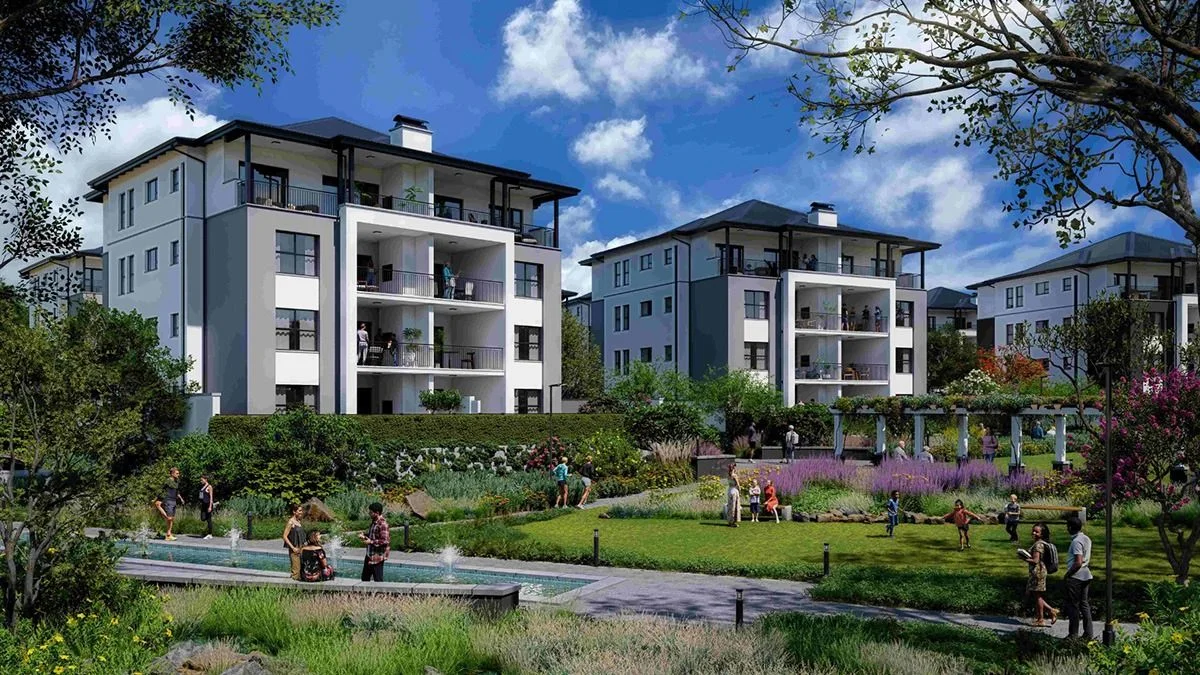
Quick answer: Balwin runs seven Western Cape schemes, five of them selling or releasing a new phase, with published from-prices between R754,900 in Gordon’s Bay and R2,749,900 at the De Aan-Zicht Lifestyle Centre. That bottom figure is roughly a third of the Northern Suburbs entry ticket and around a fifth of the Atlantic Seaboard’s. The model is volume sectional title in three standard collections, which changes what your resale competes against.
What kind of developer is Balwin?
A volume developer, and in the Western Cape the numbers are specific: seven schemes, five live, published from-prices from R754,900 to R2,749,900. That range spans more than three times, and it is delivered through three standard product lines rather than through bespoke buildings.
| Scheme | Location | From | Collection | Status |
|---|---|---|---|---|
| De Aan-Zicht Lifestyle Centre | Cape Town | R2,749,900 | Signature | Selling |
| De Buurt | Cape Town | R1,479,900 | Classic | Sold out |
| De Kuile | Cape Town | R1,429,900 | Classic | New phase released |
| Suikerbos | Sandown | R1,229,900 | Classic | New phase releasing |
| The Huntsman | Cape Town | R1,179,900 | Classic | Final Signature unit |
| Greenbay | Gordon’s Bay | R754,900 | Green | New phase releasing |
| De Aan-Zicht | Cape Town | not listed | Classic | Sold out |
Two of the seven are already sold out, which tells you the model works on absorption rather than on scarcity. A place developer sells slowly into a fixed supply; a volume developer sells quickly and then releases the next phase. Both can be good businesses. They produce very different assets.
Why does the R754,900 entry price matter?
Because it sits far below anything else this site covers. The cheapest corridor we track is the Northern Suburbs, where Durbanville tickets start near R2.0 million, and the Atlantic Seaboard’s cheapest suburb starts at R55,000 per square metre. Greenbay’s from-price is roughly a third of the first and a small fraction of the second.
That gap is not a discount on comparable stock. It is a different product in a different place: a compact apartment in a large standardised scheme in Gordon’s Bay, which is a Helderberg coastal town about 50 kilometres from the Cape Town CBD. The right comparison is not a Cape Town average but the rent a Gordon’s Bay tenant actually pays, because a low entry price only produces a yield if the rent follows it down more slowly than the price did.
Insider tip: ask what the from-price unit actually is. A published from-figure on a phased scheme is normally the smallest unit on the least desirable aspect in the current release, and the units a buyer actually wants sit meaningfully above it. Get the full price list by unit type and floor before you build a model on the headline.
What do the three collections mean for a buyer?
Green, Classic and Signature are product tiers rather than locations, and they carry different specifications, different price points and different levies. A buyer choosing between two Balwin schemes is often really choosing between two collections.
| Collection | Where it appears in the Western Cape | What it signals |
|---|---|---|
| Green | Greenbay, Gordon’s Bay | Lowest entry, most compact, eco-branded specification |
| Classic | De Kuile, De Buurt, Suikerbos, The Huntsman, De Aan-Zicht | The volume middle, four-storey walk-up format |
| Signature | De Aan-Zicht Lifestyle Centre, top units at The Huntsman | Highest specification and highest levy |
The levy consequence is the part buyers underestimate. A higher collection generally brings more shared amenity, and shared amenity is a running cost carried by the body corporate rather than by the developer once the scheme is handed over. A lifestyle centre with a pool, a gym and staffed hours is genuinely attractive and it appears on every levy statement for as long as you own the unit. The sectional title levies guide sets out how that cost is apportioned and what a participation quota does to it.
How does volume stock behave at resale?
It competes with itself, which is the single most important thing to understand before buying it. A scarce coastal apartment competes with whatever else happens to be for sale that month. A standardised unit in a phased scheme competes with the developer’s next release and with every near-identical unit inside the same scheme.
That produces two effects a buyer should price in. The developer’s next phase sets a visible ceiling, because a resale asking more than a brand-new equivalent has to justify the difference to a buyer standing in the same complex. And the number of near-identical units means your exit depends on being the best-presented one available rather than on being the only one. Neither effect makes volume stock a bad purchase; both mean the exit is decided by supply inside the scheme rather than by the wider market.
Ask the developer how many phases and how many units remain unsold in your specific scheme, and get the answer in writing. The off-plan guide covers the rest of the pre-purchase sequence, and the new developments hub places Balwin against the 28 schemes we track across the metro.
How does a lifestyle centre change the levy?
It moves a cost from the developer’s marketing budget to the owner’s monthly statement, permanently. A pool, a gym, a clubhouse and staffed hours are the visible part of the Balwin proposition, and once the scheme is handed over to its body corporate they are funded by the levy the owners pay.
The arithmetic is simple and it is worth doing before you buy rather than after. Shared amenity carries three cost lines: routine running cost such as water, power, chemicals and staff; maintenance on equipment that wears out on a schedule; and eventual replacement, which should be funded from a reserve rather than from a special levy. A scheme that budgets for the first and skips the third has a low levy today and a bill arriving later.
| Question to ask | Why it matters | What a good answer looks like |
|---|---|---|
| What does the amenity cost per unit per month? | Isolates the lifestyle centre from the rest of the levy | A line item, not a total |
| Is there a ten-year maintenance plan? | Sectional title schemes must keep one | A document with dates and amounts |
| What is in the reserve fund now? | Decides whether replacement lands as a special levy | A balance, and a trend over three years |
| Who staffs the centre and on what contract? | Staff cost is the least visible and least reducible line | A named contract with a term |
Insider tip: compare the levy per square metre rather than the levy. A larger unit in the same scheme carries a proportionally larger share of the amenity cost through its participation quota, so two units with very different levies can be paying the same rate for the same pool. The body corporate due diligence guide sets out which documents produce these answers.
Does the entry price work as an investment?
Only if the rent in that specific town supports it, and that is a question the price alone cannot answer. A R754,900 apartment needs about R6,300 a month to model a 10% gross return and about R5,000 to model 8%, before any cost comes off. Whether Gordon’s Bay pays that for a compact Green-collection unit is a local letting question, not a Cape Town one.
This is where volume stock most often disappoints a buyer who came in on the headline number. The temptation is to compare R754,900 against a Cape Town median and conclude the unit is cheap. The correct comparison is against what a tenant in the Helderberg coastal towns actually pays for a similar apartment, and against the vacancy those towns run in winter, when a seasonal coastal market thins out and a metro suburb does not.
Three checks make that comparison real rather than theoretical. Ask a local letting agent, not the developer, for achieved rents on comparable units in the last six months. Ask how long those units stood empty between tenants. And ask what proportion of the scheme’s existing units are already let, because a scheme where half the owners are landlords is a scheme where your unit competes with theirs every time a lease ends. The rental yield guide sets out how to turn those three answers into a net number.
Where does Balwin not build, and why?
Nowhere on the Atlantic Seaboard and nowhere in the City Bowl. Every Western Cape scheme on the developer’s own list sits either in a Helderberg or northern location or is filed simply as Cape Town rather than as a named seaboard or bowl suburb.
This is structural rather than a gap in the range. Volume sectional title needs a land parcel big enough for phased release and a shared lifestyle centre, and it needs a price point that supports a standardised build. The Atlantic Seaboard has neither: land is bounded by mountain and sea, and the price per square metre starts where Balwin’s product ends. A buyer comparing a Balwin apartment against a Sea Point one-bedroom is comparing two different asset classes that happen to share a province, and the Atlantic Seaboard guide sets out what the coastal stock actually costs.
Why does Balwin appear so often in Cape Town search results?
Because it competes for the generic queries rather than for place-specific ones. In our own top-10 snapshots taken on 7 September 2026, balwin.co.za sits second for “new developments cape town”, second for “off plan property cape town” and second for “property developments cape town”, in each case behind an aggregator rather than behind another developer.
That visibility is a marketing achievement rather than a market-share statement, and a buyer should read it as such. A developer that ranks for the category query reaches buyers before they have chosen a suburb, which is exactly the point at which a standardised product across many locations is easiest to sell. It says nothing about whether a specific scheme suits a specific buyer.
What to establish before you offer
- The full price list, by unit type and floor, not the published from-price.
- Phases and units remaining in your specific scheme, in writing.
- The founding levy budget, and whether the lifestyle centre’s running cost sits inside it.
- Which collection your unit belongs to, since specification and levy both follow it.
- Achievable rent in that suburb, from a local letting agent rather than from the developer’s projection.
- NHBRC enrolment naming your unit, which the NHBRC guide explains is not the same document as the developer’s registration.
We publish developer pages for orientation rather than endorsement, and the same diligence applies to every scheme regardless of the name on the hoarding. For the contrasting model, a developer tied to a single precinct it built and still supplies, read the Rabie profile.
Sources: scheme names, locations, from-prices, collections and sold-out status from Balwin Properties’ own Western Cape development listing, read 7 September 2026. Search positions from Cape Town Invest top-10 snapshots taken through XMLRiver on 7 September 2026 in the South African index. Comparative entry prices for the Northern Suburbs and Atlantic Seaboard from our suburb price table. Developer from-prices change with each phase release; confirm the current list and the units remaining directly with the developer before offering. Current as at 7 September 2026.
Frequently Asked Questions
Seven appear on Balwin's own Western Cape listing: De Kuile in Cape Town from R1,429,900, The Huntsman in Cape Town from R1,179,900, De Aan-Zicht Lifestyle Centre in Cape Town from R2,749,900, Greenbay in Gordon's Bay from R754,900, Suikerbos in Sandown from R1,229,900, and two that are sold out, De Buurt and the original De Aan-Zicht. Five are actively selling or releasing a new phase. Prices are the developer's own from-figures and change with each phase release, so confirm the current price list before you offer.
Scale and repeatability rather than place. Rabie built one master-planned precinct at Century City and keeps supplying it, so its buyers are exposed to that one precinct. Balwin builds a standardised product across many locations in three collections, Green, Classic and Signature, so its buyers are exposed to the product rather than to a place. The practical difference at resale is that a Balwin unit competes with the next Balwin phase and with every similar unit in the same scheme, while a Century City unit competes with a precinct.
It is the developer's published from-price for Greenbay in Gordon's Bay, and it is genuinely below anything else covered on this site: the cheapest corridor we track, the Northern Suburbs, starts near R2.0 million in Durbanville. What the low figure buys is a compact apartment in a large standardised scheme some distance from the metro core, not a discount on comparable stock. Compare it against rent achievable in Gordon's Bay rather than against a Cape Town average.
Four things specific to volume stock: how many phases remain unsold in your scheme, because each one competes with your resale; the founding body corporate budget and whether the lifestyle centre's running cost sits inside the levy; which collection the unit belongs to, since Green, Classic and Signature carry different specifications and different levies; and the actual rent achievable in that suburb, since the entry price is only attractive if the rent supports it.
No. Every Western Cape scheme on Balwin's list sits outside the coastal and central corridors: Gordon's Bay, Sandown and locations filed simply as Cape Town rather than as a named seaboard or bowl suburb. That is a consequence of the model rather than an oversight, because volume sectional title needs land parcels large enough for a lifestyle centre and phased release, and the Atlantic Seaboard has neither the land nor the price point for it.
Get a Cape Town property shortlist
Share your budget, target area (Atlantic Seaboard, City Bowl, Winelands), and goal. We reply within one business day with matched stock and next steps.