
Cape Town Northern Suburbs: 16 Areas, Prices, Yields 2026
Northern Suburbs of Cape Town, Goodwood to Kraaifontein: 16 areas, Durbanville at R30,000 to R48,000 per sqm with a modelled 6.8% to 8.0% gross yield.
By Cape Town Invest Editorial · Updated October 5, 2026 · 13 min read
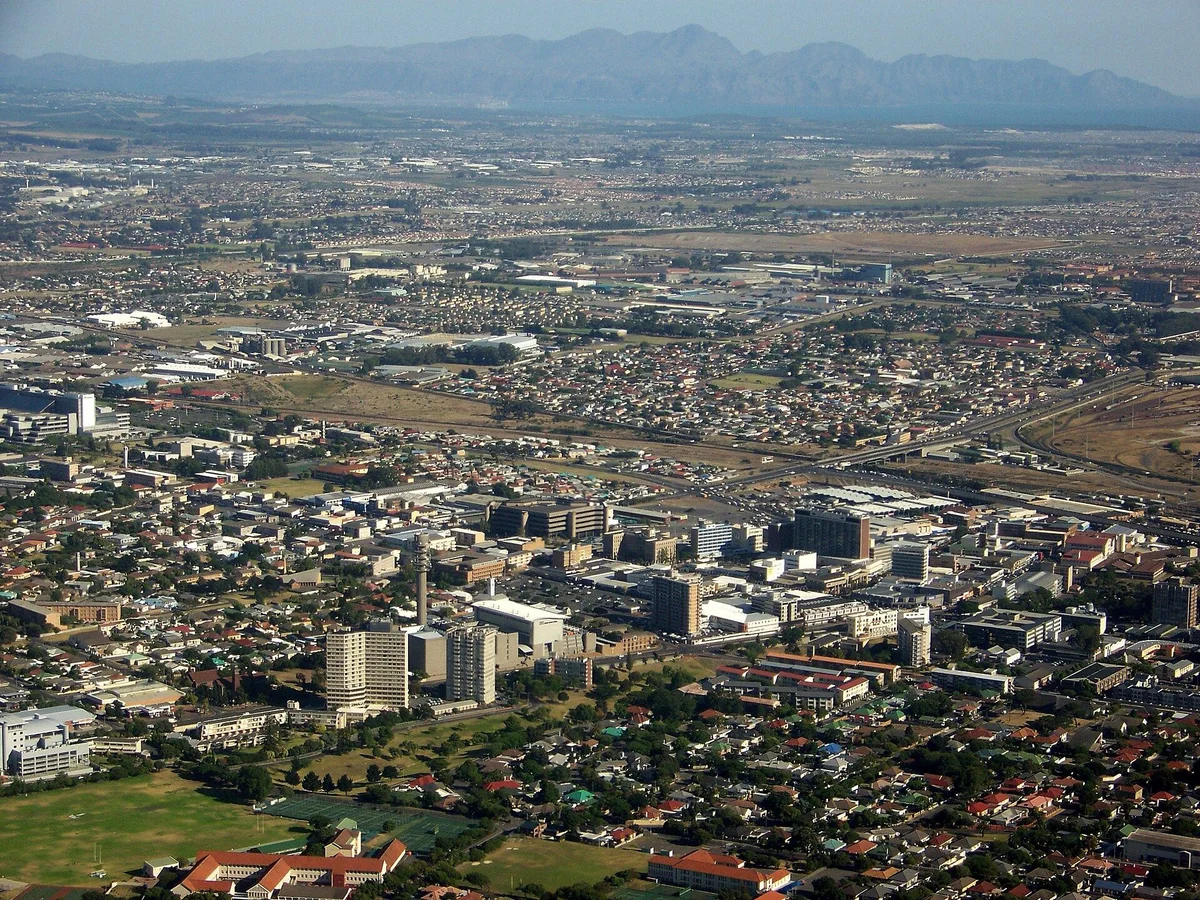
Quick answer: the Northern Suburbs run along the Tygerberg hills and the N1, from Goodwood and Parow through Bellville to Durbanville, Brackenfell, Kraaifontein and Kuils River. Durbanville is the premium end, at R30,000 to R48,000 per square metre with entry tickets from about R2.0 million and a modelled 6.8% to 8.0% gross. That is the best rent-to-price ratio of any family belt in the metro, and you buy it with a longer commute and no coastline.
Which suburbs are the Northern Suburbs?
Sixteen areas make up the corridor, counting Burgundy Estate, running west to east along the N1 and up the Tygerberg slopes. Bellville sits at the centre as the commercial and transport hub, Durbanville holds the premium residential end, and the belt gets older and denser as you move west toward Parow and Goodwood.
| Suburb | Position in the corridor | Character of the stock | Where we cover it |
|---|---|---|---|
| Goodwood | Western end, closest to the CBD | Older freehold, compact erven, high turnover | this page |
| Ruyterwacht | Beside Goodwood, N1 frontage | Entry freehold, oldest housing stock | this page |
| Edgemead | North of Goodwood, off the N1 | Quiet grid, family houses, strong school pull | this page |
| Bothasig | Between Edgemead and Milnerton | Compact family stock, coastal edge of the belt | this page |
| Monte Vista | East of Edgemead | Established family houses, mature gardens | this page |
| Parow | Centre-west, dense and old | Semis, flats, the corridor’s cheapest entry | this page |
| Parow North | Above the main road | Larger erven than Parow proper | this page |
| Panorama | Tygerberg slope above Parow | Views over the bowl, larger family houses | this page |
| Welgemoed | Above Panorama | Premium slope stock, largest erven in the west | this page |
| Plattekloof | Highest point of the western slope | Views, security estates, top of the western band | this page |
| Bellville | Commercial and transport centre | Flats, offices, student stock near the university | this page |
| Durbanville | Premium residential end | Freehold houses, wine-farm edge, security estates | Durbanville |
| Brackenfell | Eastern growth edge | Newer family estates, value freehold | this page |
| Kraaifontein | Furthest east on the N1 | Entry family stock, largest new supply | this page |
| Kuils River | South-east of Brackenfell | Estate stock, industrial edge nearby | this page |
| Burgundy Estate | Between Milnerton and the N7 | Sectional title and estate stock | Rhapsody |
One boundary correction saves a lot of wasted searching. Milnerton, Century City, Table View and Blouberg are routinely filed under the Northern Suburbs by buyers arriving from outside the city, and they are not in this corridor. They sit on the coast in the Blaauwberg belt, carry sea wind rather than Tygerberg heat, price differently, and commute along a different road. If a listing mentions the beach, it is not a Northern Suburb.
What does Northern Suburbs Cape Town property cost against the rest of the city?
Durbanville, the premium end of this belt, bands at R30,000 to R48,000 per square metre on sectional title with entry tickets from about R2.0 million and a modelled 6.8% to 8.0% gross. The cheapest Atlantic Seaboard suburb starts at R80,000 per square metre and Clifton runs past R200,000, so the corridor’s premium address begins well below where the coast’s entry point ends. Freehold houses here band lower per square metre and model two to three points less, which the Durbanville page sets out.
| Corridor | Indicative band | Ticket from | Modelled gross |
|---|---|---|---|
| Northern Suburbs (Durbanville) | R30,000 to R48,000 psqm | R2.0 million | 6.8% to 8.0% |
| Southern Suburbs (Rondebosch) | R40,000 to R60,000 psqm | R2.5 million | 7.5% to 9.0% |
| Atlantic Seaboard (Sea Point) | R80,000 to R120,000 psqm | R3.5 million | 8.5% to 9.7% |
| Atlantic Seaboard (Clifton) | R120,000 to R200,000+ psqm | R8.0 million | 6.0% to 7.0% |
The suburb price table owns these bands and carries the full metro comparison; this page uses the Durbanville row as the corridor’s anchor rather than restating the whole set.
Durbanville anchors the corridor’s price ladder, and the ladder matters more than the average. At R30,000 to R48,000 per square metre and a ticket from about R2.0 million, Durbanville sits below the Southern Suburbs at R40,000 to R60,000 and far below Sea Point at R80,000 to R120,000, yet its modelled 6.8% to 8.0% gross is only a point or two under Sea Point’s 8.5% to 9.7%. That ratio is the corridor’s argument. A buyer accepts a longer commute than the Southern Suburbs’ 15 to 25 minutes and gives up the coastline, and keeps most of the yield. A R2.0 million Durbanville ticket at 6.8% gross models R136,000 of annual rent before levies, rates, management and vacancy, which is why net income, not gross, should set the offer.
Two things in that table are worth reading together. The Northern Suburbs beat the Southern Suburbs on both price and modelled yield, which looks like a free lunch and is not one. What the Southern Suburbs buy with the difference is a 15 to 25 minute commute and a school belt with national reputation, and those two hold resale value in a way that a wider garden does not. The corridor’s real competitor on the numbers is Sea Point, and there the trade is inverted: Sea Point models a higher gross on a much smaller and more expensive unit, with a tenant pool that renews constantly and a regulatory exposure to nightly-letting rules that Durbanville does not have.
Why does the corridor yield better than the school belt?
Because the ratio between price and achievable rent is tighter here. A Durbanville family house rents to a local household paying from local salaries, and the purchase price sits close enough to that rent for the arithmetic to work. In the Southern Suburbs the purchase price is bid up by school catchment demand while the rent is still set by what a tenant can pay, so the gap widens and the yield falls.
That mechanism has a consequence buyers often miss. The corridor’s yield advantage is largest at the bottom of the market and shrinks toward the top. An entry house in Brackenfell or Kraaifontein models better than a Plattekloof property with a view, because the view is priced into the purchase and is worth very little in monthly rent. Insider tip: when you compare two Northern Suburbs listings on yield, strip out whatever the seller is charging for elevation. Rent responds to bedrooms, security and commute; it barely responds to a view over the bowl.
How does the N1 decide the purchase?
The road is the corridor’s organising fact, and which side of it you sit on changes the commute more than the map distance does. A property three kilometres from the N1 on the wrong access route can take longer to reach the CBD in the morning than one six kilometres away with a clean on-ramp.
The practical test is not distance. Drive the actual route at 07:15 on a weekday before you offer, and again at 16:45, then compare that against the same test from a Southern Suburbs address. A corridor buyer is trading commute for space, and the only honest way to price that trade is to measure the commute rather than to read it off a map. The Century City and Durbanville comparison works through the same trade against a master-planned alternative on the other side of the metro.
Why does Bellville behave differently from the rest of the belt?
Because it is the only suburb in the corridor that is a working commercial centre rather than a residential one. Bellville carries offices, the Tygerberg hospital campus, a university presence and the corridor’s main transport interchange, and that mix produces a tenant pool no other Northern Suburb has.
The practical effect is on stock type. Where Durbanville and Brackenfell are freehold house markets, Bellville carries a genuine apartment and flat market aimed at students, hospital staff and office workers, which behaves like a small-scale version of a city node rather than like its neighbours. A one-bedroom flat in Bellville lets to a different person, at a different price, on a different lease length than a three-bedroom house four kilometres away in Welgemoed.
Two consequences follow for an investor. First, Bellville is the one address in the corridor where a sectional title purchase competes on its own terms rather than as a compromise, so the body corporate questions that dominate an Atlantic Seaboard purchase apply here too: reserve fund, ten-year maintenance plan, and the levy trend over three years. Second, its tenant pool is institutional rather than domestic, which makes occupancy steadier and rent growth slower. A hospital or a university does not move, and it also does not bid rents up.
The trap is treating Bellville’s flats as if they were Durbanville houses with a lower price. They are a different asset answering a different question, and the body corporate due diligence guide sets out the documents that separate a well-run scheme from one that is deferring its capital programme.
What kind of stock does the corridor actually hold?
Three formats, and the corridor’s reputation as a freehold market is only two thirds true. Roughly speaking, the older western suburbs hold compact freehold, the eastern edge holds estate stock, and Bellville plus a handful of newer nodes hold sectional title.
| Format | Where it concentrates | What it costs to own | What to check first |
|---|---|---|---|
| Older freehold | Parow, Goodwood, Ruyterwacht, Monte Vista | Rates and your own maintenance | Roof, plumbing and electrical age; approved plans for any extension |
| Slope freehold | Panorama, Welgemoed, Plattekloof | Rates on a higher valuation | The valuation roll figure; wind and heat exposure |
| Estate freehold | Durbanville edge, Brackenfell, Kuils River | Rates plus an estate levy | Whether the levy funds the estate’s own roads and backup |
| Sectional title | Bellville, Burgundy Estate, newer nodes | Rates plus a body corporate levy | Reserve fund, ten-year plan, three-year levy trend |
The format decides which risks you carry, and they are not interchangeable. A freehold buyer in Parow owns every future repair outright, which is a cost but also a decision they control. An estate buyer hands both the cost and the decision to a homeowners association, and a sectional title buyer hands them to a body corporate that can raise a special levy by vote. None of the three is safer than the others in the abstract; what matters is that the buyer priced the one they actually bought.
One corridor-specific caution on estate stock. Several Northern Suburbs estates were built as phased developments, and a phase still under construction shares its infrastructure with the completed phases while contributing to it on different terms. Ask which phase you are buying into, whether the developer still controls the association, and on what date that control transfers to owners. The answer changes who sets the levy for the first years of your ownership.
What does a buyer check here that they would not check on the coast?
Four items, and none of them appear in a listing. They are the difference between a corridor purchase that performs and one that quietly costs more than it should.
- The municipal valuation roll figure, not the asking price. Rates are billed against the roll, and on recently transacted stock the two diverge. The rates and taxes guide sets out the tariff and the R620,000 relief, and the arithmetic is the same here as anywhere in the metro.
- Whether the estate levy covers the estate’s own infrastructure. Several Northern Suburbs security estates carry private roads, gatehouses and in some cases their own water or power backup. Some fund these inside the levy and some bill separately, and the second kind looks cheaper until the first invoice.
- The school catchment, in writing. A catchment address carries a premium here that survives resale, and the boundaries move. Confirm the current zone with the school rather than with the agent.
- Heat and wind exposure on the Tygerberg slope. The corridor runs hot in summer in a way the coastal suburbs do not, and the upper slopes carry a wind exposure of their own. Both affect what a tenant will pay and how long a unit stands empty in February.
Which new developments are in the Northern Suburbs of Cape Town?
Six schemes cover most of the corridor’s new-build stock: Balwin’s De Buurt in Richwood and De Kuile in Kuils River, and Rabie’s Finwood, Stonepine Crescent, Ashmere and Rhapsody. Entry prices run from R1,234,900 at De Kuile to R3.45m at Ashmere, and Rhapsody in Burgundy Estate has sold out.
| Scheme | Area | Developer | From | Status |
|---|---|---|---|---|
| De Buurt | Richwood | Balwin | R1,479,900 | 15 apartments available on 5 October 2026 |
| De Kuile | Kuils River | Balwin | R1,234,900 | 36 apartments available on 5 October 2026 |
| Finwood | Burgundy Estate | Rabie | R1.82m | Final phase coming |
| Stonepine Crescent | Kuils River | Rabie | R2.25m | Phase 2 selling |
| Ashmere | Burgundy Estate | Rabie | R3.45m | Phase 1 selling |
| Rhapsody | Burgundy Estate | Rabie | About R1.06m at launch | Sold out |
Primary stock in the Northern Suburbs follows two price tiers. Balwin sells apartments from R1,234,900 at De Kuile and R1,479,900 at De Buurt and covers attorney and transfer costs on its own sales, while Rabie sells sectional title from R1.82m at Finwood and freestanding houses from R2.25m at Stonepine Crescent and R3.45m at Ashmere. A developer sale carries 15% VAT inside the quoted price and no transfer duty, so the first buyer avoids a cost that a later resale buyer pays, which on a R1,479,900 apartment includes the 3% duty band above R1,210,000. Balwin bans short-term letting at both of its schemes here, which fits the corridor’s local tenant pool, and its counts on 5 October 2026 show 335 apartments sold at De Buurt and 552 at De Kuile.
Availability counts and the De Kuile floor come from Balwin’s own development pages, read on 5 October 2026. The other prices come from our project pages, each dated in its sources note.
Who is actually buying in this corridor?
Local families and semigration arrivals, in that order, with foreign buyers a distant third. That composition is the reverse of the Atlantic Seaboard and it changes how the market behaves.
| Buyer | What they want | What they compromise on |
|---|---|---|
| Local family trading up | Space, schools, a 30-minute commute | Coastal address and sea access |
| Semigration arrival from Gauteng | Freestanding house at a payable price | Proximity to the CBD and the coast |
| Yield-focused investor | Rent-to-price ratio above the school belt | Capital growth pace of the coastal nodes |
| Foreign buyer | Rare here; usually a family connection | Everything the seaboard offers |
Because the buyer pool is local and salary-driven, the corridor tracks South African interest rates and employment more directly than the seaboard does. A rate move that barely registers in Clifton, where a large share of purchases are cash or offshore-funded, changes what a Brackenfell household can borrow and therefore what a Brackenfell house is worth. The semigration guide carries the province-level migration case that keeps the demand side of that equation growing.
What is the outlook for the corridor?
The eastern edge carries the supply and the western slope carries the scarcity, and those two move in opposite directions. Kraaifontein and Brackenfell absorb most of the corridor’s new estate stock, which caps price growth there; Welgemoed, Plattekloof and the Durbanville wine-farm edge cannot expand, so they behave more like the constrained parts of the metro.
For a buyer that suggests a straightforward split. Buy the eastern edge for yield and accept that supply will keep the capital number modest. Buy the western slope or Durbanville proper for growth, and accept a modelled gross closer to the bottom of the corridor’s band. The mistake is buying the eastern edge and expecting the western slope’s appreciation, which is the corridor’s most common disappointment. For how new supply arrives across the metro rather than just here, see the new developments hub.
Sources: Durbanville price band, entry ticket and modelled gross yield from our suburb price table, which models listed prices against observed long-let rents rather than audited accounts. Comparative bands for the Southern Suburbs and Atlantic Seaboard from the same table. Rates tariff and the R620,000 relief from the City of Cape Town 2026/27 budget. Suburb boundaries follow the City’s own planning designations, which differ from agent marketing in the cases noted above. Yields are modelled and not guaranteed. Verify the valuation roll figure, levy schedule and school catchment for the specific property before offering. Current as at 7 September 2026.
Frequently Asked Questions
The Northern Suburbs run along the Tygerberg hills and the N1 corridor, roughly from Goodwood and Parow in the west through Bellville and Durbanville to Brackenfell, Kraaifontein and Kuils River in the east. Bellville is the commercial centre, Durbanville the premium residential end, and Parow and Goodwood the older, denser and cheapest part of the belt. Milnerton, Century City, Table View and Blouberg are commonly lumped in with them by out-of-town buyers, but they sit on the coast and belong to the Blaauwberg and West Coast corridor instead, with different pricing and a different commute.
Balwin sells apartments at De Buurt in Richwood from R1,479,900 and at De Kuile in Kuils River, where its page listed a one-bedroom from R1,234,900 on 5 October 2026. Rabie sells Finwood apartments in Burgundy Estate from R1.82m, Stonepine Crescent houses in Kuils River from R2.25m and Ashmere houses in Burgundy Estate from R3.45m. Rhapsody in Burgundy Estate has sold out.
Substantially. Durbanville, the premium end of the corridor, bands at R30,000 to R48,000 per square metre with entry tickets from about R2.0 million. The equivalent Atlantic Seaboard bands start at R80,000 per square metre and run past R200,000 in Clifton, and the Southern Suburbs school belt sits between the two. You are paying for a longer commute and no sea, and you get more floor area, more garden and a lower entry price for it.
Durbanville models 6.8% to 8.0% gross on sectional title, above the Southern Suburbs school belt at 4% to 6% and below Sea Point at about 9.7%. The corridor's yield comes from the ratio rather than the rent: prices sit closer to what a local family or professional tenant can actually pay, so the same cost stack takes a smaller share of gross. Yields are modelled from listed prices against observed long-let rents, not from audited accounts.
Three groups. Local families trading up for space and schools inside a 30-minute commute of Bellville or the CBD. Semigration buyers arriving from Gauteng who want a freestanding house rather than an apartment and find the coastal corridors unaffordable. And yield-focused investors who accept an inland address for a rent-to-price ratio the Atlantic Seaboard cannot match. Foreign buyers are the smallest group here, which is the opposite of the seaboard.
They answer different questions. Durbanville is freehold family stock with land, a 6.8% to 8.0% modelled gross on its sectional title, and a market driven by local schooling and commute. Century City is sectional title inside a single master-planned precinct with backup infrastructure and a body corporate culture, supplied largely by one developer. Durbanville gives you an asset whose value you control through the property itself; Century City gives you predictability and correlation with one developer's next launch.
Four things the corridor punishes buyers for skipping: which side of the N1 the property sits on, because that decides the real commute rather than the map distance; the municipal valuation roll figure rather than the asking price, since rates are billed against the roll; whether a security estate's levy includes the estate's own infrastructure, which some do and some bill separately; and the school catchment, because in this corridor a catchment address carries a premium that survives resale.
Get a Cape Town property shortlist
Share your budget, target area (Atlantic Seaboard, City Bowl, Winelands), and goal. We reply within one business day with matched stock and next steps.