
Paarl vs Stellenbosch 2026: One Town Can Still Grow
Twenty minutes apart and priced differently because one is hemmed in and the other is not. Supply, not demand, explains the gap in yield, entry and exit.
By Cape Town Invest Editorial · Updated August 27, 2026 · 12 min read
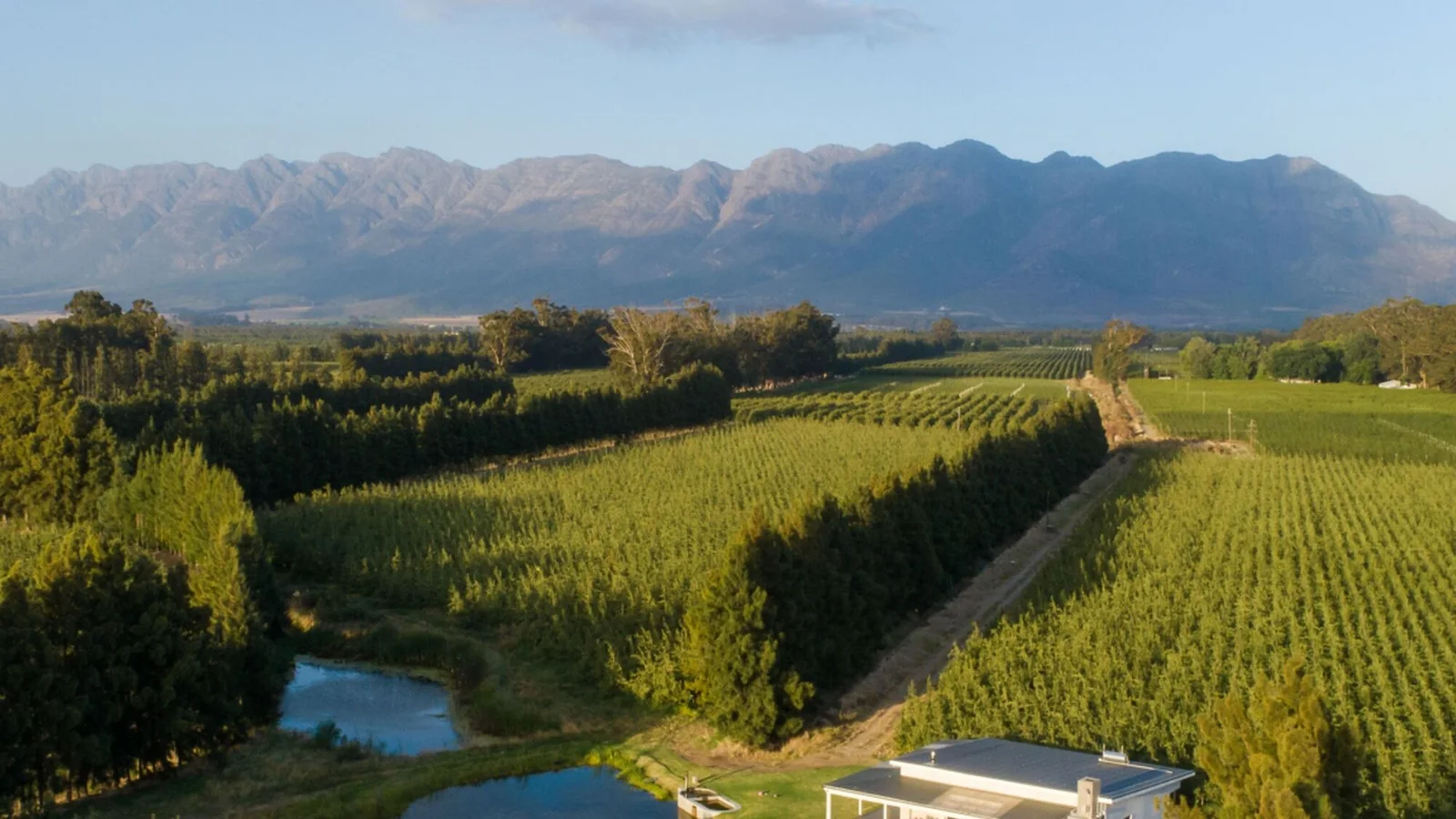
Quick answer: these towns are twenty-five minutes apart and price differently for a reason that has almost nothing to do with prestige. Stellenbosch cannot easily add housing, mountains, working farmland, a heritage overlay and a university sitting on the town centre, while Paarl and Wellington have land. Constrained supply pushes Stellenbosch prices up and yields down; available supply keeps Paarl family-home entry near R15,000 to R28,000 per built square metre and yields around 6% gross and 4.2% net. Everything else in this comparison follows from that one difference.
What actually stops Stellenbosch from growing?
Four things at once, which is why the constraint is durable rather than cyclical.
The town sits in a valley between mountains and working agricultural land, so the physical envelope is fixed in most directions. A heritage overlay covers much of the historic core, which limits what can be demolished, added to or built taller. The university occupies a large share of the central town and is itself a major landholder. And the surrounding farmland is productive wine land whose conversion to housing is neither cheap nor politically simple.
The result is that when more people want to live in Stellenbosch, they compete for the houses that already exist. Prices rise; the supply does not. That is the entire mechanism behind the price gap with Paarl, and it is more informative than any statement about which town is more desirable.
And what lets Paarl absorb demand instead?
Land, in the plainest sense, plus a corridor to build along.
Paarl and neighbouring Wellington have developable ground and an N1 corridor that supports it. When demand arrives, some of it is met by new houses rather than by bidding on old ones. Prices still rise, but they rise against supply that is answering back, which is why Paarl family-home entry sits in the region of R15,000 to R28,000 per built square metre while Stellenbosch commands a clear premium on comparable stock.
| Stellenbosch | Paarl | |
|---|---|---|
| How new demand is met | Bidding on existing stock | Partly by new building |
| Entry price per square metre | A clear premium on comparable stock | roughly R15,000 to R28,000 |
| Modelled gross yield | about 5% to 6% on town stock, under 4% on estates | about 6% on family stock |
| Modelled net yield | compressed by entry price | about 4.2% |
| What your resale competes with | Very little that is new | Houses not yet built |
| Municipality | Stellenbosch Municipality | Drakenstein Municipality |
Both yield figures are modelled from listed prices against observed rents rather than audited returns, and both towns reward checking the specific street rather than the town average. The Paarl page covers the local market in detail, and the Stellenbosch guide does the same on the other side.
What does each condition cost the owner?
This is the part that gets left out, because each town’s advantage carries a matching liability.
Buying where supply is available means competing with the future. A Paarl owner listing in five years may be selling against houses that did not exist at purchase, on the same corridor, priced by a developer who has no emotional attachment and a sales target. New stock does not have to be better to be a problem; it only has to be new. That caps how far an existing home can be pushed at resale, and it is the direct cost of the land availability that made the entry attractive. The practical response is to buy the location that cannot be replicated, the mature street, the aspect, the walk to the school, rather than the largest house on the newest edge.
Buying where supply is constrained means paying for the constraint up front. A Stellenbosch buyer is not discovering scarcity, they are purchasing it at full value, which is exactly why the yields compress. The scarcity protects the asset over time and does nothing at all for the entry price, so a three-year hold in Stellenbosch is exposed in a way a fifteen-year hold is not.
The pros and cons therefore invert cleanly rather than favouring one town:
- Paarl pros: lower entry against achievable rent, more house per rand, a market that clears on value.
- Paarl cons: your exit competes with new supply, and the ceiling on any one house is real.
- Stellenbosch pros: almost nothing new to compete with, an internationally recognised address, durable scarcity.
- Stellenbosch cons: the scarcity is already priced, yields are thin, and a short hold carries the entry premium.
Who rents in each town?
Different households on different calendars, which matters more to a landlord than the yield gap does.
Stellenbosch has an unusually large white-collar economy for a town its size: the university, its staff and students, and the corporate head offices in and around the town. That produces reliable tenancies with a strong seasonal shape, because a large share of the letting market moves before the academic year and thins afterwards. A landlord who markets in the wrong month in Stellenbosch pays for it in vacancy rather than in rent.
Paarl lets to households working locally in agriculture, agri-processing, logistics along the N1 and the town’s own services, plus semigration families choosing schools and space. Those tenancies run for years rather than terms, turn over slowly, and re-let slowly when they do. Neither pattern is better; they demand different management, and an owner running the Stellenbosch calendar on a Paarl property will simply market at the wrong time of year.
The concentration risk on the Stellenbosch side, and what a single dominant institution does to a rental market, is worked through on the Cape Town versus Stellenbosch page.
Do the two towns cost the same to hold?
No, and buyers comparing them on one spreadsheet are usually applying one municipality’s figures to both.
Paarl falls under Drakenstein Municipality, which proposed a 3.7% cap on property rate increases for 2026/27 and charges no rates on residential value below R350,000. Stellenbosch falls under Stellenbosch Municipality, which maintains its own valuation roll, sets its own tariff, runs its own rebate structure and publishes its own objection window.
Two things follow. The annual bill on two identically valued houses in the two towns is not the same number, so a holding-cost model has to be built twice. And the objection window that lets you challenge a valuation belongs to whichever municipality issued it, so an owner tracking the wrong calendar carries an incorrect valuation for the life of a roll. Obtain the rates account for the specific erf from the municipality that bills it, before the offer. How the metro handles the same question, and why no metro figure carries across, is set out in the rates and taxes guide.
Which one should you buy?
| Priority | Better fit | Why |
|---|---|---|
| Yield per rand on family stock | Paarl | About 6% gross and 4.2% net at a lower entry |
| An asset with almost no new competition | Stellenbosch | The supply constraint is structural, not cyclical |
| More house for the money | Paarl | Land availability keeps price per square metre lower |
| A hold measured in decades | Stellenbosch | Scarcity compounds for an owner who never sells |
| Long, slow tenancies | Paarl | Families and local employment, not term dates |
| Reliable seasonal renewal | Stellenbosch | The academic year refills the market annually |
| A short or uncertain hold | Paarl | You have not paid a scarcity premium to get in |
The question that decides it is not which town you would rather live in. It is whether you are buying a market that can answer your demand with new supply, or one that cannot, and whether you want that answer working for you at the exit or against you at the entry. Both structures appear again, at larger scale, in the Atlantic Seaboard and Winelands comparison.
Sources: Drakenstein Municipality 2026/27 budget proposals for the 3.7% rate increase cap and the R350,000 residential threshold, as reported by Paarl Post; Stellenbosch Municipality rates policy for the separate jurisdiction. Price per square metre and yield figures are Cape Town Invest models built from listed prices against observed rents, not audited returns. The supply-constraint description of Stellenbosch summarises its topography, heritage overlay and land use rather than citing a specific planning decision. Current as at 27 August 2026.
Frequently Asked Questions
Because it cannot grow and Paarl can. Stellenbosch sits between mountains and working farmland, carries a heritage overlay across much of its centre, and has a university occupying a large share of the town core. New residential supply is therefore hard to add. Paarl and Wellington have developable land, so demand there is met by new building rather than by bidding on existing stock, which holds prices down and yields up.
Paarl, on family stock, and the reason is the entry price rather than the rent. Paarl family homes model around 6% gross and 4.2% net at roughly R15,000 to R28,000 per square metre of built area, which is freehold stock rather than the sectional title our suburb price table bands at R22,000 to R38,000 in the same town. Stellenbosch town stock models nearer 5% to 6% gross and its prestige estates often fall below 4%, because buyers there are paying for an address and a constrained market rather than for an income.
No, and they are not even in the same municipality. Paarl falls under Drakenstein Municipality, which proposed a 3.7% cap on property rate increases for 2026/27 and charges no rates on residential value below R350,000. Stellenbosch falls under Stellenbosch Municipality, with its own valuation roll, tariff, rebates and objection calendar. Neither figure is a City of Cape Town figure and no metro number applies in either town.
Your resale competes with new building. In Paarl a seller in five years may be listing against houses that did not exist when they bought, on the same corridor, at a developer's price. That caps how far an existing home can be pushed. It is the direct cost of the same land availability that made the entry price attractive, and it argues for buying the better location rather than the larger house.
You pay the constraint up front and it is already in the price. A Stellenbosch buyer is not discovering scarcity, they are purchasing it at full value, which is why yields compress there. The constraint protects the asset and does not protect the buyer's entry price, so a short hold in Stellenbosch is exposed in a way a long hold is not.
It depends entirely on the tenant you want. Stellenbosch lets to students, academics and staff of the corporate head offices in and around the town, on a calendar set largely by the academic year. Paarl lets to families and to households working locally in agriculture, agri-processing and along the N1 corridor, on tenancies that run for years rather than terms. One is a seasonal market with reliable renewal; the other is a slower market with longer stays.
Get a Cape Town property shortlist
Share your budget, target area (Atlantic Seaboard, City Bowl, Winelands), and goal. We reply within one business day with matched stock and next steps.