
Devmco Group Projects 2026, Sibaya, Umhlanga & Cape Town
Devmco Group: Sibaya R6bn invested, Umhlanga Arch delivered. KZN projects vs Cape Town Harbour Arch, foreign buyer rules, no surcharge.
By Cape Town Invest Editorial · Updated August 21, 2026 · 12 min read
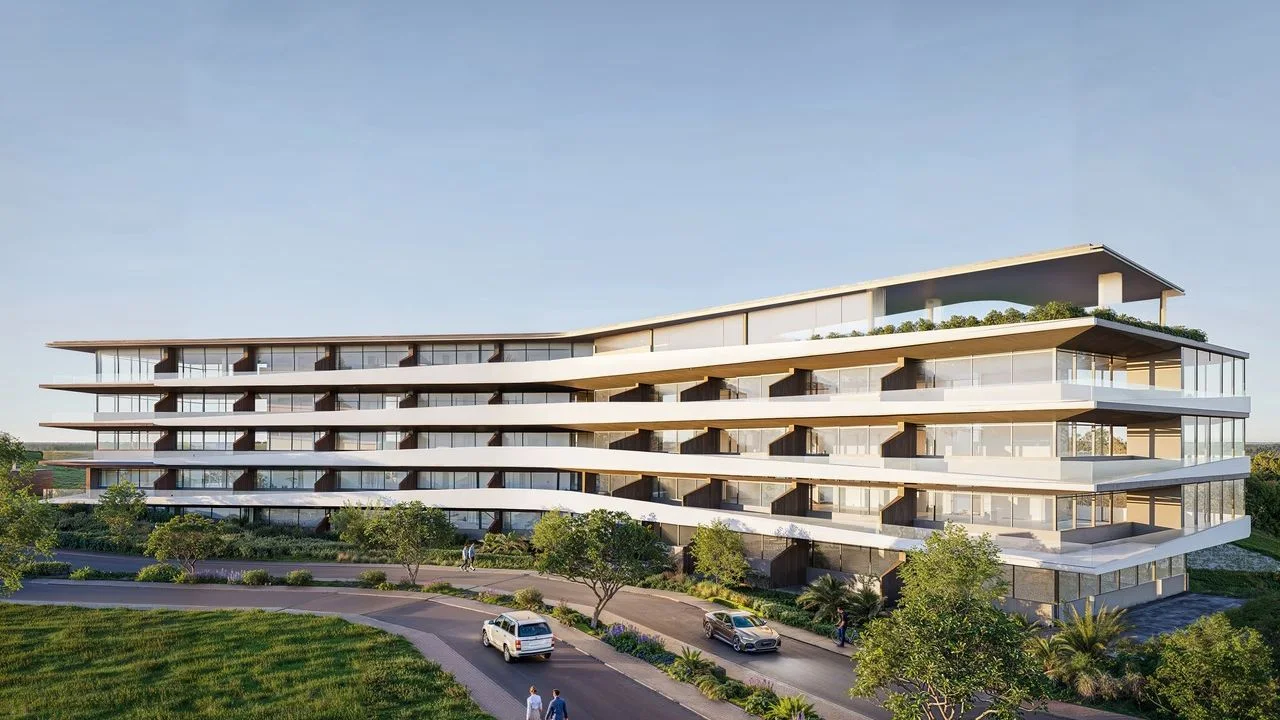
Quick answer: Devmco Group is the KZN master developer behind Sibaya Coastal Precinct (~R6bn invested) and Umhlanga Arch (~R1.23bn project value). Cape Town investors meet the name when comparing national precinct plays to Harbour Arch or Century City, not because Devmco dominates Western Cape stock.
How should Cape Town investors read Devmco versus local precinct sponsors?
Devmco is a Durban master developer, not a Western Cape builder, so Cape Town investors meet the name only when comparing precincts across provinces: about R6 billion invested at Sibaya against Harbour Arch on the Foreshore or Century City inland. Foreign buyers face no surcharge and the same 50% bond ceiling in either province.
Cape Town Invest covers the group because semigration capital crosses provinces. A buyer choosing between Umhlanga’s Sibaya node and Cape Town’s Foreshore or Century City is comparing the same product type, master-planned mixed-use precincts with hotels, retail, and apartments, in different labour markets and price bands. Devmco is the Durban analogue to what Amdec does on the Foreshore and what Rabie does inland at Century City, and foreign buyers are treated identically in both.
Comparing Devmco KZN stock with Cape Town precincts? Tell us your province and budget, we shortlist Western Cape alternatives or flag KZN schemes worth site visits.
Get developer shortlistThe group is not a Western Cape volume builder. Headquarters sit at FMI House, 2 Heleza Boulevard, Durban. Delivered work clusters on the KZN coastline: OceanDune Sibaya, Salta infrastructure, Umhlanga Arch, and the roads-and-bridge upgrades feeding the precinct. When a portal lists a generic Cape Town name beside Devmco, run the same spam check we apply to Observatory Green or Chestercourt, confirm erf, sponsor, and NHBRC before you wire a deposit.
What numbers define Devmco in 2026?
Devmco’s numbers are KwaZulu-Natal numbers: founded in Durban in 2015, about R8 billion of delivered pipeline, roughly R6 billion invested at Sibaya with a further R5 billion commercial phase planned, and Umhlanga Arch at about 105,233 m² and R1.23 billion. Verified Cape Town inventory under the brand is minimal.
| Metric | Indicative figure | Signal |
|---|---|---|
| Founded | 2015 | Mid-generation developer |
| HQ | Durban, KwaZulu-Natal | Not Cape Town based |
| KZN delivery cited | About R8 billion | Umhlanga Ridgeside to Sibaya |
| Sibaya invested | About R6 billion | Devmco as lead landowner |
| Next Sibaya phase | About R5 billion | Commercial-heavy |
| Precinct total (revised) | About R20 billion | Down from early R50bn talk |
| Umhlanga Arch value | About R1.23 billion | 2017 to 2021 delivery |
| Umhlanga Arch extent | About 105,233 m² | Mixed-use tower |
| Residential mix (Arch) | 30 lofts, 162 apts, 25 penthouses | Plus offices and retail |
| Sales channel | Devmco Realty | In-house agency |
What does Devmco’s Sibaya master-developer role mean for investors?
Devmco became Sibaya master developer after Tongaat Hulett’s exit with about R6 billion already invested and a further roughly R5 billion commercial phase planned, trimming bulk by about half versus early forecasts while still delivering thousands of doors over decades.
Sibaya sits on prime coastal land between booming Umhlanga and uMdloti. Tongaat Hulett launched the original master plan around 2015; when Tongaat’s financial troubles stalled infrastructure, Devmco stepped up as master developer because it already held the largest developed and undeveloped land positions in the node.
Charles Thompson told Moneyweb the group would trim development bulk by roughly half versus early Tongaat forecasts, fewer towers, better fit with the coastal environment, but still thousands of residential and commercial doors over a multi-decade horizon. Next-phase emphasis includes offices, car dealerships, hotels, and a destination shopping centre, diversifying beyond the residential waves that built the first R6 billion of value.
For Cape Town investors, the lesson is infrastructure risk in mega-precincts: master developers who fund roads, bridges, and services early can capture land uplift, but successor phases depend on continued tenant demand and construction finance.
Umhlanga arch delivery track record
Umhlanga Arch is the delivery record behind Devmco’s credibility with off-plan buyers: roughly 105,233 m² of mixed-use floor area at a project value near R1.23 billion, handed over between 2017 and 2021, holding 30 lofts, 162 apartments and 25 penthouses above offices and retail.
That mix is what makes the record useful to a Cape Town buyer, because the tower had to satisfy three constituencies at once:
- Commercial tenants across the office and retail podium, whose service expectations set the building’s operating standard.
- Hotel-grade services, including 24-hour concierge and a business hub, the same placemaking vocabulary Harbour Arch uses on the Foreshore.
- Private owners across 217 residential units, whose levies carry those services long after handover.
Completing a R1.23 billion programme through Covid-era supply chains without headline delay is the reputational asset a foreign buyer is actually weighing when an unknown off-plan sponsor is the alternative.
Who should buy Devmco stock versus Cape Town sectional title?
Devmco stock suits a buyer whose mandate spans provinces, not a buyer who has already settled on the Western Cape. The group holds master-developer control of Sibaya phasing with about R6 billion invested and a further R5 billion commercial phase planned, and Umhlanga Arch proves it can deliver high-rise mixed-use. None of that produces Cape Town inventory. A Western Cape mandate is better served by Amdec on the Foreshore or Rabie at Century City, where a sectional title register can be inspected today. Foreign buyers face no surcharge in either province and bond at roughly 50% of value as non-residents, so the eligibility question is identical. What differs is the labour market underneath the rent, the depth of the resale pool, and how long precinct phasing outlasts your hold horizon.
Pros
- Master-developer control of Sibaya land and phasing.
- About R6 billion skin in the game before claiming master status.
- Umhlanga Arch proves high-rise mixed-use delivery.
- Turnkey model spans planning, construction, marketing, and sales.
- No foreign buyer surcharge in South Africa.
Cons
- Minimal verified Cape Town inventory under Devmco branding.
- Sibaya still subject to KZN economic and tourism cycles.
- Mega-precinct phases can outlast personal hold horizons.
- Body corporate levies on coastal towers run high.
- Portal spam can attach fake Cape Town names to national brands.
What red flags appear on Devmco or Sibaya listings?
Red flags on a Devmco or Sibaya listing are a Cape Town off-plan scheme citing the brand with no matching project page, a yield table built on precinct-wide Sibaya averages, and silence on levy schedules for coastal towers carrying hotel-grade amenities. Master-developer status and R6 billion invested do not remove phase-delay risk.
- Cape Town off-plan listings citing Devmco without a devmcogroup.co.za project page.
- Yield tables using Sibaya averages for a single small scheme.
- Ignoring levy schedules on coastal towers with hotel-grade amenities.
- Assuming master-developer status eliminates phase-delay risk.
What due diligence should run on any Devmco scheme?
Due diligence on a Devmco scheme starts with the seller: confirm the legal entity is Devmco Realty or a named joint venture, pull NHBRC enrolment on any off-plan tower, request the body corporate budget and parking tariffs, and model transfer duty with a non-resident bond capped at 50% of value.
- Confirm the legal seller is Devmco Realty or a named JV with site references.
- Pull NHBRC enrolment on any off-plan tower.
- Request body corporate budget forecasts and parking bay tariffs.
- Compare three live rentals in the same precinct, not city-wide averages.
- Model transfer duty and bond LTV at 50% for non-residents.
- Cross-read semigration guide if you are choosing between provinces.
How Devmco compares to Cape Town precinct sponsors
Devmco reads as a national comparator rather than a Cape Town shortlist entry, because about R6 billion invested at Sibaya and R1.23 billion at Umhlanga Arch buy KwaZulu-Natal exposure, not Western Cape stock. Amdec, Rabie and Growthpoint are the local sponsors with a sectional title register you can inspect today.
| Sponsor | Primary node | Cape Town relevance |
|---|---|---|
| Devmco | Sibaya / Umhlanga | National comparator, KZN stock |
| Amdec | Harbour Arch Foreshore | Direct CBD apartments |
| Rabie | Century City | Income sectional title |
| Growthpoint | V&A Waterfront | Trophy resale + pipeline |
Devmco belongs in a national portfolio conversation, not a default Cape Town shortlist. If your mandate is Western Cape only, start with Amdec, Rabie, and Growthpoint. If you are weighing Durban’s north coast against Cape Town’s Atlantic or Table Bay corridors, Devmco is the developer dossier to read before you fly to Umhlanga.
Devmco realty and the sales channel
Devmco Realty is the group’s in-house agency, so the person showing the unit, quoting achievable rent and drafting the offer works for the seller. Nothing a developer sales arm produces is a valuation, and a non-resident sizing a purchase against the 50% bond ceiling needs a real one before signing.
That structure is legal and normal in precinct development, but it removes the independent check most buyers assume they have.
Three practical consequences follow. The rental projection comes from the organisation that benefits from the sale, so test it against live listings placed by unrelated agencies in the same node rather than against precinct-wide averages. The comparables you are shown are usually other units in the same scheme, which tells you what the developer is asking, not what the resale market has actually paid: deeds office transfer records answer that question. And an in-house agent has no reason to mention the competing scheme two streets away, so build your own shortlist before the site visit.
Confirm that both the agency and the individual agent hold a current Fidelity Fund Certificate from the PPRA, and establish in writing where your deposit will sit. An attorney’s trust account or a registered agency trust account, with interest accruing for your benefit, is the answer you want. A developer operating account is not. Specify it in the offer to purchase, not in an email afterwards. The scams guide covers the deposit traps in more detail.
Infrastructure delivery as competitive moat
Infrastructure spend is the Devmco moat: the group cites the M27 bridge extension and Salta packages valued in the hundreds of millions of rand, funded ahead of the apartments that repay them. Early connectors capture land uplift, and they also carry cost risk if the R5 billion commercial phase slips.
Cape Town analogues include Growthpoint’s Granger Bay breakwaters and Rabie’s canal bridges in Century City. When you compare Devmco to local sponsors, ask who pays for the next road interchange, not just the tower concrete.
What to verify next
Open the exact scheme on devmcogroup.co.za or Devmco Realty mandates, then verify NHBRC, professional team, and levy schedules before deposit. Cape Town-only buyers: pivot to investment hub project layer for local stock. Cross-province buyers: compare Sibaya pricing with Harbour Arch context and Century City Rabie schemes. Foreign eligibility: foreign buyer hub. Request a shortlist when you want Cape Town stock matched to your brief.
Frequently Asked Questions
Devmco Group is a Durban-headquartered property developer and development manager founded in 2015, led by director Charles Thompson. The group delivered roughly R8 billion in KwaZulu-Natal projects between Umhlanga Ridgeside and the Sibaya Coastal Precinct, including OceanDune Sibaya and the Umhlanga Arch mixed-use tower. In 2024 Devmco became master developer of the Sibaya precinct after Tongaat Hulett's exit, with about R6 billion already invested on site.
Devmco's delivered portfolio is concentrated in KwaZulu-Natal, especially Umhlanga and Sibaya north of Durban. Cape Town Invest lists the group because semigration investors often compare Durban's Sibaya and Umhlanga Arch playbook with Cape Town precincts such as Harbour Arch and Century City. Verify any Cape Town marketing name against a Devmco site, NHBRC enrolment, and professional team before you treat it as a Devmco scheme.
Sibaya is a mixed-use coastal node between Umhlanga and uMdloti on KZN's north coast, originally master-planned by Tongaat Hulett. Devmco became master developer with major landholdings, citing about R6 billion invested to date and a further roughly R5 billion commercial-focused phase including offices, hotels, dealerships, and retail. Total precinct investment is now framed nearer R20 billion versus early R50 billion headlines.
Yes. South Africa imposes no foreign buyer surcharge on sectional title purchases. Non-residents may finance up to about 50% with a South African bond and must record offshore capital for repatriation. Devmco stock today is mainly in KZN off-plan and resale schemes sold through Devmco Realty, apply the same NHBRC, levy, and build-programme checks as any Cape Town off-plan purchase.
Devmco mirrors the master-precinct logic of Amdec's Harbour Arch and Rabie's Century City, but on Durban's north coast rather than the Western Cape. Amdec and Rabie offer direct Cape Town sectional title inventory; Devmco offers coastal KZN scale for buyers weighing semigration between provinces. Yield and duty math still run per scheme, brand pedigree does not replace deal diligence.
Get a Cape Town property shortlist
Share your budget, target area (Atlantic Seaboard, City Bowl, Winelands), and goal. We reply within one business day with matched stock and next steps.