
Cape Town Water Security and Property: 2026 Buyer Guide
How Day Zero, dam levels and City water restrictions affect Cape Town property: boreholes, tanks, sectional title water costs, due diligence and rent.
By Cape Town Invest Editorial · Updated August 21, 2026 · 16 min read
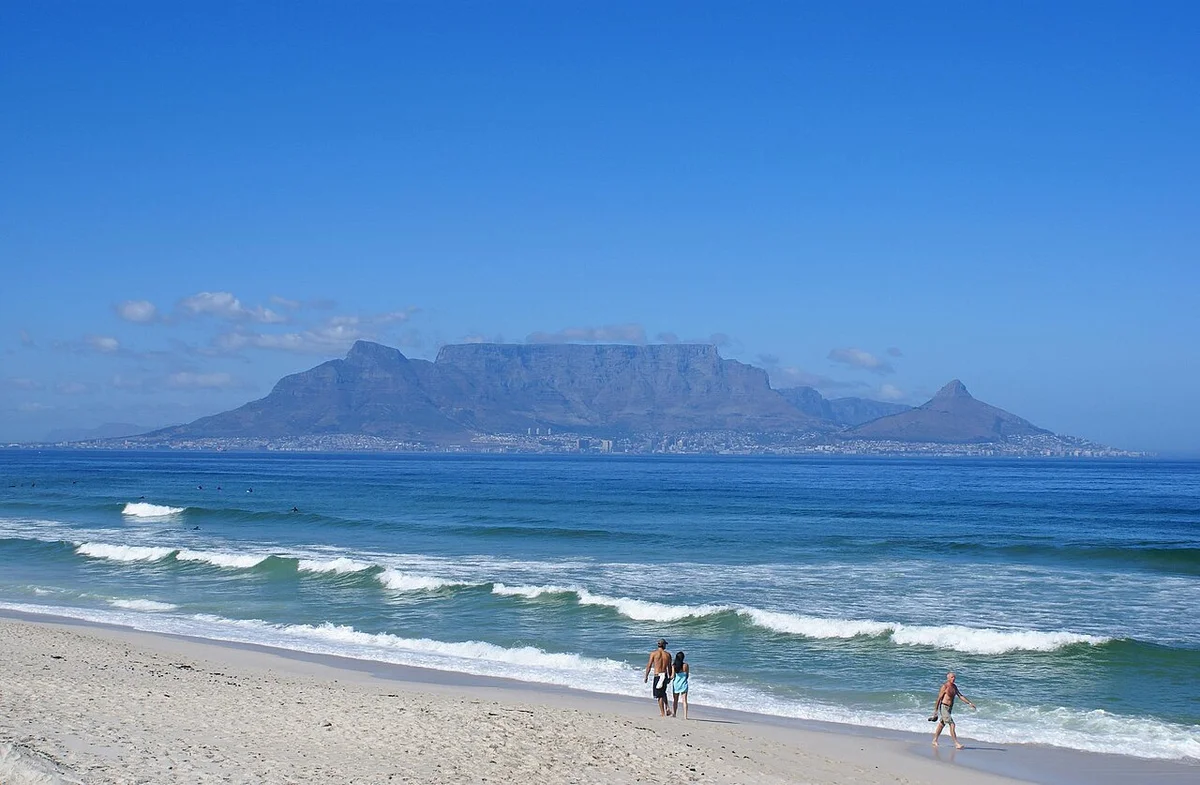
Quick answer: water security has become a real factor in Cape Town property value, running costs, and rentability since the 2018 Day Zero crisis. A home or estate with its own borehole, well-point, or rainwater tanks holds value and lets faster because it keeps gardens, pools, and basic supply going through City restrictions, while a purely municipal property carries more exposure if dam levels fall. Before you buy, confirm how water is supplied, metered, and billed, whether any borehole is registered and working, and how tariffs and restrictions feed into your yield.
Why water became a property issue in Cape Town
Because of 2018: a multi-year drought cut dam storage below 20% and rationed residents to roughly 50 litres per person per day. Homes with a registered borehole or stored rainwater carried on, while municipal-only homes were fully exposed. The Cape Town market has priced resilience ever since.
Four things changed permanently after that summer, and each one belongs on a purchase checklist:
- Restriction tiers became routine. The City publishes dam levels and steps limits up in stages, so a wet year above 80% storage still gives warning long before the 20% of 2018 returns.
- Private supply became an asset. Registered boreholes and rainwater tanks are now listed as features rather than curiosities, and buyers pay for them.
- Bodies corporate started spending. Schemes fund pumps, tanks, and irrigation from the levy, and deferred maintenance has produced special levies of R15,000 to R52,000 per owner.
- Tenants started asking. A browned garden and an empty pool are visible, so water resilience now feeds rent and vacancy, not only resale.
What did Day Zero 2018 change for Cape Town property buyers?
Day Zero was the projected 2018 date when Cape Town would shut off most municipal supply and ration water through collection points, with dam storage under 20% and Level 6B limits near 50 litres per person per day. Three changes are permanent for buyers: published restriction tiers, an installed base of private water, and a market that prices resilience.
- Active supply management. The City publishes dam levels and steps restrictions in tiers, so a market that sees storage above 80% in a wet year gets warning long before it returns toward the 20% of 2018.
- An installed base of private water. Rainwater tanks, well-points, and registered boreholes fitted during the drought are still on those properties today, and they transfer with the sale.
- Water on the buyer’s checklist. Registration, yield, metering, and pump backup now sit alongside power backup in Cape Town due diligence rather than being assumed.
What dam levels and City water restrictions mean for Cape Town property today?
Cape Town water supply still rests largely on rain-fed supply dams that fill in winter and draw down through the dry summer, so dam levels are seasonal and the City publishes tiered restrictions that tighten outdoor irrigation, garden use, and pool top-ups first before reaching indoor limits at the most severe tiers. In wet years with dams above 80 percent restrictions stay light, while dry years can return toward Level 6B-style limits near 50 litres per person per day as seen in 2018, so buyers should underwrite the tighter case rather than only today’s calm dashboard reading.
| What to confirm | Where it comes from | Why it matters |
|---|---|---|
| Current restriction level | City of Cape Town water dashboard | Sets what usage is allowed right now |
| Municipal-only or with backup | Inspection and seller disclosure | Decides exposure if restrictions tighten |
| Borehole or well-point registration | City registration records | Unregistered private water can breach the rules |
| Water metering and billing setup | Municipal account or body corporate | Determines who pays and how much |
| Tariff trend and any planned increases | City tariff schedules | Feeds directly into holding cost and yield |
The practical point is that restrictions are not static: a property that is comfortable in a wet year with full dams can face real limits in a dry year, and buyers should underwrite the tighter case rather than the current calm one. Through the 2015 to 2018 drought, dam levels fell below 20% and the City raised restrictions to Level 6B; in wetter years since, the dams have recovered above 80% and limits eased again. Augmentation has reduced the city’s dependence on rainfall alone, yet the seasonal cycle and the risk of another multi-year drought remain part of the Cape Town picture.
What water backup options work best for Cape Town estates?
Three, in descending order of cost and capability: a registered borehole, a shallow well-point, and rainwater tanks. A 10,000-litre tank covers a four-person household for about 8 days without rain, so storage bridges gaps rather than replacing supply. Each option requires City registration, a pump that survives 2 to 4 hours of daily load-shedding, or both.
| Water source | What it does well | Limitations | Typical use |
|---|---|---|---|
| Borehole | Draws groundwater for gardens, pools, sometimes household use | Must be registered; quality varies; pump needs power | Larger homes and estates |
| Well-point | Cheaper shallow groundwater for irrigation | Lower yield; seasonal; registration required | Gardens and outdoor use |
| Rainwater tanks | Stores winter rain for dry-season use | Capacity-limited; depends on rainfall and roof area | Apartments and houses alike |
Who pays for water in a Cape Town sectional title scheme?
The split runs along the boundary between common property and your section. Water consumed on the common property, shared gardens, communal pools, irrigation, and any staff facilities, is a body corporate expense funded through the monthly levy. Water consumed inside your unit is normally metered and billed to you, either through a municipal account in your name or through a recovery line on the levy statement.
The detail that matters is how the scheme actually meters. Buildings with individual unit meters bill each owner on real consumption. Older schemes often hold a single bulk municipal connection and apportion the total across owners by participation quota, which means a low-consumption owner subsidises heavy users and a leak in someone else’s section shows up in your account. Ask which arrangement applies before you sign, and request the last twelve months of levy statements so you can see the water line rather than a summary figure.
Three further items belong on the same request list: whether the scheme has borehole, well-point, or tank backup serving the common areas, when the pumps and irrigation system were last serviced, and whether any special levy for water infrastructure has been tabled at a general meeting. Deferred pump maintenance is expensive to fix retrospectively, and documented 2024 cases saw schemes raise special levies from R15,000 to R52,000 per owner when shared water infrastructure failed. The sectional title levies guide covers how these charges are calculated and approved.
How does water security affect Cape Town rent and net yield?
Through two separate mechanisms, and investors usually model only one of them. Tenant demand is the first: reliable supply decides how quickly a property lets and whether a tenant renews once restrictions tighten. Holding cost is the second: stepped tariffs and scheme water charges of R800 to R1,500 per month can strip 1.0 to 1.5 percentage points off a 6 percent gross yield in a dry summer.
The first is tenant demand. Reliable supply now behaves like backup power: it does not command a headline premium in a wet year, but it decides how quickly a property lets and whether a tenant renews when restrictions tighten. Homes with gardens and pools are the most exposed, because a browned garden and an empty pool visibly remove what the tenant is paying for. Short-term and holiday lets feel it fastest, since guests arrive expecting a normal water experience and review the property when they do not get one.
The second is cost. Municipal water tariffs step upward with consumption, and schemes irrigating large common gardens can see the water line in the levy rise 8 to 15 percent year-on-year when restrictions ease but tariffs stay elevated. On a R4 million Atlantic Seaboard apartment in a scheme without borehole backup, water-related levy and meter charges of R800 to R1,500 per month are realistic, and that is enough to take 1.0 to 1.5 percentage points off a 6 percent gross yield in a dry summer.
Model both. Run your yield at a dry-year restriction level with elevated tariffs and a realistic vacancy assumption, then compare it against the same property with registered borehole plus storage. The gross versus net yield guide sets out where these charges sit in the calculation.
What are the pros and cons of water-resilient Cape Town property?
It costs more up front, and returns that through rent, restriction-proofing and resale. A registered borehole with tank storage takes most outdoor demand off the municipal meter, saving the R800 to R1,500 a month that scheme water charges reach without backup, but the pump, filtration, and tank sit in your purchase budget.
-
A registered borehole, well-point, or tank provides supply independent of municipal restrictions, keeping gardens and pools alive when limits tighten.
-
Water resilience is a visible, tangible feature that buyers and tenants reward, so the investment tends to convert into both higher rent and a stronger resale price.
-
Private water can cut reliance on rising municipal tariffs for outdoor use, softening one of the fastest-growing holding costs.
-
A scheme or home that already has backup water spares you the capital cost and disruption of installing it after Day Zero-style restrictions return.
-
A borehole, pump, filtration, and tank system is a real capital cost that must be funded from your purchase budget or financed.
-
Boreholes and well-points must be registered and used within City rules, and unregistered or poorly maintained systems can breach regulations or fail.
-
Pumped water depends on electricity, so without backup power a borehole can be sidelined by load-shedding exactly when you need it.
-
Groundwater quality and yield vary, so a borehole may need filtration or may underdeliver in a dry season, and that risk has to be checked, not assumed.
What water risks should Cape Town buyers underwrite before purchase?
Underwrite water at a dry-year restriction scenario, not only today’s dam level. Schedule risk means confirming how outdoor irrigation, pools, and household supply behave when restrictions tighten. Registration risk means verifying City borehole or well-point compliance in writing. Tariff and levy risk means modelling municipal water increases and sectional title special levies for shared irrigation or pump upgrades. Resale risk means buyer demand now treats boreholes and tanks as standard features in family suburbs and holiday lets.
Treat the following as the water risks to price in during due diligence, not afterthoughts to discover once you own the property:
- Restriction risk. A wet year with full dams is not the worst case. Underwrite the property in a dry-year restriction to see whether it can keep its garden, pool, and supply going, and whether that depends on a private water source.
- Registration risk. A borehole or well-point that is not registered with the City, or is used outside the rules, can attract penalties and cannot be relied on as a clean asset. Confirm registration in writing.
- Pump and power risk. A borehole pump runs on electricity, so without backup power it stops during load-shedding. Resilient water and resilient power need to be checked together.
- Tariff and levy risk. Municipal water tariffs rise over time, and a sectional title scheme may raise a special levy to install or upgrade water infrastructure after you take transfer. Both land on the owner.
- Quality and yield risk. Groundwater quality varies and yield can drop in a dry season, so confirm water testing, filtration, and realistic yield rather than trusting the word “borehole” on a listing.
Foreign buyers should layer these checks onto the wider ownership and finance picture, since you may be coordinating the purchase and any water upgrade from offshore. Our foreign buyer guide for Cape Town pairs naturally with the water due diligence above, so you arrive at transfer with the supply, registration, and cost questions already answered.
Done properly, water due diligence is not a reason to fear the Cape Town market; it is a way to buy into it intelligently. Confirm how the property is supplied, check that any borehole is registered and working, understand who pays and how much, and underwrite a dry-year restriction, and you turn the lesson of Day Zero into a value lever you control rather than a risk that controls you.
What water security red flags should pause a Cape Town offer?
Three, and each one is checkable in an afternoon: a borehole advertised without City registration, an estate claiming off-grid water with no pump or filtration maintenance record, and a guest-house model that ignores drought restrictions. Each is cheap to verify before signing and expensive afterwards, with failed shared infrastructure producing special levies of R15,000 to R52,000 per owner.
- Borehole or well advertised without proof of registration or water-use compliance.
- Estate claims “off-grid water” without maintenance history on pumps and filtration.
- Guest house STR model ignores drought restrictions that can cap occupancy amenities.
Insider tip: tank sizing and borehole yield in Cape Town
Tank sizing is where Cape Town water due diligence stops being theoretical. A 10,000-litre rainwater tank covers a four-person household for about 8 days without rain, and boreholes yielding 500 to 1,500 litres per hour keep gardens alive only if storage bridges peak evening demand. Underwrite a dry-year restriction, not today’s dam level.
During the 2015 to 2018 drought, City dam storage fell below 20% and personal limits tightened to roughly 50 litres per person per day under Level 6B restrictions. A four-person household using 300 litres per day needs 1,200 litres daily, which a 10,000-litre rainwater tank covers for only 8 days without rain or borehole backup. Boreholes yielding 500 to 1,500 litres per hour can keep gardens alive, but peak evening demand often exceeds yield unless storage bridges the gap. Confirm City borehole registration, request summer yield tests showing at least 600 litres per hour, and verify inverter backup because load-shedding outages of 2 to 4 hours daily can disable pumped supply. Sectional title schemes with deferred pump maintenance raised special levies from R15,000 to R52,000 per owner in documented 2024 cases when shared water infrastructure failed.
Municipal tariff pressure adds a second layer. City of Cape Town stepped tariffs during the drought peak punished heavy users, and sectional title schemes that irrigate large common gardens can see levy lines rise 8 to 15 percent year-on-year when restrictions ease but tariffs stay elevated. Investors modeling net yield on a R4 million Atlantic Seaboard apartment should add R800 to R1,500 per month for water-related levy and meter charges on schemes without borehole backup, because a 6 percent gross yield can lose 1.0 to 1.5 percentage points net when outdoor water costs spike in a dry summer. Compare that to an estate with registered borehole plus 20,000-litre storage where outdoor use is largely off-grid: the upfront premium on purchase often pays back within 5 to 7 years of avoided restriction downtime and tenant retention through drought seasons.
Which buyer profiles need different water due diligence in Cape Town?
Three profiles, three different checklists. Suburban family buyers confirm street supply history and whether borehole rights transfer with title. Estate buyers treat HOA water infrastructure as a shared asset, where deferred pump maintenance has produced special levies of R15,000 to R52,000 per owner. Investors discount schemes with thin common-area backup.
Suburban family buyer: Check municipal supply history for the street and whether borehole rights transfer with title.
Estate buyer: HOA water infrastructure is a shared asset; review levy-funded maintenance, not only household tanks.
Investor: Tenants expect reliable supply; discount units in schemes with known restriction history.
Related reading:
Frequently Asked Questions
Water security affects Cape Town property value, running costs, and rentability. After the 2018 Day Zero crisis, when the city came within weeks of turning off municipal taps, buyers and tenants started treating reliable water the way they treat backup power: as a feature worth paying for. A home or estate with its own borehole, rainwater tanks, or a well-point holds value better and lets faster because it can keep gardens, pools, and basic supply going through restrictions. Properties wholly dependent on municipal supply carry more exposure if dam levels fall and the City tightens usage limits. For an investor, water resilience now sits alongside location, security, and power as a core factor in the buying decision.
Day Zero was the name given to the projected date in 2018 when Cape Town's dam levels were forecast to fall so low that the City would have to shut off most municipal water supply and ration it through collection points. A multi-year drought had drained the supply dams, and at the peak of the crisis residents were limited to roughly 50 litres of water per person per day under severe restrictions. A combination of drastic usage cuts, augmentation projects, and returning rains pushed the date back and Day Zero was ultimately avoided, but it permanently changed how Cape Town thinks about water. For property, the legacy is a market that prices in water resilience and a City that manages supply far more actively than before.
A borehole, well-point, or rainwater tank is a genuine asset in Cape Town because it provides supply that is independent of municipal water and the City's restriction levels. During tight periods it lets you keep a garden and pool alive and maintain basic resilience while purely municipal homes face limits, which supports both livability and resale value. There are conditions: boreholes and well-points must be registered with the City and used within the rules, water quality varies and may need filtration, and a pump depends on electricity, so it can be affected by load-shedding without backup power. Confirm registration, yield, water quality, and the pump setup during due diligence rather than assuming a borehole on the listing is fully functional.
In a sectional title scheme, water for the common property such as gardens, shared pools, and any communal supply is paid for by the body corporate through the levy, while water used inside your own unit is usually metered and billed to you. The arrangement varies between schemes: some have individual unit meters, others apportion a bulk municipal bill across owners, which can mean you partly subsidise heavy users. During due diligence, confirm how water is metered and billed, whether the scheme has any borehole or tank backup for common areas, and whether tariff increases or a special levy for water infrastructure are on the horizon, because these costs feed directly into your net yield.
Yes. Tenants increasingly value reliable water, especially for homes with gardens and pools, so a property with borehole or tank backup can let faster and hold tenants longer through restriction periods. Short-term and holiday lets are particularly sensitive because guests expect a normal water experience and a property that cannot fill a pool or maintain a garden during tight restrictions becomes less attractive and harder to price. Rising municipal water tariffs also matter: where water is billed to the tenant they factor it into affordability, and where it sits in the levy it raises the owner's holding cost. Factor both water resilience and the trend in tariffs into your yield model before you buy.
Get a Cape Town property shortlist
Share your budget, target area (Atlantic Seaboard, City Bowl, Winelands), and goal. We reply within one business day with matched stock and next steps.