
Blouberg Property: Wind Is the Variable, 2026
The south-easter that made Blouberg a world kite-surfing destination also sets its rental season, its maintenance costs and which units let in summer.
By Cape Town Invest Editorial · Updated September 7, 2026 · 10 min read
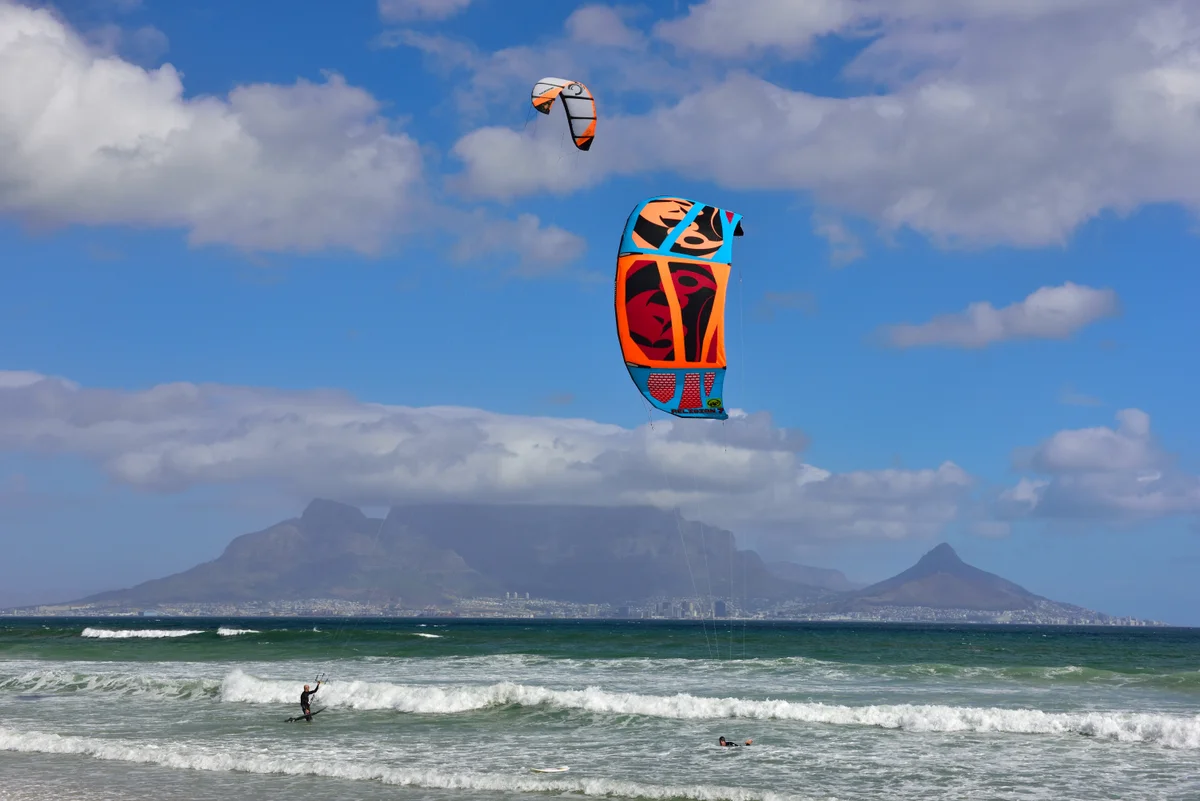
Quick answer: wind is the underwriting variable in Blouberg, and it cuts both ways. The south-easter that blows hardest from November to February makes an unsheltered terrace unusable through the summer letting season, and the same wind made Big Bay one of the world’s known kite and wind-sport destinations. Which of those two facts applies to a specific property depends on orientation and shelter, not on the address.
What does the wind actually do to a property here?
It decides which market the property can serve. The south-easter blows hardest from about November to February, which is the summer holiday season, so a terrace or balcony without shelter is least usable in the months when a holiday let earns most of its money.
| Position | Summer usability | What it suits |
|---|---|---|
| Sheltered, north-facing, wind break | High through the season | Holiday let, family long let |
| Partially sheltered | Usable on many afternoons | Long let at a modest discount |
| Fully exposed, west-facing frontline | Limited on windy afternoons | View-led sale, weaker letting case |
A worked example sizes the effect. Two identical two-bedroom units in the same Big Bay block, one sheltered and one fully exposed, let long-term within about R500 a month of each other because a long tenant adapts. Put both on a summer holiday calendar and the gap widens to R1,200 or more a night in January, because a visitor paying premium rates for 7 nights will not accept a terrace they cannot sit on. Across a 10 week summer season that is R80,000 of revenue attached to an attribute neither listing mentions, and it repeats every year for the 10 or 20 years an owner holds.
Our reading of West Coast lettings is that this single attribute separates two properties in the same building more reliably than floor level or finish does, and it is rarely priced into an asking price because it does not photograph. Insider tip: view on a windy November afternoon, not a still June morning. The wind is a fact of the location and the only question is whether the specific unit is protected from it, which takes one visit at the right time to answer.
Why does the same wind support the local economy?
Because it turned Big Bay and Bloubergstrand into an internationally recognised kite and wind-sport destination. Conditions that make a terrace uncomfortable make the bay reliable for wind sports at a level few coastlines match, and that draws visitors who plan trips around it.
The practical effect on a letting calendar is a different shape from the Atlantic Seaboard’s. Where a Camps Bay apartment carries most of its revenue in a six-week December window, a Blouberg unit can draw wind-sport visitors across a longer summer season and into the shoulder months, because those visitors are choosing conditions rather than school holidays. That does not make the area a stronger short-let market overall, and it does make its revenue less concentrated, which matters for anyone financing the purchase. For the neighbouring stretch of the same coast, see the Table View page.
What is the value argument against the Atlantic Seaboard?
Space and view for materially less money. The same budget that buys a compact apartment on the Atlantic Seaboard buys considerably more square metres on the West Coast, frequently with a sea view and the Table Mountain profile across the bay rather than behind the building.
What a buyer gives up is real and worth stating plainly:
- Commute, at 20 to 25 kilometres to the CBD and 25 to 40 minutes off-peak, longer at peak on the R27.
- Address recognition, since Blouberg is known locally and regionally rather than internationally, which narrows the buyer pool by perhaps 25% at the trophy end.
- Resale pool depth, because the buyer at exit is more likely to be a Cape Town family than a foreign trophy buyer.
Against those, the northern employment corridor and Century City sit closer than the CBD for many residents, so the commute figure overstates the cost for a large share of the market. For buyers working to a fixed foreign-currency budget, the under-500k guide covers where that money reaches furthest, and the rental yield guide covers how the gross-to-net gap behaves outside the prime suburbs.
What does salt and sand cost an owner?
The West Coast maintenance baseline sits above inland stock, and the mechanisms are specific rather than general. Wind-driven salt and sand reach surfaces that would be sheltered in a bay position, and they attack fittings before they attack structure.
Four lines carry most of the difference. Window and door seals degrade faster and fail quietly, which shows up as draughts and water ingress rather than as an obvious defect. External paint cycles shorten, often to 4 or 5 years rather than 7 or 8, which on a typical unit adds R8,000 to R15,000 a year once amortised. Metalwork, including balustrades, gates and mechanical fittings, corrodes visibly on exposed elevations. And sand ingress affects sliding-door tracks, drainage and pool filtration on an ongoing basis. A buyer should have the seals checked specifically, because replacing them across a whole apartment is an unpleasant surprise that a general inspection can miss.
What does a Blouberg purchase cost to hold?
Holding costs here sit inside the City of Cape Town’s jurisdiction, so the 2026/27 municipal position applies in full: a rates-free R620,000 on homes valued at R8 million or less, and a residential rate in the rand of about 0.0064 above it.
| Line | On a R2,600,000 Blouberg apartment | Note |
|---|---|---|
| Municipal rates | about R1,060 a month | After the R620,000 rates-free portion |
| Sectional title levy | R2,200 to R4,500 a month | Higher where the block has a pool and lifts |
| Maintenance premium | R8,000 to R15,000 a year | Salt and sand exposure, amortised |
| Insurance | Standard, loaded on exposed positions | Ask what the insurer required |
The levy line deserves the closest look in beachfront blocks, because coastal buildings run heavier maintenance cycles than inland ones and the schemes that fund them properly charge for it. A block with a low levy and an ageing exterior is not cheaper, it is deferring. The levies guide covers how to read a scheme’s financials, and the rates guide covers the municipal calculation.
Who lives here, and what does that do to the market?
Blouberg functions as a working suburb rather than a resort, and that is the foundation under its rental market. Families and professionals employed in the northern corridor, at Century City and in the industrial and logistics nodes along the N7 make up the resident base, and they rent year-round rather than seasonally.
The result is a market with a genuine long-let floor beneath its seasonal upside, which is a more robust structure than a purely holiday-driven coastal town carries. The pros and cons follow from it: occupancy is reliable and rents are set by local salaries rather than by tourist willingness to pay, so yields are decent and capital growth tracks the metro rather than leading it. For the adjacent lagoon-side market with a different set of constraints, see the Milnerton page, and for what any South African purchase costs a foreign buyer, the pillar investment guide.
New stock prices differently from the resale market described above: at Two Oceans Beach the units are sold VAT-inclusive with no transfer duty payable, which moves the entry arithmetic enough to be worth checking before you assume a resale is the cheaper way in.
Sources: South African Weather Service records for the seasonal pattern of the south-easter on the Table Bay coast. Maintenance cycles and letting observations describe typical West Coast stock rather than any specific property and are directional. Inspect window and door seals and confirm the property’s orientation and shelter before offering. Current as at 27 August 2026.
Frequently Asked Questions
More than the view does, in both directions. The south-easter blows hardest from about November to February, which is exactly the summer season a holiday let depends on, and it is also what made Big Bay and Bloubergstrand an internationally known kite and wind-sport destination. The same wind that empties an unsheltered terrace fills the beach with visitors who came specifically for it, so orientation and shelter decide which of those two markets a property serves.
Substantially, and that is its core investment argument. The same budget buys considerably more space and often a sea view on the West Coast than it does on the Atlantic Seaboard, with Table Mountain across the bay rather than behind the property. The trade is a longer commute to the CBD, a less internationally recognised address and a resale pool that is more local than global.
Yes, with a mixed profile. Long-let demand comes from families and professionals working in the northern corridor and at Century City, which is closer than the CBD for many residents, and it runs year-round. Short-let demand is seasonal and skewed toward the wind-sport calendar rather than only to December, which gives the area a slightly different revenue shape from the Atlantic Seaboard.
Wind-driven salt and sand. Exposed West Coast positions attack window seals, external paint, metalwork and mechanical fittings faster than sheltered inland stock, and sand ingress affects tracks, drainage and pool systems. Budget shorter repaint cycles and check the condition of window and door seals specifically, because they fail quietly and are expensive to replace across a whole unit.
About 20 to 25 kilometres to the CBD, typically 25 to 40 minutes off-peak and considerably longer in traffic on the R27 and N1 approaches. Century City and the northern business nodes are closer, which is why many Blouberg residents work there rather than in the city centre, and why the area functions as a genuine commuter suburb rather than a weekend destination.
Orientation and shelter first, since a north-facing terrace behind a wind break is a different asset from an exposed west-facing one; the condition of window seals, external paint and metalwork given salt exposure; whether the building has covered parking, which matters more here than inland; and the actual commute at the hour the buyer would drive it, because the R27 changes character completely at peak.
Get a Cape Town property shortlist
Share your budget, target area (Atlantic Seaboard, City Bowl, Winelands), and goal. We reply within one business day with matched stock and next steps.