
Hermanus Property: A Different Municipality, 2026
Hermanus is not in Cape Town. Overstrand Municipality rates at 0.005237 in the rand with a R350,000 threshold, and the 120km drive shapes who rents and when.
By Cape Town Invest Editorial · Updated September 7, 2026 · 10 min read
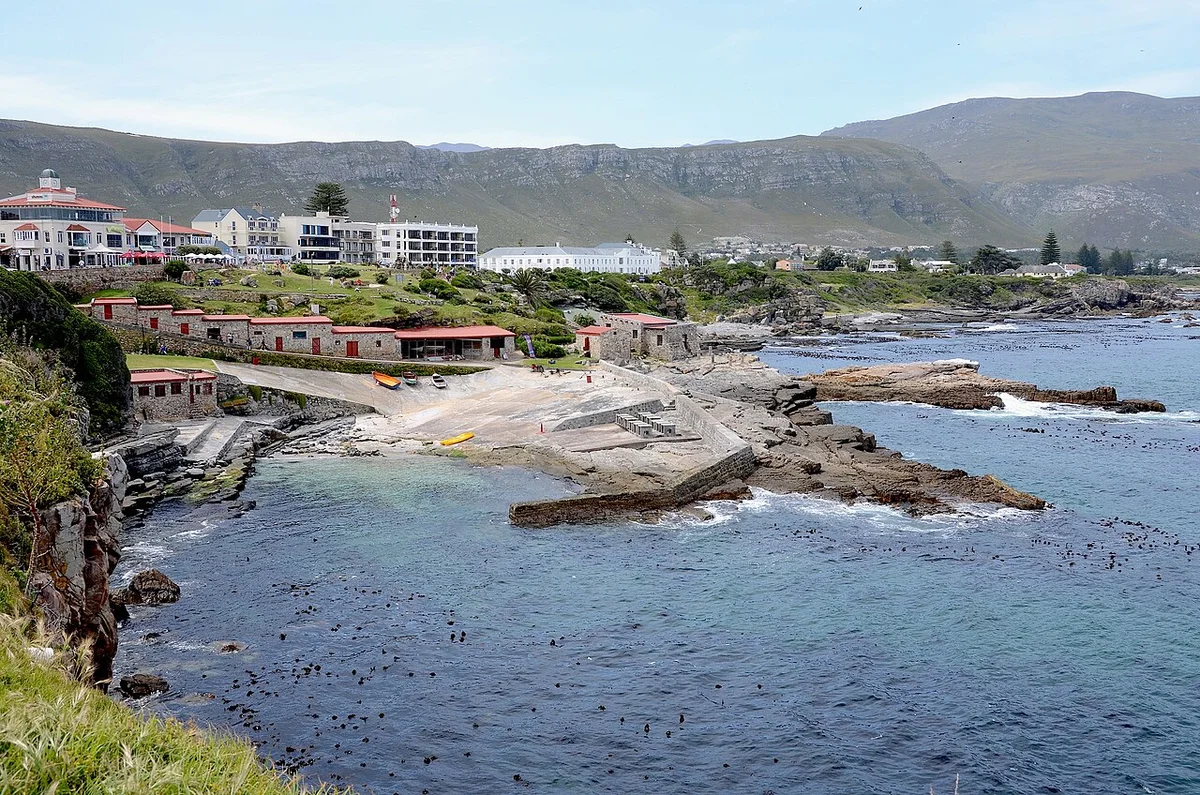
Quick answer: Hermanus is not a Cape Town suburb and should not be underwritten like one. It sits in Overstrand Municipality, 120 kilometres from the CBD, with its own valuation roll and a residential rate of 0.005237 in the rand for 2026/27 against the City’s 0.0064. The distance rules out commuting, which removes the tenant pool that supports metro yields and leaves a tourism, retirement and lifestyle market instead.
Which municipality actually rates a Hermanus property?
Overstrand Municipality does, and the distinction is worth real money rather than being a technicality. Hermanus sits in the Overberg District, roughly 120 kilometres from the Cape Town CBD, and Overstrand runs its own valuation roll, tariff and rebate structure independent of the City.
| Item | Overstrand 2026/27 | City of Cape Town 2026/27 |
|---|---|---|
| Residential rate in the rand | 0.005237 | about 0.0064 |
| Previous year | 0.004988, so a 5% increase | reduced by 10.2% |
| Value below which no rates apply | R350,000 | R620,000 rates-free on homes to R8 million |
| Additional relief | R15,000 rebate, plus R35,000 on improved residential, plus 20% for solely residential use | Rebates by category |
The two structures favour different properties, which is the practical point. Overstrand’s lower rate in the rand rewards higher values, while the City’s larger rates-free portion does more for modest ones. A buyer comparing a R4 million Hermanus house against a R4 million Cape Town house using one set of figures will misprice one of them, and our reading of enquiries is that the Cape Town number is the one people carry across. The rates and taxes guide covers the City’s methodology; for Hermanus, pull the actual Overstrand rates account before offering.
What does 120 kilometres do to the tenant pool?
Distance removes the commuter, and with the commuter goes the depth that metro rental markets rely on. At 90 to 120 minutes each way depending on route and season, Hermanus cannot function as a dormitory town for Cape Town employment, so nobody rents here because of a job in the city.
What remains is a genuine but narrow pool:
- Local employment in tourism, retail, services and the wine and agricultural economy of the Overberg.
- Remote professionals choosing the coast over the city, a segment that grew after 2020 and remains sensitive to connectivity quality.
- Families and retirees on long leases, often as a trial before buying in the town.
The consequence for underwriting is that a Hermanus long-let model should assume longer marketing periods than a metro equivalent and a rent ceiling set by local incomes rather than by Cape Town salaries. Our reading of coastal-town lettings is that the mistake buyers make is not the yield assumption but the vacancy assumption, and the vacancy guide sets out how the two interact.
How does whale season change the calendar?
Hermanus has two visitor seasons where most South African coastal towns have one, and that is a genuine structural advantage for short-letting. Southern right whales are present in Walker Bay roughly from June to November, producing winter demand at exactly the point when Atlantic Seaboard nightly-let stock stands empty.
The pattern matters more than the headline. December and January bring the conventional summer peak, driven by domestic holidaymakers and the Cape Town spillover; June to November brings a longer, lower plateau driven by whale-watching visitors, walkers on the cliff path and a quieter international segment. A property that works in both windows has a materially different revenue distribution from a Camps Bay apartment carrying its whole year in six weeks. Insider tip: check the cliff path proximity specifically, because the whale-season premium attaches to walkable access to the viewing points rather than to a sea view in general, and the two are priced very differently.
What kind of market is this underneath?
Hermanus is a retirement and lifestyle market with a tourism overlay, and that combination decides how prices move. Demand concentrates in secure complexes, single-storey homes and units near medical facilities and the cliff path, and turnover follows life events rather than job relocations or interest-rate cycles.
For an investor the implications run in both directions. Price movement is slower and steadier than in the metro, because the buyer pool is less leveraged and less rate-sensitive; a rate cut moves Cape Town’s rental stock faster than it moves Hermanus. Against that, the market is shallow enough that a seller in a hurry has few buyers to choose from, so exit timing carries more risk than entry timing. A ten-year horizon suits this town; a three-year trade does not. For the nearest comparable market still inside the City’s jurisdiction, see the Somerset West page.
What does the arithmetic look like on a real Hermanus house?
A worked example shows why the municipal difference is not a rounding error. Take a R4.5 million house in Hermanus and an identically valued one in a Cape Town suburb, and run each through its own municipality’s 2026/27 numbers.
| Line | Hermanus, Overstrand | Cape Town, City |
|---|---|---|
| Rateable value after relief | about R4,450,000 | R3,880,000 after the R620,000 rates-free portion |
| Rate in the rand | 0.005237 | about 0.0064 |
| Annual rates before further rebates | about R23,300 | about R24,800 |
| Monthly | about R1,940 | about R2,070 |
The gap is modest at this value and widens as values rise, because Overstrand’s advantage is its lower rate while the City’s is its larger exemption. Above roughly R8 million the City’s rates-free portion falls away on its own terms, and the comparison shifts further toward Overstrand. Add the 20% rebate Overstrand grants where a property is used solely for residential purposes and the Hermanus number falls again, which is a real consideration for a buyer choosing between a holiday let and an owner-occupied home. Our reading is that the rates line rarely decides a purchase on its own, but it belongs in the holding-cost model rather than being carried across from a metro page. For the wider tax picture on a South African property, see the foreigner tax hub.
What should a buyer verify here?
Four checks are specific to Hermanus, and each of them is answerable before an offer rather than after transfer.
- The actual Overstrand rates account, not a Cape Town estimate, since the tariff, threshold and rebates all differ.
- Fire exposure at the fynbos interface, which affects insurance premiums and, in some positions, insurability.
- Water arrangements, because Overstrand runs its own reticulation and supply, separate from the City’s system.
- The real drive, taken on a Sunday evening in December rather than a quiet Tuesday, since that is the trip an owner actually repeats.
Beyond those, the transaction runs on national rules identical to any other South African purchase, and a foreign buyer is not treated differently at any point. The duty scale, the transfer sequence and the exchange-control steps sit in the pillar investment guide.
Sources: Overstrand Municipality approved 2026/27 budget for the residential rate in the rand, threshold and rebates, effective 1 July 2026; City of Cape Town budget 2026/27 adopted 29 June 2026 for the comparison. Whale season dates describe the usual presence of southern right whales in Walker Bay and vary year to year. Obtain the actual Overstrand rates account and insurer position for the specific property before offering. Current as at 27 August 2026.
Frequently Asked Questions
No. Hermanus falls under Overstrand Municipality in the Overberg District, about 120 kilometres and 90 to 120 minutes from the Cape Town CBD depending on the route and season. That matters financially: Overstrand runs its own valuation roll, its own rates tariff and its own rebate structure, so every City of Cape Town rates figure quoted elsewhere is the wrong number for a Hermanus property.
Overstrand set the residential rate in the rand at 0.005237 for 2026/27, up from 0.004988, a 5% increase effective 1 July 2026. Residential property valued below R350,000 pays nothing, and rateable value is reduced by a R15,000 rebate plus a further R35,000 on improved residential property, with an additional 20% rebate where the property is used solely for residential purposes. The City of Cape Town, by contrast, charges about 0.0064 with the first R620,000 rates-free on homes valued at R8 million or less.
It shapes the calendar rather than the whole market. Southern right whales are present in Walker Bay roughly from June to November, which produces a winter visitor season that most South African coastal towns do not have, on top of the ordinary December to January peak. The practical effect is two demand periods a year instead of one, which changes short-let modelling but does not create a deep long-let market.
A small pool. The town's economy is tourism, retirement and services rather than corporate employment, so long-let demand comes from local workers, some remote professionals and families rather than from a commuting workforce. Cape Town is too far for a daily commute at 90 to 120 minutes each way, which is why Hermanus does not function as a dormitory town and its long-let yields sit below metro equivalents.
Substantially, and that shapes the stock. Demand concentrates in secure complexes, single-storey homes and units close to medical facilities and the cliff path, and turnover follows life events rather than job moves. For an investor it means slower, steadier price movement, a buyer pool that is less sensitive to interest rates than to health and family, and stock that is easier to let to a long-stay tenant than to a short-stay one.
Four things: the Overstrand rates account rather than a Cape Town estimate, whether the property sits inside a fire-risk fynbos interface and what insurers charge for it, water supply arrangements given Overstrand's separate reticulation and dam system, and the drive time on a Sunday evening in December rather than on a quiet Tuesday, since that is the trip an owner will actually make.
Get a Cape Town property shortlist
Share your budget, target area (Atlantic Seaboard, City Bowl, Winelands), and goal. We reply within one business day with matched stock and next steps.