
Milnerton Property: The Lagoon Question, 2026
Milnerton's lagoon and the Diep River carry a long-running water quality problem, and it sits between the suburb's best views and its most exposed property.
By Cape Town Invest Editorial · Updated September 7, 2026 · 10 min read
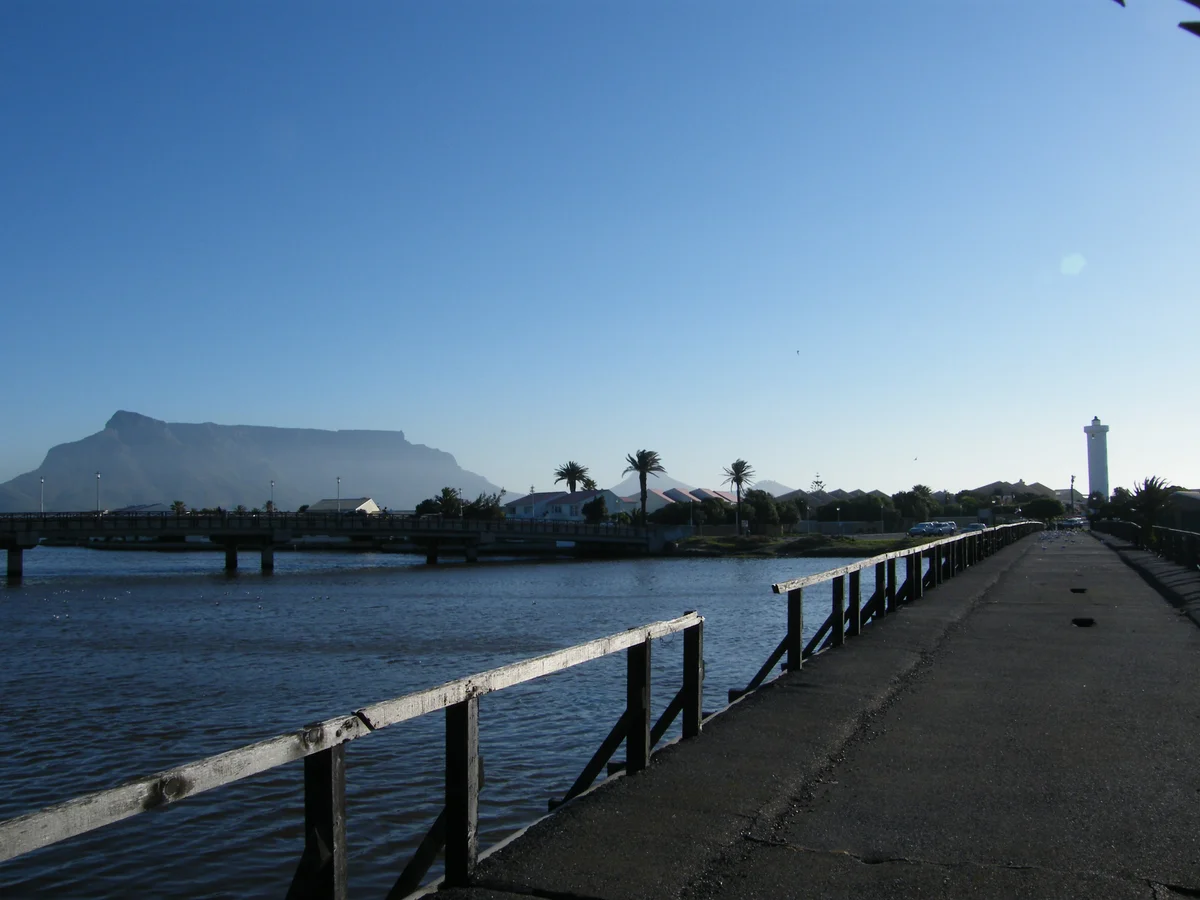
Quick answer: Milnerton’s lagoon is both its best amenity and its most specific risk. The Diep River system that feeds it has carried a long-running water quality problem, so a lagoon-front position does not command the premium the same frontage would on a clean waterway. Away from the water, the suburb is a straightforward working market serving Century City and the northern corridor, letting year-round at entry prices well below the Atlantic Seaboard.
What is the lagoon issue, and how should a buyer treat it?
The Milnerton lagoon is fed by the Diep River, and that system has carried elevated bacterial counts over a long period from inflows upstream of the suburb. The City has at times posted advisories against contact recreation, and it remains an active municipal matter rather than a resolved one.
For property the effect is specific rather than general. It does not depress the suburb, and it does compress the premium that a water frontage would otherwise carry, because a buyer paying for a waterway is paying for something they may not want to swim in. The practical instruction is narrow: if a property has a lagoon or river frontage, or if the plan depends on that amenity, check the City’s current published status for the system before assigning any value to the water. If the property sits several streets back, the question does not arise. The water security guide covers the city-wide supply picture, which is a separate matter from surface water quality.
What does the rest of the suburb run on?
Employment, and mostly not in the CBD. Milnerton sits about 12 kilometres from the city centre at 20 to 30 minutes off-peak, and roughly 10 minutes from Century City, which is where a large share of its working residents actually go.
| Node | Distance from Milnerton | What it supplies |
|---|---|---|
| Century City | about 10 minutes | Corporate offices, retail, the largest local employer base |
| Cape Town CBD | 20 to 30 minutes off-peak | Professional employment, longer commute at peak |
| Northern industrial and logistics spine | 10 to 20 minutes | Steady mid-income tenant demand |
| Table Bay coast and Blouberg | 10 to 15 minutes | Lifestyle amenity rather than employment |
That structure is why Milnerton lets year-round rather than seasonally, and why its rental market is more predictable than a coastal holiday suburb’s. Our reading is that buyers under-appreciate the Century City adjacency and over-weight the CBD distance, which describes the commute of a minority of local tenants. The Century City guide covers the node itself.
What does coastal exposure cost here?
The Table Bay side of Milnerton carries the same salt and sand exposure that shapes maintenance further up the West Coast, and the gradient is sharp: a shoreline property and one set back several streets have different annual costs.
- Window and door seals degrade faster on exposed elevations and fail quietly, showing up as draughts and water ingress rather than an obvious defect.
- External paint cycles shorten, often to 4 or 5 years rather than 7 or 8.
- Metalwork, including balustrades, gates and mechanical fittings, corrodes visibly where it faces the sea.
- Sand ingress affects sliding-door tracks, drainage and pool filtration on an ongoing basis.
A buyer should ask for the window and door seals to be inspected specifically, as a named item, rather than relying on the coverage of a general survey, because replacing them across a whole unit is a substantial cost that a walk-through misses. For the neighbouring stretch of the same coast where wind is the dominant variable, see the Blouberg page.
What are the returns and the holding costs?
Milnerton sits inside the City of Cape Town, so the 2026/27 municipal position applies in full: a rates-free R620,000 on homes valued at R8 million or less and a residential rate in the rand of about 0.0064 above it. On a R2,200,000 apartment that is roughly R840 a month.
Yields are decent rather than exceptional, supported by year-round demand and modest entry prices. Stock is largely modern, which keeps maintenance predictable away from the shoreline and keeps sectional title levies in a normal range rather than the heavy figures older coastal blocks carry. The pros and cons are straightforward: a buyer gets reliable occupancy, low drama and a metro-tracking capital return, and gives up the growth premium that concentrates on the Atlantic Seaboard and the City Bowl. For a buyer whose priority is that the property lets every month rather than that it appreciates fastest, that is a coherent trade.
How do the two markets price against each other?
The gap between water-adjacent and set-back stock in Milnerton is narrower than it would be on a clean waterway, and that is the suburb’s most useful pricing insight.
| Position | What it offers | How to price it |
|---|---|---|
| Lagoon or river frontage | Views, Woodbridge Island access | Discount the water premium until quality is confirmed |
| Coastal, Table Bay side | Sea views, beach access | Add the maintenance baseline before comparing |
| Set back, 3 to 6 streets | Neither view nor exposure | The suburb’s most predictable holding cost |
| Century City side | Commute advantage | Prices on access rather than on outlook |
Cape Town Invest reads the fourth row as the quietly strongest position for an income buyer. It carries no water premium to justify, no coastal maintenance loading, and the shortest commute to the employment node that actually supplies the tenants, which is the combination that produces the most predictable net yield in the suburb. The rates and taxes guide covers the municipal side of that holding cost.
What should a buyer verify before offering?
Four checks matter here and three of them relate to water in one form or another.
- Current water quality status for the Diep River and lagoon system, if the property has a frontage or the plan depends on the amenity.
- Flood exposure, since the river and lagoon define a floodplain, and the insurer’s position on it belongs in the conversation before an offer rather than after.
- Coastal exposure, with a specific inspection of window and door seals, external paint and metalwork.
- The commute at the hour it would be driven, because the R27 and the N1 approaches both congest heavily at peak and the off-peak figure flatters them.
Beyond those the transaction is ordinary conveyancing with no additional cost or restriction for a foreign purchaser, and the duty scale, transfer sequence and exchange-control steps sit in the pillar investment guide.
Sources: City of Cape Town inland water quality monitoring and advisories for the Diep River and Milnerton lagoon system; City of Cape Town budget 2026/27 adopted 29 June 2026 for the rates position. Water quality status changes over time, so confirm the current position with the City rather than relying on this page. Maintenance observations describe typical Table Bay coastal stock and are directional. Current as at 27 August 2026.
Frequently Asked Questions
The Diep River and the Milnerton lagoon system have carried elevated bacterial counts over a long period, driven by inflows upstream of the suburb, and the City has posted advisories against contact recreation at times. It is a live municipal issue rather than a historical one, and it matters to property because the lagoon is simultaneously the suburb's main amenity and the reason some lagoon-front stock trades below its view.
It affects the premium a water frontage can command rather than the suburb as a whole. A lagoon-front position that would carry a substantial premium on a clean waterway carries a smaller one here, and buyers should treat any implied water premium sceptically until they have checked the City's current status for the system. Streets set back from the water are largely unaffected.
A steady one. Demand comes from households working at Century City, in the northern corridor and along the industrial and logistics spine, so it lets year-round rather than seasonally. Entry prices sit well below the Atlantic Seaboard and the stock is mostly modern, which keeps maintenance predictable, and the trade is capital growth that tracks the metro rather than leading it.
About 12 kilometres to the CBD, typically 20 to 30 minutes off-peak, and Century City is closer still at roughly 10 minutes. That proximity to a major commercial node rather than to the city centre is the practical basis of the rental market here, and it is why Milnerton behaves like a working suburb rather than a coastal resort.
Coastal exposure on the Table Bay side, which attacks window seals, external paint and metalwork the way it does further up the West Coast, and wind-driven sand in exposed positions. Properties set back from the shoreline carry a materially lower baseline. Ask specifically about window and door seals, since they fail quietly and are expensive to replace across a whole unit.
The City's current water quality status for the Diep River and lagoon system if the property has a water frontage or the plan depends on one; flood exposure, since the lagoon and river system defines a floodplain; coastal exposure and the condition of seals and metalwork; and the actual commute at the hour it would be driven, because the R27 and the N1 approaches both congest heavily at peak.
Get a Cape Town property shortlist
Share your budget, target area (Atlantic Seaboard, City Bowl, Winelands), and goal. We reply within one business day with matched stock and next steps.