
V&A Waterfront Investment: Prices and Yields 2026
V&A Waterfront investment: Penrith and The Aurum trade at R160,000 to R170,000 per sqm, with a modelled 5.0% gross and 3.5% net against 6.0% net in Green Point.
By Cape Town Invest Editorial · Updated October 5, 2026 · 12 min read
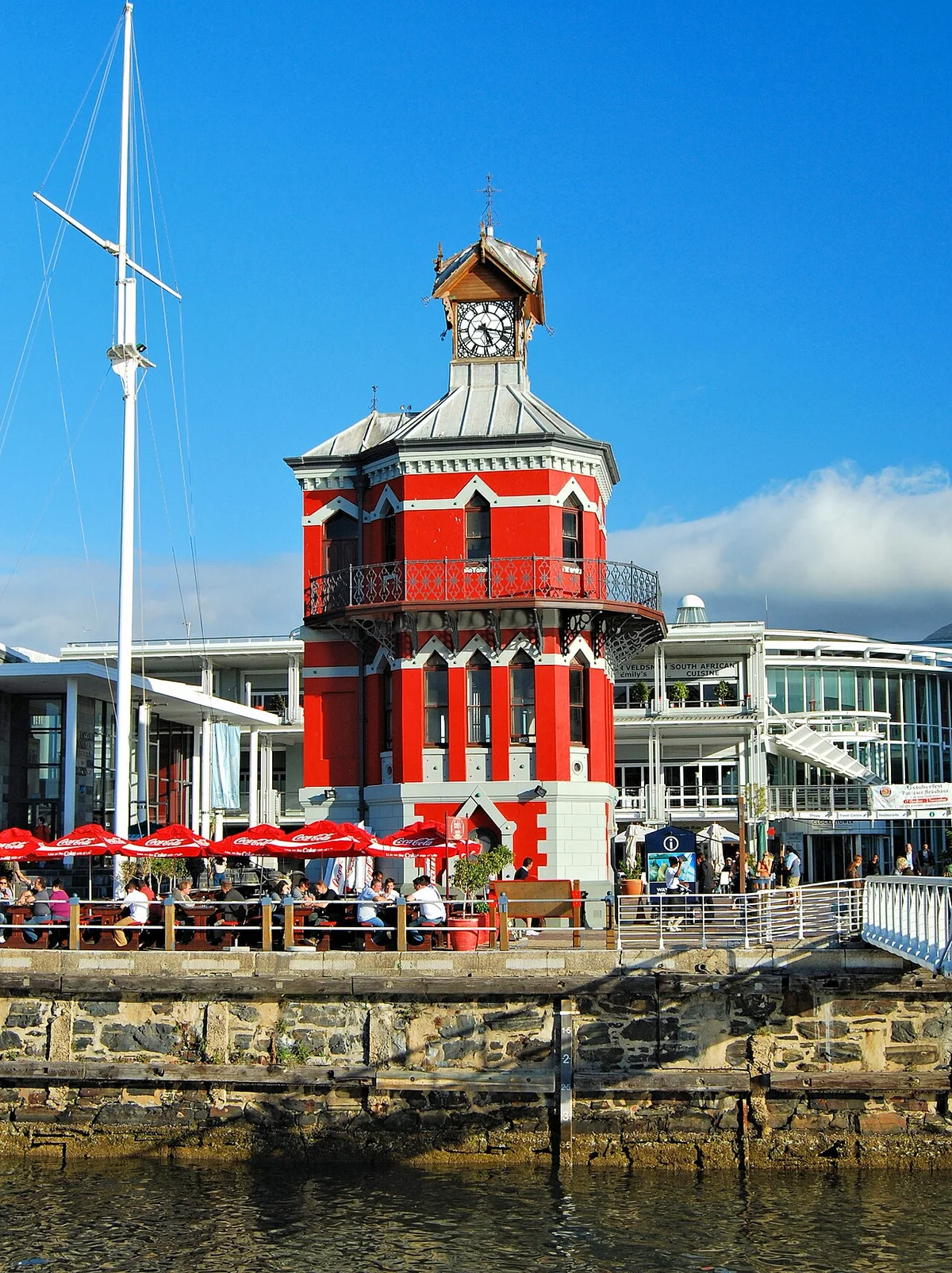
Quick answer: The V&A Waterfront is Cape Town’s managed luxury precinct, where sectional title trades on amenity scarcity and foreign demand rather than headline rental yield. Recent Penrith and The Aurum comparables cluster around R160,000 to R170,000 per sqm, with average transactions near R18m, which compresses modelled net yields to roughly 3.5% on long-let assumptions. The investment case is growth-led capital preservation inside a 24-million-visitor destination, with Green Point and the City Bowl one walk away and the Granger Bay expansion on the horizon. Foreigners pay no buyer surcharge. All yields are modelled and directional.
How should you underwrite V&A Waterfront investment?
The V&A Waterfront is not a suburb in the conventional sense. It is a privately managed precinct where retail, tourism, offices, hotels, and luxury sectional title share a single security, parking, and amenity framework. For investors, that structure shifts the thesis from rental yield to capital preservation, liquidity, and foreign-demand depth. Where Green Point models around 8.0% gross and 6.0% net on typical apartments, Waterfront luxury stock models around 5.0% gross and 3.5% net once levies, rates, and management costs bite, because entry prices on recent Penrith and The Aurum comparables cluster around R160,000 to R170,000 per sqm with average transactions near R18m.
That yield compression is the price of buying inside South Africa’s most visited urban destination. More than 24 million visitor movements a year flow through the precinct’s retail, hospitality, and events calendar, which supports both resale depth and short-stay demand even when long-let math looks thin. Read this guide as the precinct-level companion to the Atlantic Seaboard guide, which frames how the Waterfront relates to Sea Point, Camps Bay, and the City Bowl income strip.
What do the 2025 to 2026 numbers say about V&a Waterfront?
V&A Waterfront investment is priced on scarcity: luxury sectional title at Penrith and The Aurum trades at R160,000 to R170,000 per sqm, with average transactions near R18m, against a modelled 5.0% gross and 3.5% net yield. Combined Atlantic Seaboard and City Bowl sales reached R11.3bn in 2025, up about 26%.
| Metric | Figure | What it signals |
|---|---|---|
| Luxury psqm band (Penrith / The Aurum) | R160,000 to R170,000 | Ultra-prime sectional title pricing |
| Average transaction (luxury band) | ~R18m | Trophy ticket, foreign buyer weighted |
| Modelled gross yield (long-let) | ~5.0% | Growth-led, below City Bowl |
| Modelled net yield (long-let) | ~3.5% | Levies and rates compress net sharply |
| Green Point net yield (modelled) | ~6.0% | Income alternative one suburb away |
| Visitor movements (precinct) | 24m+ annually | Tourism and amenity depth |
| Combined prime 2025 sales | R11.3bn, up ~26% | Liquidity in trophy bracket |
| Foreign share of value | ~25%, about R2.8bn | International demand backbone |
| Granger Bay expansion budget | ~R24bn | Long-dated supply and amenity pipeline |
| Foreign buyer surcharge | None | Versus UK 2% and Singapore 60% |
Why Waterfront pricing trades on growth, not yield
Three structural forces explain why Penrith and The Aurum can clear R160,000 to R170,000 per sqm while modelled net yields sit near 3.5%: a curated precinct that releases very little residential stock, foreign and semigration demand that took roughly 25% of combined Atlantic Seaboard and City Bowl value in 2025, and a visitor economy deep enough to support hotel-linked formats year after year.
First, managed precinct scarcity. The Waterfront is not an open suburb where new towers appear on every block. Residential releases are curated, often hotel-linked or amenity-heavy, with body corporate costs that reflect 24-hour security, concierge-grade common areas, and proximity to anchor tenants. Scarcity supports capital values even when rent multiples look thin.
Second, foreign and semigration demand. Foreigners took roughly 25% of combined Atlantic Seaboard and City Bowl value in 2025, about R2.8bn, and the Waterfront attracts a disproportionate share of international lifestyle capital because it bundles tourism, dining, and harbour views inside one address. South Africa charges no foreign buyer surcharge, which keeps Cape Town on the shortlist versus the United Kingdom’s 2% non-resident premium or Singapore’s heavy additional duty.
Third, tourism and short-stay depth. The precinct’s visitor economy supports hotel-managed apartments, premium short-stay formats, and corporate tenancy tied to hospitality and creative sectors. Those channels can lift gross income above long-let benchmarks in peak season, but operator fees, house rules, and seasonality mean underwriting still starts with conservative long-let math near 3.5% net.
Penrith, the aurum, and the R18m transaction band
The R18m transaction band is what a Penrith or Aurum buyer typically pays, and it sets the cash and yield arithmetic. As a worked example, the table below applies the page’s modelled yields and the SARS transfer duty scale to an R18m purchase.
| At an R18m purchase | Annual | Monthly |
|---|---|---|
| Gross rent at 5.0% | R900,000 | R75,000 |
| Net income at 3.5% | R630,000 | R52,500 |
| Levies, rates and costs absorbed | R270,000 | R22,500 |
| Transfer duty on a resale (once) | R1,851,156 | n/a |
The duty line is R1,241,456 plus 13% of the R4,690,000 above R13,310,000, and it falls away on a developer sale, which carries 15% VAT inside the price instead. The transfer duty guide owns the full scale and the transfer cost calculator prices any figure.
| Scheme / comp | Indicative psqm | Typical format | Buyer profile |
|---|---|---|---|
| Penrith | R160,000 to R170,000 | Luxury sectional title | Foreign lifestyle, semigration |
| The Aurum | R160,000 to R170,000 | Premium two and three bed | Trophy, low LTV equity |
| Wider precinct resales | Variable by view | Hotel-linked and pure residential | Mix of owner-use and let |
| Green Point comparison | Below Waterfront psqm | One to two bed apartments | Income plus adjacency |
Smaller one-bedroom Waterfront units can trade below R18m in absolute terms yet still carry per-square-metre premiums that compress yield. Rebuild every offer on net rent after levies, rates, insurance, vacancy, and any hotel-management fee before you treat a view premium as investment math.
Granger Bay expansion and long-dated supply
Granger Bay is a long-dated supply and amenity pipeline with a budget of about R24bn, not a source of new stock soon. Environmental and public participation runs from 2026 to 2027, parliamentary approval is targeted for late 2027, and residential occupation comes years after approval.
| Phase | Timing (indicative) | Investor read |
|---|---|---|
| Environmental and public participation | 2026 to 2027 | Ignore hype-only launches |
| Parliamentary approval target | Late 2027 | Authorisation, not occupation |
| Marine works and breakwaters | Post-approval | Construction noise near fringe stock |
| Residential occupation | Years after approval | Model supply against today’s rents |
Track pipeline timing against other towers in the new developments Cape Town 2026 roundup before you assume Granger Bay will be the first new stock to market. Underwrite existing Waterfront apartments on today’s rents and levies, not projected uplift alone.
What are the pros and cons of investing at the v&a Waterfront?
| Pros | Cons |
|---|---|
| Managed precinct, 24-hour security and amenity | Levies and rates erode net yield sharply |
| R160k-R170k psqm supports trophy liquidity | Average deals near R18m require heavy equity |
| 24m+ visitor movements, tourism depth | Growth-led, modelled ~3.5% net on long-let |
| No foreign buyer surcharge | Non-residents face ~50% LTV caps |
| Strong foreign and semigration demand | Hotel-managed fees compress net further |
| Granger Bay pipeline may deepen amenity moat | Future supply may compete at handover |
The pros cluster around scarcity, security, and exit depth. The Waterfront gives you an institutional address foreigners recognise, with transacted comparables on Penrith and The Aurum that confirm buyer willingness to pay R160,000 to R170,000 per sqm. The cons cluster around yield and ticket size. Modelled net near 3.5% will not satisfy income-first investors, and average transactions near R18m demand substantial equity or carefully structured offshore financing.
Short-let, hotel-managed, and long-let formats
The disciplined approach is to underwrite long-let net first, confirm it clears your hurdle rate or accept that you are buying growth, then treat hotel or short-stay upside as optional. Compare income-led alternatives in Green Point if net cash flow is the primary goal.
Three letting formats compete inside the same precinct, and they produce very different net numbers on identical units. A straight twelve-month long-let is the base case, modeling around 5.0% gross and 3.5% net once levies, rates, insurance, and letting commission come off. Hotel-managed pools hand the unit to an operator, which removes the workload and the vacancy admin but takes an operator share that typically pushes net below the self-managed long-let, so ask for the agreement and model it line by line rather than from a headline pool return. Premium short-stay can beat both across the December to February window on the back of the precinct’s visitor volumes, then fall away sharply in winter while the levy stays flat. Test every format against the long-let floor of about 3.5% net, because that is the number you keep if house rules or regulation close the other two.
How do foreign buyers approach the v&a Waterfront?
This is the address international buyers reach for when they want a lock-up-and-go with no operational burden. The precinct handles security, parking, and public realm, the building handles the rest, and an owner who visits twice a year does not need a local manager for the basics. That convenience, more than the view, is what the foreign share of roughly 25% of prime value is buying.
At an average ticket near R18m the acquisition cost stack deserves attention before the yield does. Transfer duty is charged on a sliding scale that starts at zero below R1,210,000 and climbs through 3%, 6%, 8%, and 11% to a top marginal rate of 13%, so on a trophy sectional title unit the duty alone is a substantial line item, and no surcharge is added for being foreign. On the way out, a non-resident seller has 7.5% of the price withheld by the conveyancer as an individual, 10% as a company, and 15% as a trust, credited against the eventual capital gains assessment.
Financing rarely does much work at this level. Non-residents are generally capped near half the price locally, and at R18m that leaves a large offshore leg that must be recorded properly at entry under exchange control rules if the proceeds are to leave the country cleanly later. Deal with that at the outset with your conveyancer; see South Africa exchange control and property.
What risks should you plan for with V&A Waterfront Property Investment Guide 2026, Prices?
The precinct is transparent at the luxury end, but specific risks still matter. The table below maps the main ones against a mitigation.
| Risk | Why it matters | Mitigation |
|---|---|---|
| Gross yield quoted, not net | 5.0% gross may be 3.5% net after costs | Rebuild with levies, rates, insurance |
| Hotel-management fee stack | Operator share compresses net sharply | Model net after all fees in writing |
| Paying R170k psqm without view premium | Average R18m deals need line-item proof | Verify comparables floor by floor |
| Granger Bay supply at handover | New luxury stock may compete on rent | Stress-test rents, not just values |
| Short-let rule change | Tourism income is cyclical and regulated | Underwrite long-let fallback near 3.5% net |
| Offshore funds not recorded | Repatriation problems at exit | Record capital at entry |
The most common error is importing City Bowl yield expectations into a R160,000 to R170,000 per sqm precinct. The second is trusting hotel-managed gross projections without deducting operator fees, vacancy, and levy escalations tied to amenity-rich bodies corporate.
Which Waterfront property fits your investment goal?
The V&A Waterfront fits growth-led and lifestyle buyers, not yield hunters: modelled net is about 3.5%, against 6.0% in Green Point and 4.4% in Camps Bay. The table below positions the precinct against its neighbours.
| Location | Positioning | Yield vs growth (modelled) | Best buyer fit |
|---|---|---|---|
| V&A Waterfront | Managed luxury precinct | Growth led, ~3.5% net | Trophy, foreign lifestyle |
| Green Point | Waterfront adjacency, urban grid | Balanced, ~6.0% net | Income plus liquidity |
| De Waterkant | Heritage boutique, bowl fringe | Balanced, ~5.8% net | Short-let plus character |
| City Bowl compact | Professional long-let core | Yield led, ~5.8% net | Income-first urban |
| Camps Bay beachfront | Prestige sea views | Growth led, ~4.4% net | Capital preservation |
If your goal is net cash flow, start with the City Bowl guide or Green Point. If your goal is a recognisable trophy address with foreign-demand liquidity and you accept modelled net near 3.5%, the Waterfront belongs in the portfolio conversation alongside the Atlantic Seaboard guide beachfront comparables.
Investment scenarios for the v&a Waterfront
| Scenario | Entry profile | Strategy | Modelled outcome | Main risk |
|---|---|---|---|---|
| Trophy long-let | Penrith-style two-bed near R18m | 12-month premium lease | ~5.0% gross, ~3.5% net | Levy escalations |
| Hotel-managed absentee | Aurum-style unit, operator pool | Managed rental pool | Net below self-managed long-let | Operator fees and terms |
| Owner-use with let fallback | View-led three-bed, low LTV | Occupy peak, let off-season | Lifestyle value plus partial income | Seasonality |
Scenario one suits foreign buyers recording offshore equity who accept growth-led returns. Scenario two suits absentee owners who prioritise convenience over net. Scenario three suits semigration households who will use the apartment part-year yet still need honest long-let math on the weeks they let.
What to verify next
Pull recent transacted prices for your shortlisted Waterfront block, then compare per-square-metre values against Penrith and The Aurum in the R160,000 to R170,000 band and against Green Point one suburb away. Rebuild rental yield on net, not gross, confirming modelled long-let spreads near 5.0% gross to 3.5% net hold with actual levies, rates, and insurance. If the unit is hotel-managed, obtain the operator agreement and model net after all fees. Read the buy Cape Town property foreigner guide if you are introducing offshore capital. Review Granger Bay timing in the new developments Cape Town 2026 guide before you pay for pipeline uplift. Request a written cost breakdown covering duty, conveyancing and bond registration, and check it against the SARS scale yourself. Request a Waterfront shortlist when you want trophy or Green Point-adjacent stock screened for levies and net yield. If net yield fails your hurdle rate after honest modelling, choose Green Point or the City Bowl rather than forcing a trophy ticket near R18m.
Figures cite Cape Town and Waterfront market data for 2025 to 2026 where noted, including Penrith and The Aurum per-square-metre comparables, average transaction sizes, combined prime sales value, foreign share of value, and Granger Bay expansion estimates. Per-square-metre and price figures are indicative, and rental yields are modelled and directional, not guaranteed. This guide is for information only and does not constitute investment, tax, or legal advice. Verify current transfer duty, costs, and rules with qualified South African professionals before purchase.
Insider tip: at the V&A Waterfront the amenity that sells the apartment is also the line that eats the yield. Cape Town Invest sees comparables in Penrith and The Aurum clustering at R160,000 to R170,000 per square metre with average transactions near R18m, and precinct levies funding concierge, security and managed common areas run far above a standard Sea Point block. That is how a headline near 5.0% gross lands at roughly 3.5% net. Green Point, a walk away, models closer to 6.0% net on plainer stock, so the Waterfront premium is a liquidity and preservation decision rather than an income one. The counterweight is depth of demand: foreign buyers took about 25% of the R11.3bn Atlantic Seaboard and City Bowl market in 2025, and the R24bn Granger Bay pipeline extends the precinct story.
One name to disentangle before you search the precinct: Makers Landing is a food incubator at the cruise terminal, not an apartment launch, however often it surfaces in residential listings.
Frequently Asked Questions
The V&A Waterfront suits growth-led and lifestyle buyers more than pure income investors. Luxury sectional title in the precinct trades at R160,000 to R170,000 per sqm on recent Penrith and The Aurum comparables, with average transactions near R18m, which compresses modelled net yields well below City Bowl income suburbs. The case is institutional amenity, tourism depth, foreign demand, and scarcity inside a managed precinct, plus the Granger Bay expansion pipeline. Figures are modelled and directional, so rebuild net yield on live rents and levies before you offer.
At the average luxury transaction near R18m, a modelled 5.0% gross yield is about R900,000 a year and a 3.5% net yield about R630,000 a year, or R52,500 a month. That compares with a modelled 6.0% net in Green Point. A resale at R18m also pays about R1.85m in transfer duty on the SARS scale, while a developer sale carries VAT instead. All figures are modelled and should be rebuilt on live rents and levies.
Waterfront luxury sectional title models around 5.0% gross and 3.5% net on long-let assumptions, growth-led rather than income-led. At R160,000 to R170,000 per sqm entry on schemes such as Penrith and The Aurum, achievable rent rarely supports City Bowl-style 7.8% gross yields. Short-stay and hotel-managed formats can lift gross in peak season but add operator fees and regulation risk. All yields are modelled, not guaranteed, and should be stress-tested against a conservative long-let fallback.
Recent luxury releases and resales in the precinct cluster around R160,000 to R170,000 per sqm on Penrith and The Aurum comparables, with average transacted values near R18m on upper-tier sectional title. Smaller one-bedroom stock can sit below that average on an absolute price basis but still carries a heavy per-square-metre premium versus Green Point or De Waterkant. Treat marketing schedules as indicative until you verify live comparables for the exact block and line item.
Yes. Foreigners can buy sectional title and freehold stock in the Waterfront precinct with very few restrictions and no foreign buyer surcharge, unlike the UK's 2% premium or Singapore's 60% stamp duty. Foreigners took roughly 25% of combined Atlantic Seaboard and City Bowl value in 2025, about R2.8bn, and the Waterfront attracts a heavy share of international lifestyle and semigration capital. Non-residents typically finance around half the purchase price locally and should record offshore capital at entry for clean repatriation.
Green Point models around 8.0% gross and 6.0% net on typical one and two-bedroom apartments, income-led with Waterfront adjacency, while the V&A Waterfront precinct models around 5.0% gross and 3.5% net on luxury sectional title, growth-led with R160,000 to R170,000 per sqm pricing. Green Point suits buyers chasing net cash flow; the Waterfront suits buyers prioritising precinct amenity, trophy liquidity, and foreign-demand depth. Both carry no foreign surcharge, and both should be underwritten on net, not gross.
Get a Cape Town property shortlist
Share your budget, target area (Atlantic Seaboard, City Bowl, Winelands), and goal. We reply within one business day with matched stock and next steps.