
Somerset West vs Constantia 2026: The R8 Million Line
Both sit inside the City of Cape Town, so the rate in the rand is identical. The difference is the R620,000 rates-free portion, which stops above R8 million.
By Cape Town Invest Editorial · Updated August 27, 2026 · 11 min read
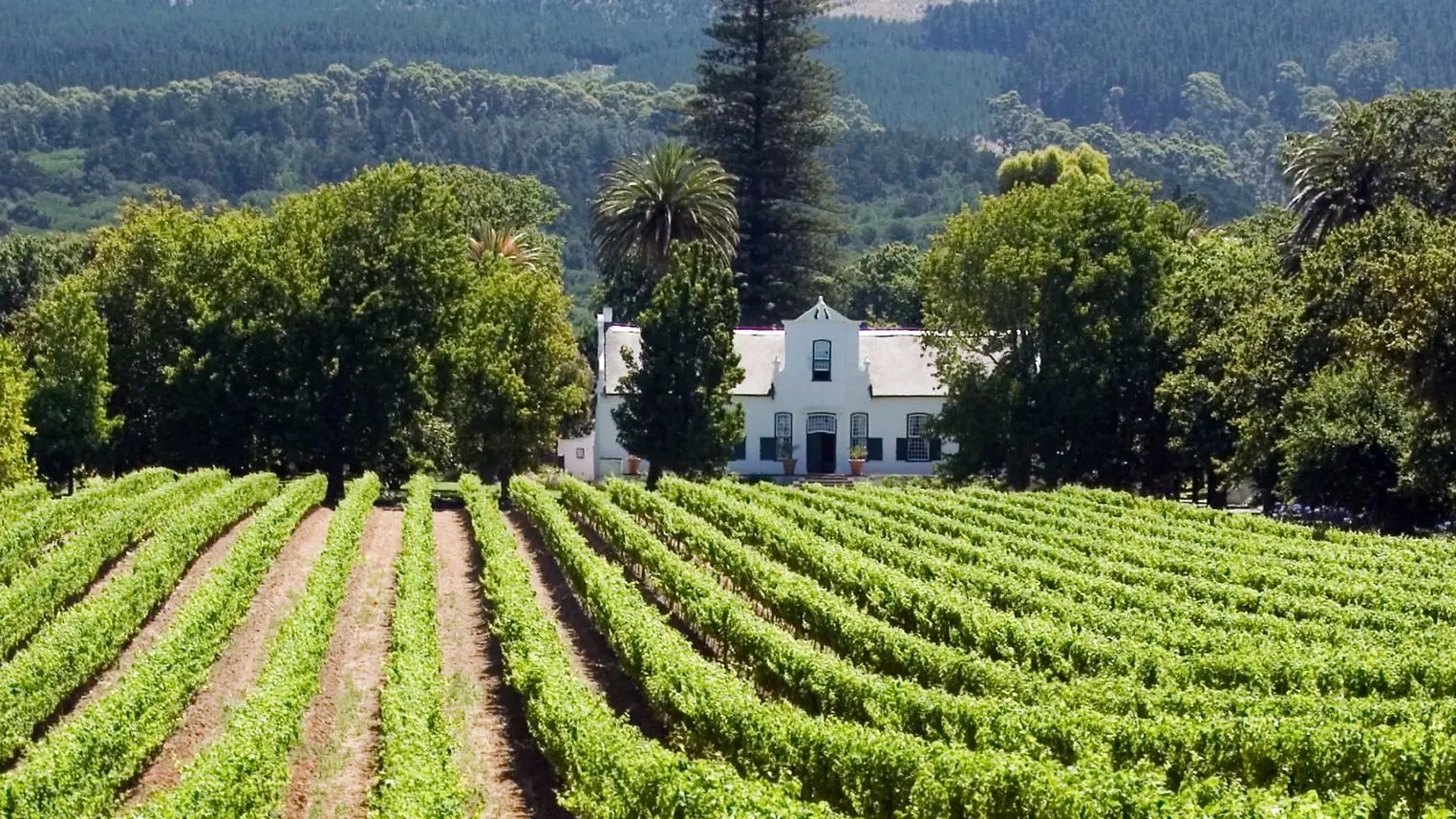
Quick answer: these two suburbs sit inside the same municipality, so the rate in the rand is identical and the comparison turns on something more specific. The City’s R620,000 rates-free portion applies to homes valued at R8 million or less, and Constantia routinely exceeds that line while Somerset West routinely sits under it. Everything else follows from land: Constantia sells large erven, Somerset West sells smaller ones with an estate around them.
Why does the same municipality produce different rates bills?
Because the relief is conditional on value rather than on address. The City of Cape Town charges a residential rate in the rand of about 0.0064 for 2026/27 to every residential property in its jurisdiction, and grants a rates-free portion of R620,000 on homes valued at R8 million or less.
| Valuation | Rates-free portion | Effective position |
|---|---|---|
| R4,500,000, typical Somerset West | R620,000 applies | Rates on R3,880,000 |
| R7,800,000, upper Somerset West | R620,000 applies | Rates on R7,180,000 |
| R9,500,000, mid Constantia | Does not apply at that valuation | Rates on the full amount |
| R14,000,000, upper Constantia | Does not apply | Rates on the full amount |
The practical instruction is the same on both sides and rarely followed: obtain the current municipal valuation for the specific erf rather than working from the asking price, and establish which side of R8 million it falls on. A property marketed at R8.4 million may be valued at R7.6 million or at R9 million, and the rates consequence differs. The rates and taxes guide sets out the calculation, and the valuation objection guide covers what to do when the number looks wrong.
What does each suburb actually sell?
Land in one case and an estate in the other, and that is the deeper difference the rates line only signals.
- Constantia sells large erven with mature gardens, greenbelt corridors and a wine-estate setting, on plots that are generous by metro standards.
- Somerset West sells smaller erven, a high share of secure estates with controlled access, and proximity to schools and medical facilities in the Helderberg basin.
That difference decides the annual cost more than the valuation does. A large Constantia erf carries continuous grounds and garden service, frequently a borehole and irrigation system with pumps to maintain, private security with perimeter infrastructure, and building maintenance on an older home, which together can reach 2.4% to 3.2% of value a year before a single repair. A Somerset West estate property replaces part of that with a levy covering perimeter security, gate access and internal roads, which is a fixed monthly cost rather than an open-ended one. Neither arrangement is cheaper in principle; the estate model is more predictable and the freehold model gives more control. The Constantia page and the Somerset West page work each side in detail.
Which one produces rental income?
Somerset West, modestly, and Constantia mostly not at all. The reason is stock size against tenant pool rather than demand for either suburb.
A Constantia family home at prevailing prices meets a narrow market of corporate relocations and established households, so a vacancy runs in months rather than weeks, and most buyers there are not letting. Somerset West carries a genuine if unspectacular rental market around its business node, drawn from families, professionals working in the Helderberg and people testing the town before buying, and it lets year-round rather than seasonally. Yields in both sit below the City Bowl catchment, because entry prices in each are supported by owner-occupier demand rather than by what tenants can pay. An investor whose priority is income should be looking at neither, and the southern suburbs guide covers the corridor where the arithmetic is different.
Who is the buyer on each side?
Both markets are owner-occupier markets, which is what makes them behave alike despite looking different.
Constantia draws established families, Gauteng semigration households buying at the top of the market and foreign buyers wanting space within reach of the city. Somerset West draws retirees, families and semigration households, with the estate and retirement developments giving it a distinct demographic weighting. In neither case is the buyer compelled by employment or by a rental calculation, so both suburbs respond to confidence rather than to interest rates, and both slow in time on market rather than in asking price when discretionary buyers pause.
The consequence for an investor is that exit timing carries more risk than entry timing in both suburbs, and more so in Constantia, where the price point narrows the pool further. Our reading is that a buyer in either should plan a longer intended hold than they would in a rental-backed market, because there is no income floor underneath the resale.
What are the risks specific to each?
The pros and cons here are genuinely different rather than better and worse, and each suburb carries one risk the other does not.
| Suburb | Specific risk | How to check it |
|---|---|---|
| Constantia | Holding cost compounding on a large erf | Three years of the seller’s actual municipal, water and security statements |
| Constantia | Greenbelt boundary security and privacy | Which corridors touch the erf, and how it is fenced and lit |
| Somerset West | Lourens River floodline exposure | The City’s floodplain mapping, plus a written insurer indication |
| Somerset West | Estate levy trajectory and reserves | Three years of levy history and the estate’s reserve position |
Insider tip on both: ask what the annual holding cost was last year, not what it is estimated to be. Sellers absorb these costs gradually and describe them optimistically, and the statements settle the question in a way that a conversation does not.
Which should you buy?
The choice sorts cleanly once the question is framed as cost and horizon rather than as prestige.
| Priority | Better fit | Why |
|---|---|---|
| Lowest annual holding cost | Somerset West | Smaller erven, and usually inside the R8 million line |
| Space and setting that cannot be reproduced | Constantia | Large erven, greenbelt, wine-estate context |
| Predictable monthly costs | Somerset West | An estate levy replaces open-ended grounds spending |
| Control over the property | Constantia | Freehold with no estate governance above it |
| Any rental income at all | Somerset West | A genuine if modest year-round market |
One thing the two share is that the purchase mechanics do not vary with the answer: the duty scale, the conveyancing chain and the transfer timetable are national, and only the annual municipal line changes with the boundary. The pillar investment guide sets out that shared machinery.
Sources: City of Cape Town budget 2026/27 adopted 29 June 2026 for the residential rate in the rand, the rates-free portion and the R8 million qualifying threshold; City of Cape Town floodplain mapping for the Lourens River. Holding-cost percentages describe typical stock in each suburb rather than any specific property. Obtain the current municipal valuation and three years of actual statements before offering. Current as at 27 August 2026.
Frequently Asked Questions
They pay the same rate in the rand, because both sit inside the City of Cape Town, but not the same effective rate. The City's 2026/27 rates-free portion of R620,000 applies to homes valued at R8 million or less, and Constantia stock routinely exceeds that line while Somerset West stock routinely sits below it. The result is that two identically valued properties can carry different effective rates depending on which side of R8 million the valuation falls.
Somerset West, on almost every line. Erven are smaller, so grounds and garden costs are lower, borehole and irrigation systems are less common, and the typical valuation sits below the R8 million threshold where the rates-free portion still applies. Constantia's holding cost is driven by land: a large erf carries continuous grounds maintenance and rates on a high valuation, and can run 2.4% to 3.2% of value a year before repairs.
Neither strongly, and Somerset West more reliably. Constantia's large family homes meet a small tenant pool of corporate relocations, so voids run in months and most buyers are not letting at all. Somerset West has a modest but genuine rental market around its business node, drawn from families and professionals working in the Helderberg, which lets year-round. Yields in both sit below the City Bowl catchment.
Constantia draws established families, Gauteng semigration at the top of the market and foreign buyers wanting space near the city, all of them discretionary. Somerset West draws retirees, families and semigration households, with a large share of secure estates. Both markets are driven by owner-occupiers rather than investors, which is why they move on confidence rather than on interest rates.
It depends on what is being held. Constantia offers scarcity, greenbelt access and a wine-estate setting that cannot be reproduced, at a holding cost that compounds every year of the hold. Somerset West offers steadier, less rate-sensitive demand at a materially lower annual cost. A buyer with a decade in mind should ask which of those two profiles they can fund comfortably in a bad year, because that is the question a long hold actually tests.
In Constantia, the current municipal valuation and whether it sits above or below the R8 million line, plus water rights and greenbelt boundary treatment. In Somerset West, the Lourens River floodline position and the insurer's view of it, plus the estate levy and what it covers where the property sits inside a secure estate. Both checks are answerable before an offer.
Get a Cape Town property shortlist
Share your budget, target area (Atlantic Seaboard, City Bowl, Winelands), and goal. We reply within one business day with matched stock and next steps.