
Buying a Farm or Plot in the Western Cape: The Process
Farms follow different law from houses: subdivision needs ministerial consent, water is licensed not owned, and occupiers hold rights that survive the sale.
By Cape Town Invest Editorial · Updated September 7, 2026 · 14 min read
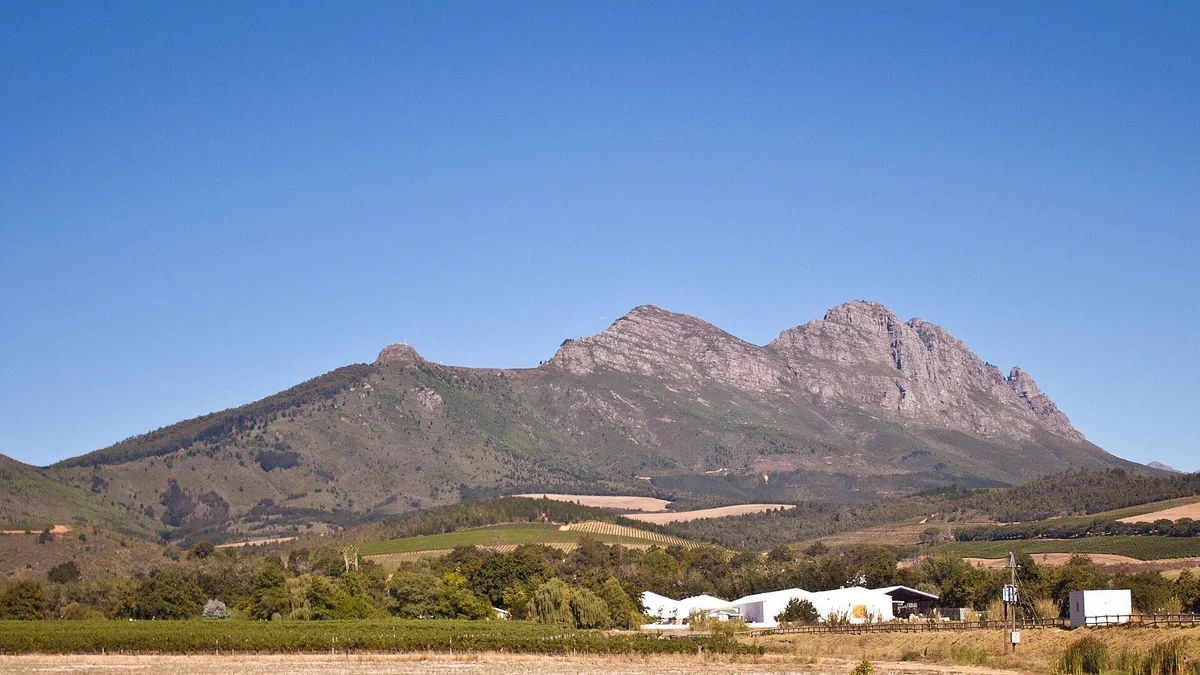
Quick answer: a Western Cape farm is not a large house. Three layers of law apply that never touch a suburban purchase: subdivision needs ministerial consent under the Subdivision of Agricultural Land Act 70 of 1970, water is licensed under the National Water Act 36 of 1998 rather than owned with the land, and people living on the property may hold statutory residence rights under ESTA that survive the sale. A vacant erf inside the metro avoids all three and carries a holding cost instead.
What makes rural land different from a house?
Three statutes that never appear in a suburban conveyance, and each of them can change what the property is worth. A house transaction turns on the title deed, the zoning and the building. A farm turns on what you are allowed to do with the land, whether you can water it, and who already lives on it.
| Layer | Statute | What it decides |
|---|---|---|
| Subdivision | Subdivision of Agricultural Land Act 70 of 1970 | Whether the land can be split at all |
| Water | National Water Act 36 of 1998 | Whether you can irrigate, and how much |
| Occupation | Extension of Security of Tenure Act 62 of 1997 | Who has a right to live there after you buy |
| Labour tenancy | Land Reform (Labour Tenants) Act 3 of 1996 | Historic claims by tenants and their families |
| Tax on purchase | VAT Act or transfer duty | Which one applies, and how much cash you need |
None of these is exotic and none of them is a reason not to buy. They are simply the reason a farm purchase takes longer and needs a conveyancer who does agricultural work rather than only residential transfers. The due diligence guide covers the checks common to every purchase; this page covers the ones that only arise on land.
Why is water the first thing to check?
Because South African law separates water from land, and a buyer who assumes otherwise can pay a vineyard price for a dryland farm. The National Water Act 36 of 1998 made water a national resource held in trust by the state, and the right to use it is a licensed entitlement rather than something owned with the erf.
That has three practical consequences on a Winelands or West Coast property. The existing entitlement has a volume, a source and conditions, and all three should appear in writing rather than in conversation. Entitlements do not always transfer automatically on sale, so the mechanism by which yours passes to you needs to be established before the offer goes unconditional. And a borehole is not a substitute: groundwater use is also regulated, and a borehole that has always been used does not by itself prove a lawful entitlement to keep using it at that volume.
Insider tip: ask for the water use entitlement documentation and the last three years of actual abstraction records together. The first tells you what is permitted, the second tells you what the farm has really been running on, and a gap between them in either direction is information. A farm using far less than its entitlement may have an equipment or infrastructure problem; one using more has a compliance problem you would inherit.
Can you subdivide, and should you assume it?
Not without ministerial consent under the Subdivision of Agricultural Land Act 70 of 1970, and the correct assumption is no until you hold the paper. The Act exists to prevent agricultural land being fragmented into uneconomic pieces, and consent is discretionary rather than procedural.
A great many Western Cape land purchases are made on an unstated subdivision plan: buy the farm, split off three lifestyle plots, sell them, and hold the remainder cheaply. That plan requires two separate approvals from two separate authorities, and neither is guaranteed. Ministerial consent under the 1970 Act deals with whether agricultural land may be divided at all. Municipal rezoning and planning approval deal with what may then be built on the pieces. A buyer who has one and not the other has nothing usable.
The safe sequence is to establish the current subdivision status before agreeing a price. Ask whether any consent already exists, whether an application has been made and refused, and what the municipality’s spatial development framework says about the area. A price that only works if a permission arrives is a speculative position, and it should be priced as one rather than as a farm purchase.
Who lives on the land, and what rights do they hold?
This is the question most often skipped and the hardest to fix afterwards. The Extension of Security of Tenure Act 62 of 1997 gives people occupying rural land with the owner’s consent statutory protection, and those rights survive a change of ownership. A buyer takes the land subject to them.
ESTA is not a technicality. Long-term occupiers, and particularly those over 60 or who have lived on the land for a decade or more, hold strong protection, and lawful eviction requires a court process with specific procedural requirements rather than a notice period. Separately, the Land Reform (Labour Tenants) Act 3 of 1996 provides for claims by labour tenants and their descendants, which can attach to land independently of who owns it now.
Three things belong in the offer to purchase rather than in the hope column:
- A written schedule of every person occupying the property, with the basis and duration of their occupation.
- A warranty from the seller as to the accuracy of that schedule, with a remedy if it is wrong.
- Confirmation of any pending land claim or labour tenant claim affecting the property, obtained independently rather than from the seller.
A farm with occupiers is not unbuyable and is often perfectly workable. A farm with occupiers a buyer did not know about is a different matter, because the position is discovered after transfer when the price has already been paid.
Do you pay VAT or transfer duty?
One or the other, never both, and which one applies changes the cash you need at transfer. A farm sold as a going concern between two VAT-registered parties can be zero-rated for VAT, which is why the seller’s VAT status is an early question rather than a late one.
| Situation | What applies | Effect on the buyer |
|---|---|---|
| Seller is a VAT vendor, farm sells as a going concern | VAT, potentially zero-rated | Can remove a large cash line at transfer |
| Seller is a VAT vendor, not a going concern | VAT at 15% | Normally inside the price, confirm in writing |
| Seller is not a VAT vendor | Transfer duty on the progressive scale | Nil below R1,210,000, rising in bands above it |
The going-concern route has conditions attached and both parties have to be registered, so it is not a lever a buyer can pull unilaterally. What a buyer can do is establish the position early, because discovering at transfer that a 15% VAT line is payable rather than absorbed is a cash problem rather than a negotiating one. The cost of buying guide sets out the rest of the stack, and the transfer duty guide covers the residential scale.
What about a vacant plot inside the metro?
Much simpler, and simple in a way that costs money rather than time. A residential erf inside the City of Cape Town carries no subdivision consent under the 1970 Act, no water use licence and no ESTA occupiers. It carries zoning, building lines, a services position and a municipal valuation.
The trap is the holding cost. Rates are levied on the land whether or not anything stands on it, so an undeveloped erf produces a monthly bill and no income for as long as you own it. On a R1.5 million erf, applying the City’s residential tariff to the valuation after the R620,000 relief, that is roughly R470 a month before anything else. Over a three-year hold while plans are drawn and approved, the holding cost is real money that rarely appears in the buyer’s original arithmetic.
Two further checks separate a good erf from a slow one. Confirm the services position, meaning whether water, sewer and electricity connections exist at the boundary or have to be brought there, because bringing them can cost more than the land. And read the title deed conditions, which on older Cape Town erven frequently carry building line restrictions, height limits or restrictive covenants that survive the municipal zoning and quietly decide what you can put on the site.
Where does this land actually trade?
Across four distinct markets that share a province and very little else, and a buyer should be clear which one they are in before comparing prices.
| Market | Where | What buyers are actually buying |
|---|---|---|
| Winelands farms | Stellenbosch, Paarl, Franschhoek, Wellington | A working agricultural business, or a lifestyle estate with vines |
| West Coast smallholdings | Darling, Malmesbury, the Swartland | Space and grain land, low water, long commute |
| Overberg and coastal | Hermanus hinterland, Caledon, Bot River | Second-home land with agricultural zoning |
| Metro vacant erven | Inside the City of Cape Town | A building site with a holding cost |
The Winelands market is the one most foreign buyers arrive in, and it is the one where all three legal layers apply at full strength. Our suburb pages for Franschhoek, Paarl and Stellenbosch cover what the residential side of those towns costs, which is the reference point for judging whether a farm’s house component is priced sensibly against its land.
What to establish before you offer
- The water use entitlement, its volume, source, conditions and how it transfers.
- The subdivision status, including any refused application, before pricing a split.
- A written schedule of occupiers, with a seller warranty and an independent claim check.
- The seller’s VAT status and whether a going-concern treatment is intended.
- The title deed conditions, which survive zoning and can restrict what you build.
- A conveyancer who does agricultural transfers, not a residential specialist taking a first one.
Foreign buyers face no ownership prohibition on agricultural land and register on the same basis as anyone else, which the foreign ownership guide sets out. The constraints on this page are constraints on the land, not on the buyer’s passport.
Sources: Subdivision of Agricultural Land Act 70 of 1970; National Water Act 36 of 1998; Extension of Security of Tenure Act 62 of 1997; Land Reform (Labour Tenants) Act 3 of 1996; VAT Act for the going-concern treatment; transfer duty scale effective 1 April 2025 with the R1,210,000 threshold; City of Cape Town residential rates tariff and the R620,000 relief for the worked holding-cost figure. Statutes are cited for orientation and are not legal advice. Agricultural transfers turn on facts specific to the property, so take advice from a conveyancer who does agricultural work before you sign. Current as at 7 September 2026.
Frequently Asked Questions
Yes. There is no prohibition on a non-resident owning agricultural land in South Africa, and a foreign national registers a farm at the Deeds Office on the same basis as a residential property. Land reform policy has been debated for years and proposals to restrict foreign agricultural ownership have surfaced repeatedly without being enacted, so a buyer should treat it as a live political question rather than a settled one. The practical constraints on a farm purchase are subdivision consent, water rights and occupiers, none of which arise on a suburban house.
Not automatically, and this is the single most expensive assumption a farm buyer makes. Under the National Water Act 36 of 1998 water is a national resource and use is licensed rather than owned, so the right to irrigate does not attach to the title deed the way a servitude does. Verify the existing water use entitlement, its volume, its source and whether it transfers on sale, in writing, before the offer becomes unconditional. A vineyard without secure irrigation is a different asset from the one in the brochure.
Only with ministerial consent under the Subdivision of Agricultural Land Act 70 of 1970, which is neither quick nor certain. A buyer planning to split a farm into lifestyle plots is buying a permission they do not hold, and the correct order is to establish what consent exists or is realistically obtainable before agreeing a price that assumes it. Municipal zoning is a separate layer on top of that, so a rezoning and a subdivision consent are two different approvals from two different authorities.
The Extension of Security of Tenure Act 62 of 1997 gives people who live on rural land with the owner's consent statutory rights of residence that survive a sale, and long-term occupiers can be very difficult to remove lawfully. A buyer inherits those occupiers along with the land. Establish who lives on the property, on what basis and for how long, before you offer, because the position cannot be undone afterwards and it materially affects both the use and the value of the farm.
It depends on whether the seller is a VAT vendor and whether the farm sells as a going concern. A farm sold as a going concern between two VAT-registered parties can be zero-rated for VAT, which changes the cash requirement at transfer substantially. A farm sold by a non-vendor attracts transfer duty on the ordinary progressive scale above the R1,210,000 threshold. Get the VAT status of the seller and the intended treatment confirmed in writing early, because it changes the number you need on the day.
Considerably, because the agricultural layer falls away. A vacant residential erf inside the metro carries zoning, building lines, a municipal valuation and services connections, but no subdivision consent under the 1970 Act, no water use licence and no ESTA occupiers. What it does carry is a holding cost with no income: rates are billed on the land whether or not anything stands on it, so an undeveloped erf costs money every month until you build.
Get a Cape Town property shortlist
Share your budget, target area (Atlantic Seaboard, City Bowl, Winelands), and goal. We reply within one business day with matched stock and next steps.